Yglesias Award Nominee

"I proudly stood behind James O’Keefe on his groundbreaking ACORN investigation. I also defended him when the media, including CNN — during a previous regime, “the Rick Sanchez era” – falsely reported the Sen. Mary Landrieu story as a “wiretapping” plot gone wrong.

In all these cases the left-leaning media exposed its obvious bias against James because of his contrarian point of view and because the targets of his investigations are protected institutions of the Democrat Media Complex. However, in my dealings with Ms. Boudreau, she and her producer, Scott Zamost, conducted themselves professionally, and I believe James owes them a candid and public explanation. From what I’ve read about this script, though not executed, it is patently gross and offensive. It’s not his detractors to whom he also owes this public airing. It’s to his legion of supporters," – Andrew Breitbart.

How Power Corrupts And Saves

Christian Jarrett summarizes a new study that explained why power increases dehumanization but why it sometimes "serves a function, allowing leaders and certain professionals, such as doctors, to cope with the decisions they have to make":

By treating other people as objects or tools, the emotional consequences of the powerful people's actions are downplayed and become irrelevant,' the researchers said. 'Although this can lead people to abuse others, it may also facilitate the powerful in making tough decisions. … Without dehumanising they would be overcome by the pain and suffering that result from their decisions.

Free Hot Dogs

RYANLANDRY:AaronTone

Michael Ehrhardt interviews John Waters on gay marriage, gay wit, and the beauty of Ptown:

It’s really amazing how Provincetown somehow stays the same. … When I first arrived here, I had a girlfriend at the time. That’s how long ago it was! We shared an apartment for a couple of weeks in a building on Bradford Street in 1964, and the landlord tried to fuck us both! I loved the people here. I found an apartment and got a job at the East End Bookshop, owned by Molly Malone Cook and Mary Oliver. Then in 1967, I came back and was offered a full-time job at the Provincetown Bookshop.

I even lived in this wonderful tree fort, with a rope ladder and small apartments. Some crazy person constructed it; it had no roof, so if it rained you got soaked to the bone. It was owned by Prescott Townsend, who must have been in his late seventies and was probably from a very wealthy Boston family; he was an early gay liberationist who would ride around on a small motorcycle on the beaches and hand out gay liberation material to people. Mink Stole was going to marry him. Prescott would let you live in his tree fort if he liked you, and you got free hot dogs. Certainly there were fewer lesbians here back then. Everyone’s become compartmentalized today, and I’m against all separation. That’s the big difference now. I’m a big butch-lesbian hag. I love the ones with chips on their shoulders and heavy attitude. They’re my real favorites.

If I ever had to point to the true spirit of Ptown, I'd point – among so many rivals – to John. Watching him sail past on his bicycle means all is right in the world. But Ryan Landry (pictured above in a photo by Aaron), the grand ring-master of Showgirls and Space Pussy, is right up there. There is no social hierarchy – just a huge amount of love, far too many muscles and stacks and stacks of wigs. My favorite bar is the Vault, a totally seedy leather place where I like to smoke cigars and drink Jager shots, or the best named gay bar night in the stinking, foul basement of the Governor Bradford. It's called FagBash. I also have as a summer townie a lovely anonymity – fame of any kind is treated with the contempt it deserves.

Michael Cunningham's little book on the place, Land's End: A Walk In Provincetown, is an exquisite homage to the place and its culture. I'm back in DC now. And it still feels like a mirage, even after sixteen consecutive full summers there.

(Photo: Ryan Landry backstage at the weekly performance contest, "Showgirls", by Aaron Tone.)
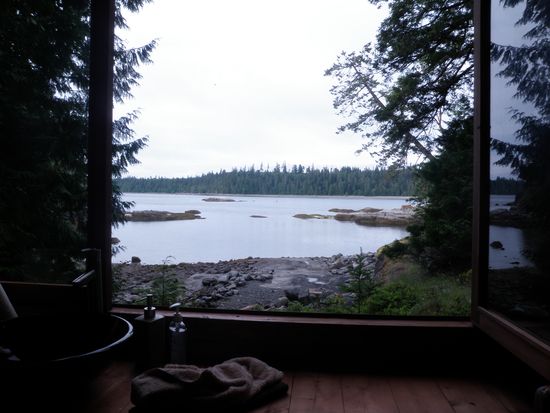
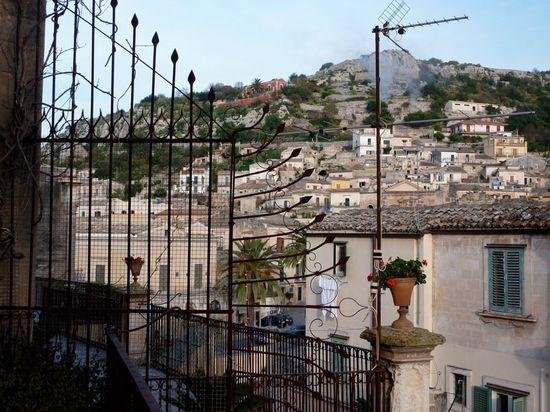
The View From Your Window Contest

Vfywcontest_10-2

You have until noon on Tuesday to guess it. City and/or state first, then country. Please put the location in the subject heading, along with any description within the email. If no one guesses the exact location, proximity counts.  Be sure to email entries to VFYWcontest@theatlantic.com. Winner gets a free The View From Your Window book, courtesy of Blurb. Have at it.

Consumed By The Now

Kevin Hartnett finds that politics makes fiction reading difficult:

All forms of desire have their natural enemies and I find that nothing saps my desire to read fiction like the Internet does.  This is partly physiological—too much time at the computer withers my brain—but it’s partly dispositional, too.  After the last round of primaries a couple Tuesdays ago, I spent an hour reading articles about the Tea Party. When I came up for air I was in an explicitly present-tense state of mind where anything written more than an hour ago seemed to be based on a world that had already been subsumed.  Novels, which require a willingness to attend to more enduring themes, don’t hold up very well by this perspective.

Politics as a whole has a fairly degrading effect on my fiction drive. It’s not just that it’s depressing to watch the way Congress operates—it’s that it’s depressing in such an unredeemable way.  Fiction can be depressing too, of course, but there’s something intrinsically optimistic about the process by which tragedy and frailty are turned into art.


This Must Be The Place

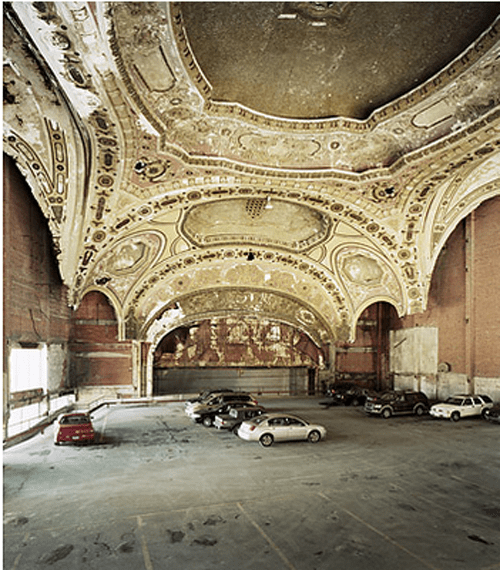
Theater_garage David Byrne, of Talking Heads fame, shares a travelogue-cum-history of contemporary Detroit:

Part of Henry Ford’s brilliant idea with the assembly line meant that by breaking down the making of a car (a complicated piece of machinery) into miniscule jobs, he could hire unskilled (and cheap) labor to fill his factory. The original place where he first built a car was on the site of the Michigan Theater, which now houses a parking lot. There are numerous explanations for how this movie-palace-turned-parking-garage came to be.

The multiplexes in the suburbs took moviegoers away from these theaters, but this one had hit hard times before that. White folks were leaving the city center for the suburbs long before multiplexes became common. The car, and the highways the car and oil companies lobbied for, made that migration possible. Though the auto industry started here, the more successful it became, the more it destroyed the place that nurtured it. This theater, after many incarnations (one was a venue to watch live hockey games on a screen!) eventually gave up, and when the need for one more parking garage superseded any possibility of renovation there was talk of tearing it down. But it turned out it was cheaper to leave it up and simply gut it—and besides, it seemed that removing it would put the integrity of the building next door in peril—so here it remains. At least the Romans didn’t do this, though they did probably sell off all the valuable statuary that wasn’t tied down.

Hidden Hoarding

Christopher Mims asks about hoarders of information:

Has endless access to a bottomless pool of knowledge and distraction, all of which can be recalled in an instant via Google, eliminated the pathological dimension of obsessive information collecting, by eliminating the physicality of the hoarded item, or is the 'net more like crack for a relapsed addict, encouraging all of us – even those who are sub-pathological – to go deeper and deeper into habits that cost us the one resource that is scarce in this marketplace of free ideas: time. …

The difference between information hoarding and the regular kind is that information hoarding has the potential to be invisible.