The Pernicious Myth Of The Surge’s “Success”

Stephen Walt takes us down a notch:

If we tell ourselves we won and then get out, we will end up learning the wrong lessons from the whole experience. By portraying the Iraqi and Afghan "surges" as victories, we fool ourselves into thinking that this sort of war is something we are good at fighting, that the benefits of doing so are worth the costs, and that all it takes to win this sort of war is the right commander, the right weapons, and the right Field Manual. And if we indulge in this familiar form of historical amnesia, we'll be more likely to make similar errors down the road.

The Birthers Live On

Below is nutty video from a sparsely attended birther rally in DC this weekend. The man dressed as Captain America holding the Stars and Stripes is priceless:

Weigel reads the life line of the birther meme:

I'm encountering liberals all around the country who are despondent about the coming loss of the House and fully expect the Birthers to impeach Obama. They're not crazy; several Republicans who questioned Obama's citizenship on the trail are going to end up in Congress. I think the Republicans are just pandering and avoiding town hall boos. But even as the people who invented the conspiracy fade, they can admire how they've pushed a meme that will be with us, likely, forever.

Yglesias Award Nominee

"I have no doubt there’s a vast amount of money wasted in defense, but at the same time I think it’s the most important thing the federal government does, and it has to be something it does all over the country. So I would be a very strong supporter of the National Guard but I’d also take a very sharp pencil to looking at the defense budget, because I think Dwight Eisenhower was right when he said there was a military industrial complex, and this continues to be a problem we have to deal with," – Senate nominee Jim Huffman (R-OR).

Why Hip-Hop Is Cool With Today’s GOP

Thomas Chatterton Williams follows up on his WSJ op-ed to explain why hip-hop is inherently conservative:

It's not just that hip-hop is, to put the matter mildly, pro-gun rights (most mainstream rappers could be on the NRA's payroll), atavistically homophobic (Byron Hurt documented this convincingly in Hip-Hop: Beyond Beats and Rhymes, where even a "conscious" rapper like Talib Kweli is unwilling to go against the anti-gay grain) and spectacularly patriarchal (male-female inequality has always been the law of the hip-hop nation) — it is also unquestioningly God-fearing and, not infrequently, proselytizing. …

Which reminds one of this Onion classic:

The Lord Almighty finally responded to nearly two decades of praise in hip-hop album liner notes Monday, when He gave a shout-out back to all His loyal niggaz. "Right about now, I want to send a shout-out to each and every nigga who's shown Me love through the years," said the Lord, His booming voice descending from Heaven. "I got mad love for each and every one of you niggaz. Y'all real niggaz out there, you know who you are. Y'all was there for me, and it's about time I'm-a give some love back to God's true crew." "All y'all niggaz, y'all be My niggaz," the Lord added.

Williams continues:

I bring all this up simply to point out that hip-hop music and culture, while often nihilistic and self-sabotaging, from a political standpoint is almost never radical or even merely progressive. There is a reason the hip-hop generations have never produced a Huey Newton or a Malcolm X. Hip-hop — when it transcends the gutter and goes beyond the streets — doesn't want to overthrow the system; on the contrary, it wants desperately and at any cost ("Get Rich or Die Tryin'") to join it.

Rick’s Left; My Right, Ctd

Rick somehow transforms my arguments against "a high-taxation state that reduces its citizens to economic dependents" into support for the high tax systems of the Netherlands, Germany, Scandinavia, and France. In fact, I do think that many of the citizens of those countries have indeed become economic dependents. France is currently being crippled by strikes and protests against raising the retirement age to a mere 62! Where do these people think the money comes from, if not the private sector and the entrepreneurial spirit?

I grew up in socialist Britain where individual talent and success were actually stigmatized, where the economy was collapsing, where the top rate of taxation was 98 percent, where the state absorbed more and more of people's livelihoods, and where trade unions held successful businesses to ransom. Thatcher's radical return to a tradition of liberty and independence and self-reliance changed the public culture and the very psyches of Britons in ways that enhanced liberty. Hence their very different response to the notion that debts have to be paid today, compared with the French.

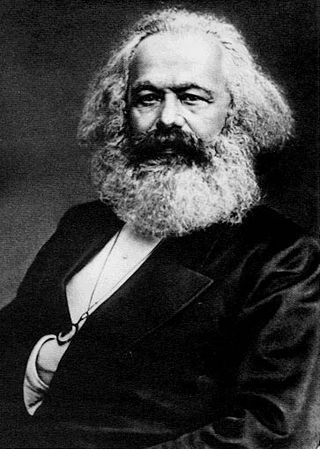
And I do not regard the Scandinavian collectivist states as any place I would like to live in, since I value the economic liberties that such high taxation takes away, and my ability to choose individually how I spend my money, rather than be forced by the majority to spend it the way that majority Karl_Marx_001 wants to. I value those liberties, moreover, as ends in themselves and not just as means to any particular ends. I like being free over my own life and decisions. It makes me happy.
Let me make one other point. A critical distinction between liberalism and conservatism, in my view, is the conservative insistence on the distinction between practical wisdom and theoretical wisdom. A mathematical proof cannot be disproven by someone's living experience. But a mathematical proof that tries to predict human behavior will always fail at some point, which is why economics is not a science in the way that, say, physics, is.

The case for free markets and low taxation rests on the idea that people are better judges of what is in their best interest when they have the most practical knowledge and real world understanding of any particular issue; and that human conduct is far too complex and nuanced and changeable to be extrapolated to any single person's theory or any movement's ideology (see Marx and Engels' total misjudgment of the future, even though they possessed some brilliant insights into the past; see neoconservatives' extrapolation of the success of democratization in, say, Poland to, say Iraq).

So the closer you are to the ground and the actual issue, the more likely you are to get it right. And so devolving decisions as much as possible to the people on the ground is conservative, while organizing societies around collective principles that have to be decided at the center is liberal.

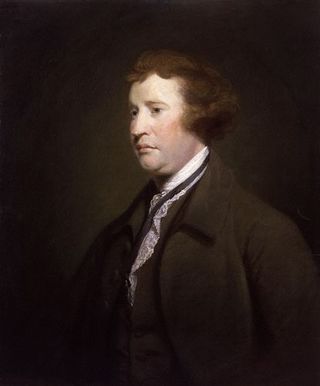
In general, money = power. The more of their own money people keep the more likely it is that the society will evolve the way its people want it to evolve, and not be coerced by some rationalist in government. I prefer markets to make these decisions to governments. But of course, it is equally EdmundBurke1771 true (and this is where conservatism has gone off the rails in America) that it is the government's task to ensure that the game is not rigged, that private corporations do not gain too much power, that politics is not corrupted in this fashion, and that financial markets are robustly regulated and monopolies vigorously broken up. Like Adam Smith, I favor a small but very robust government. In America right now, no one seems to really be able to represent that tradition – although Obama says he does.
The problem is, of course, that neither this conservatism nor this liberalism can work on its own. In advanced societies, we need to find a balance between them. Some things, like infrastructure or defense or even funding public education will need to be done collectively. But there's a tipping point at which a society becomes centrally run and managed, rather than governed from the ground up by the wisdom of individuals, families, villages, towns and cities. This is the vision behind Cameron's Big Society, which is why he is a genuine Tory. Even within collectivist institutions, like the National Health Service, he is trying to empower local doctors or within public education, individual school principals, because they are closer to the problems they are tackling than someone in Whitehall or Washington or a state capitol.

In general you can see conservatism represented both in the absolute amount of money taken by the government from the people (I get queasy when the state takes up more than around a third of GDP) and in the way the distribution of public goods are structured (centralized or devolved in power). In general, I favor lower taxation and more local power over higher taxation and centralized power. I favor practical wisdom in the realm of prudential judgments. Because anything else mistakes what it is doing.

And will end in tears.

What The War On Terror And The War On Drugs Have In Common: Torture

William Finnegan reports on the various ways that the Mexican government is fighting the drug war in Tijuana. This excerpt is especially chilling:

Castellanos was tortured for three days, primarily by a soldier whom he called “the person of the voice.” He came to learn who had denounced him—a fellow-officer who had also been tortured for names. The other man had told his torturers that he saw Castellanos’s car in the company of members of the Arellano Félix gang—a powerful organized-crime group sometimes known simply as the Tijuana cartel. He also mentioned that he thought Castellanos had been looking at his wife. Castellanos sighed. “I’ve never met or seen his wife. I don’t even know her name.”

On the second day, with his torturers threatening to harm his wife and two young daughters (his wife, frantic about his disappearance, was meanwhile receiving phone threats, warnings to stay silent), Castellanos came to the end of his power to resist. He was willing to say or sign anything. “I say, ‘O.K., I’ll do what you want.’ I was always screaming, ‘Please, please don’t do that to me.’ But I think they don’t care.” He was given a denunciation, a list of names, to sign. “The worst thing to me was that I signed that paper, which I hadn’t even read.”

His eyes searched mine, fierce and pleading. It looked to me as if something terrible had happened to him inside. A friend of his later told me that when Castellanos couldn’t sleep he did pushups and pullups, hour after hour, which explained his physique. He went on, “I just signed the paper. Whatever. This was on a Wednesday. They destroyed my mind. They destroyed my spirit. Always with tape and handcuffs. No opportunity to defend myself. But the government, the military, believed what I’m confessing. They believed things I said yes to from torture, because I don’t want to die. They are very bad persons, but they are also stupid.”

It's a kind of stupidity they share with Dick Cheney.

Prop 19: Down To The Wire

Josh Marshall pins his hopes on a reverse Bradley Effect. Jacob Sullum reports on pot arrest racial disparities:

[The government] currently catches, at best, 3 percent of marijuana offenders each year (while the feds are responsible for less than 1 percent of those arrests, representing less than 0.03 of all offenders). These numbers are generous, since they assume that data based on self-reports in surveys do not understate the prevalence of marijuana consumption, which they probably do. In any case, it's clear that only a small percentage of people who violate the ban on marijuana are getting arrested, a situation that invites arbitrary enforcement. A report released [Friday] by the Drug Policy Alliance and the California NAACP illustrates that problem, finding that from 2006 to 2008 "police in 25 of California's major cities arrested blacks at four, five, six, seven, and even 12 times the rate of whites." The racial disparities are not explained by differences in drug use, since the government's survey data indicate that "young whites use marijuana at higher rates than young blacks."

TNC Pwns Saletan On The Sherrod Analogy

Exactly:

Shirley Sherrod did not simply admit her own past prejudice, and she did not tell the story to show how her sympathy for bigoted black people. She told the story to condemn her own, specific, prejudices. Juan Williams did no such thing.

Saletan goes on to cite Juan Williams admirably noting the folly of claiming Muslims attacked America on 9/11, and assuring host Bill O'Reilly that "there are good Muslims." I am sure those "good Muslims" are as grateful for Williams' defense as he would be for their defense of "good blacks." But that aside, the notion that Williams initial statement of prejudice is somehow absolved by his objections to O'Reilly greater prejudice is false. I can, all at once, believe that Jews are blood-suckers and still think the Holocaust was horrific. Strom Thurmond's defense of white supremacy is not absolved by his support for South Carolina's black colleges. It is not comforting to behold Trent Lott's pining for segregation in light of the black Senate aids working in his office.

Williams is peddling bigotry on a channel devoted to demonizing and stigmatizing all American Muslims as often as it can as shamelessly as it can. It is doing this as an integral part of one political party dedicated to using such bigotry to demonize the president of the United States.

We need to be clear: Fox is neither a news nor an opinion channel. With almost every GOP candidate running for president on its payroll and with massive donations to one political party, it is a propaganda channel. People like Williams who take its money to legitimize it as a credible journalistic enterprise have somewhere along the line lost their soul.

Dispositive proof of Williams' bigoted double standards for Muslims and African Americans here.

Out On A Limb

Daniel Larison thinks that the GOP is only going to pick up 35 seats in the House – he lists them here – fewer than needed for a majority:

Gaining 35 seats in the House is impressive, and it will be the second-largest turnover in my lifetime, but after the overhyping of Republican chances for the last year it will seem anticlimactic and unsatisfying. The reality that gaining 35 won’t be enough to win a majority serves as a reminder just how far down the GOP had sunk in the last four years, which should remind us that the GOP deserved to be so far down. It should also make us realize the gains the GOP makes this year are largely unmerited. Right now, everyone in the “biggest tent” is working together and setting aside disagreements for the sake of winning the election. What happens if Republicans don’t win? The round of post-election recriminations will be that much more severe and bitter when it becomes clear that the party failed to take advantage of one of the most favorable election years in decades.

If Republicans do manage to eke out a House majority, the electorate won’t have provided them with even the illusion of a mandate, and their leaders have already made clear they have no desire for fiscal responsibility. Riding an entirely negative electoral wave created by a weak economy, Republicans will see that they have not have been elected for any particular reason. They will devolve into their usual time-serving habits even faster than before.