You have until noon on Tuesday to guess it. City and/or state first, then country. Please put the location in the subject heading, along with any description within the email. If no one guesses the exact location, proximity counts. Be sure to email entries to VFYWcontest@theatlantic.com. Winner gets a free The View From Your Window book, courtesy of Blurb. Have at it.
Chad Parmenter interviews author Nick Flynn on his memoir The Ticking Is the Bomb, about the Abu Ghraib torture victims, some of whom he met personally:
With the Abu Ghraib photographs I was never interested in the question of how our soldiers came to torture other human beings, or even in how Dick Cheney came to authorize it. That Dick Cheney is pro-torture surprises no one; he freely admits it. That soldiers do terrible things during wartime should not surprise us.
So at some point the book became about the darker impulses we all carry within us, which led me to examine my own darker impulses. The only way to break out of these darker impulses, for me, was to make a human, face-to-face connection with some of the ex-detainees from the photographs. This is always the only way out.
Emily Singer gets a preview of the results from Ozzy Osbourne's sequenced genome, to be revealed at TED roundtable this weekend:
According to the analysis, Osbourne has about 300,000 novel variants, a figure similar to that of other newly sequenced genomes. (The number of novel variants discovered per genome will fall as more people are sequenced.) Analysis of his mitochondrial DNA, inherited from his mother, revealed that Osbourne shared a common ancestor with Stephen Colbert about 1,000 years ago.
The rocker also learned that, like most people of European descent, he has some some DNA segments inherited from Neandertals. "For fun, we did the same analysis for George Church," says [Jorge] Conde [Knome's chief executive officer]. Church, a pioneer in DNA sequencing, Harvard professor, and one of Knome's cofounders, "had three times as much Neandertal DNA."
Joe Amon blames the recent cholera outbreak on Haiti's sub-par government:
Governments don't want to admit the failure of health-care or surveillance systems, and they are afraid of the trade and travel sanctions that may result from a large outbreak. But inaction leads to larger epidemics: Treating a few cases of cholera with oral rehydration salts or intravenous fluids is relatively straightforward, managing hundreds or thousands of cases is not. With prompt and proper treatment, less than 1 percent of those infected die. Without a fast response, death rates of five percent or more are not unheard of.
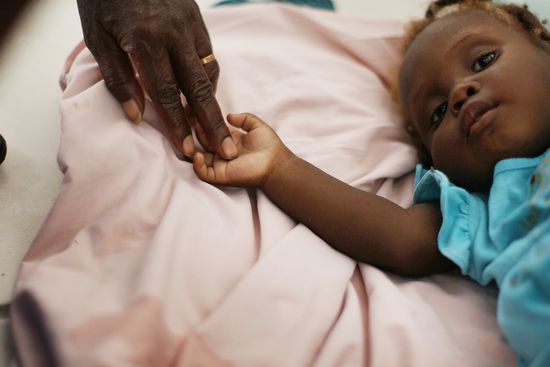
(Photo: A relative holds the hand of Dachny, a child who is suffering from the symptoms of cholera at a hospital run by the Haitian government where Doctors Without Borders is treating people October 27, 2010 in St. Marc, Haiti. Haiti, one of the poorest nations in the Western Hemisphere, has been further unsettled by an outbreak of cholera which has killed nearly 300 people so far. The epidemic has affected the central Artibonite and Central Plateau regions with 3,612 cases so far on record. While authorities believe the outbreak is contained, they believe it has not yet peaked. There is also fear that the deadly diarrheal disease could migrate to the sprawling camps for the hundreds of thousands of Haitians displaced by the earthquake. By Spencer Platt/Getty Images)
Fred Pearce argues that "geography is the new hot discipline" after reading Larry Smith's The World in 2050:
[Smith's] argument is that there will be winners as well as losers from climate change and the other forces shaping our future. The Arctic rim will be transformed by climate change into a new economic powerhouse. As the ice recedes, ecosystems extend and minerals and fossil fuels are discovered and exploited, the Arctic will become a place of “great human activity, strategic value and economic importance.” The eight nations of the Arctic rim – the US, Canada, Russia, Greenland, Iceland, Finland, Sweden and Norway– will become increasingly prosperous and powerful, he says.
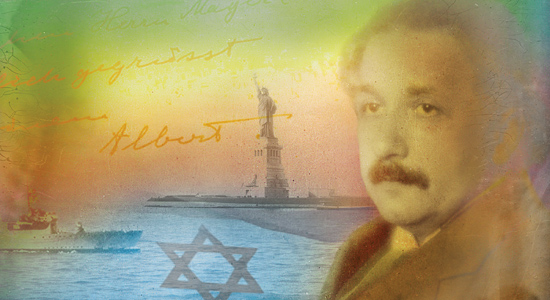
Since we've been talking about the subject, this fascinating piece by Walter Isaacson on Einstein's conversion to Zionism may be of interest. Of course, Zionism was a subject of debate among Jews and Gentiles for a very long time, and when Einstein visited America, he encountered some resistance to his increasingly passionate belief in a Jewish state:
The resistance to Einstein’s mission came not only from the Brandeis camp of cautious and restrained American Zionists, but also from successful New York Reform Jews of German heritage, many of whom were opposed to Zionism. When Einstein invited 50 or so of New York’s most prominent Jews to a private meeting in his hotel, many of them declined. Paul Warburg, who had served as his agent soliciting lecture fees, wrote:
"My presence would be of no use; on the contrary, I fear that, if at all, its effect would be rather to cool things down. As I already told you on another occasion, I personally have the greatest doubts relating to the Zionist plans and anticipate their consequences with genuine consternation."
Other rejections came from Arthur Hays Sulzberger of The New York Times; the politically connected financier Bernard Baruch; the lawyer Irving Lehman; the first Jewish Cabinet secretary, Oscar Straus; the philanthropist Daniel Guggenheim; and the former Congressman Jefferson Levy.
One note on my series of posts on the Israel-Palestine debate. I'm not squelching debate right now, just postponing it. I'm trying to make a longer argument than can appear in a single post, and after I've made my entire case, open the series up for real discussion. It's an experiment.
Jennifer Schuessler sums up the Amish approach to technology, as represented in Kevin Kelly's new book, What Technology Wants:
The Amish may not have cars or buttons, but they do have “alpha-geeks,” “early adopters” and enough clever retro-futuristic contraptions to do any steampunk proud. Behind one electricity-free farmhouse, Kelly finds a workshop vibrating with “an ear-cracking racket of power sanders, power saws, power planers, power drills and so on,” all powered by a diesel generator driving a compressed-air system known locally as “Amish electricity.” Everywhere he goes, Amish D.I.Y.-ers show off “their geekiest hacks.”
The Amish, Kelly says, are the ones who stand athwart technological history and shout “Maybe!” They reject cars and credit cards but are enthusiastic users of disposable diapers, chemical fertilizers and pesticides. Different sects, like the ultra-strict Old Order Amish, take different approaches. But in general they make a distinction between technologies that will strengthen the community — like genetically modified corn, which is easier to harvest using older equipment, and thus helps keeps family farms together — and those that might weaken it, like cellphones, which, along with artificial insemination and solar power, are still being debated.
Even Daniel Larison couldn't get psyched about a Republican surge, Bruce Bartlett feared a similarly bad outcome, all of which is probably true when you look at Rush Limbaugh's marching orders. Raising the retirement age to 65 sounded like a sane conservative idea to us, and scrapping the corporate income tax appealed to Megan and Drum. E.D. Kain wanted a local tea party to solve what aren't really national problems, and readers phoned home on Obama and DADT, and on why gays are stronger for having been through the struggle.
Two real candidates actually campaigned together on a "civility tour," but looking at the attack ads of 1800, it seems some things never change. Steven Taylor nominated Sarah Palin as the first Fox News candidate, and President Bush got advice during the war years from radio talk show hosts. This video is why Andrew ran away from political science, Radley Balko didn't think we should vote on DAs, and Drum outlined the limits of interviewing any politician. Jim Manzi laid the smackdown on the liberal gene theory, Aaron Carroll rated the US healthcare system low by any account, and elites accelerated their careers.
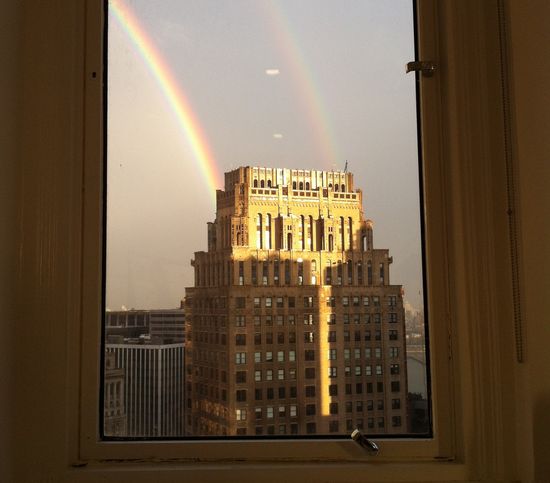
Americans loved to drop pumpkins, and bromance bloomed in the UK. Dutch teens had sexy safe sex with parental consent, but marriage equality was not going to lead to kids being raised in warehouses any time soon. Quote for the day here, dissents of the day here, apology of the day here and here, time-space continuum threatening VFYW here, double rainbox VFYW here, Greenwald bait here, MHB here, and FOTD here.
John D. Rockefeller's old office suite on the 25th floor of 26 Broadway, 5.20 pm
Thursday on the Dish, Andrew parsed the NYT poll on the sometimes schizophrenic opinion of voters. He also picked apart Obama's waxing and waning support for marriage equality, went another round in debating Israel-Palestine, and chastised the NYT on their double standard for torture. Andrew opened up about coming out and the remarkable Dan Choi recounted how he met his partner.
Mike Pence pledged "no compromise" with the Democrats and an ad supporting Angle's campaign proclaimed "us vs them." Chait explained the endless loop of spending and tax cuts for Republicans. Justin Wolfer hedged his bets against everyone else's bets, while admitting no one would remember either way. Rove waged war on Palin, who may have waged war on herself in her own backyard with Miller in Alaska. Obama was still the least unpopular of the Republican frontrunners, Joe Miller Halloweened Murkowski, and we tracked Sabato and Silver on the horserace here and here.
Bernstein proposed that Fox News is part of the Republican party, and readers responded to Andrew on whether liberals should appear on the channel at all. Tea Party members were not fans of Islam, according to one of their founders. Yglesias defined climate hawks, terrorists could turn to cyber offense, and Mark Lynch feared open war talks with Iran. Megan looked at a future without Warren Buffet, and Prop 19 got a polling reality check just as the national numbers were improving.
Wednesday on the Dish, Andrew conceded ground on Helen Thomas and initiated dialogue with Goldblog on Israel, Palestine, and the chasm between. Andrew clarified his case against Juan Williams to Saletan once more, and in response to readers, gave credit to Shep Smith, vowed never to appear on Olbermann, but allowed Maddow her due. Andrew echoed Greenwald on marrying gay foreigners and how behind America really is. The Tea Party had its heartin the right place but its head was nowhere to be found. The British take on American ingratitude for what Obama has done right was spot on for Andrew.
On the Prop 19 front, Nick Gillespie and Matt Welch deemed it the most important issue of 2010. David Boaz made the all-too-reasonable libertarian case and Andrew couldn't agree more. Ryan Tracy saw Holder's hands tied, masked gunmen with tasers served marijuana warrants in New Haven, and Ron Hill saw Republicans mellowing on the drug war. The average pot smoker (and voter) was the one who quit, the drug war wasn't colorblind, and this is what the reality of that war looked like.
Joel Wing tried to follow Iraq's sketchy financial paper trail, and Derbyshire noticed that we're only occupying two of the top five most corrupt nations. Joe Miller admitted wrongdoing and lying about it, the curb-stomper wanted an apology, and there was news of possible Democratic ballot shenanigans. Ezra didn't see divided government helping the deficit, money couldn't buy elections, and some campaign ads stunk – literally. Americans mistook America for a country more equal than it is, former bartenders with bachelor's degrees sounded off, and Josh Barro designed a better gas tax. Dana Goldstein questioned whether we could teach our kids true grit, Ebert defended Hugh Heffner and the Playboy era, readers served up another grammar lesson, and snow days ended for ease of scheduling.
Some things just shouldn't be sexed up for Halloween, New Yorkers were scared of clown births, but the rent was so damn high that most people would accept ghosts as roommates. Moore award here, quote for the day here, campaign ad of the day here, journalistic standards for bloggers here, MHB here, VFYW here, VFY-CPAP here, and FOTD here.
By Uriel Sinai/Getty Images.
Tuesday on the Dish, Andrew was aghast at the human rights abuses in Omar Khadr's "guilty" plea. Wikileaks offered Steve Coll a moment of clarity, but adding mayonaise to chicken shit didn't make it chicken salad, according to Tom Ricks. Andrew joined the boycott on Fox as a propaganda channel, but E.D. Kain thought Fox gave the people exactly what they wanted.
Andrew pushed back against David Brooks and Mickey Edwards on what they want Dems to learn this year, the GOP stood for one thing only, and Andrew wasn't optimistic about Gingrich's tax promises. Andrew wondered why John Heilemann didn't factcheck Palin, Sharron Angle played hide and seek with the press, sheriff Joe Arpaiogave Palin some pink underwear, and the Tea Partiers were just as elite as the people they disparage. WWII eerily paralleled Iraq today, readers didn't want to pardon Bush, and the Onion illuminated the true source of the Israeli-Palestinian conflict.
Decriminalization may have hurt Prop 19, Thoreau wondered where all the liberal think tank support was, Kevin Williamson shot down dishonest arguments against it, and Barbara Boxer could ride Prop 19's coattails all the way to the win. It Gets Better went global, gayness doesn't die out because of genetics, it was possible to be gay and republican, and Lincoln wasn't the only gay president.
America was number one… in incarceration. Cowen expressed uncertainty, bloggers added their two cents on "curb-stomping" in the blogosphere, and we shed a tear for the end of snow days. Our wardrobes were proof of how wealthy we are, New Hampshire loved beer, and mushrooms could be the new styrofoam. Homer would have trouble not eating meat on Fridays, highbrow TV was the new elite entertainment, and too many future bartenders might be paying for higher education. Dish grammar nerds united, soy sauce took us for a ride, but loyal readers grounded us again. Apology of the day here, political ad of the day here, app of the day here, passive aggressive note of the day here, dissents of the day here, FOTD here, VFYCPAP here, VFYW here, MHB here, and VFYW contest winner #21 here.
Monday on the Dish, Andrew continued to delve into the difference between liberals and conservatives. TNC pwned Saletan on the Sherrod analogy, and Fallows eloquently defended NPR. Andrew lent some historical perspective to Silver's predictions, Larison's were here, and Kaus wanted a "none of the above" option on ballots. Reihan corrected the record on his fiscal proposals, Ross put TARP into perspective, the birthers were still at it, and a reader wondered if Obama should pardon Bush.
Elsewhere, men didn't scoop the poop, airbags might be coming to a bicycle near you, bloggers debated curb-stomping, and hip-hop was down with G.O.P. We looked into whether Google should give up its tax loophole, and Choire Sicha asked what people were doing with their iPads when they aren't reading magazines. Alain de Botton camped out in Heathrow, we guffawed at the economics of Seinfeld, and good luck charms work if you already believed in them. Quote for the day here, VFYW here, FOTD here, Yglesias award here, MHB here, and campaign ad of the day here.
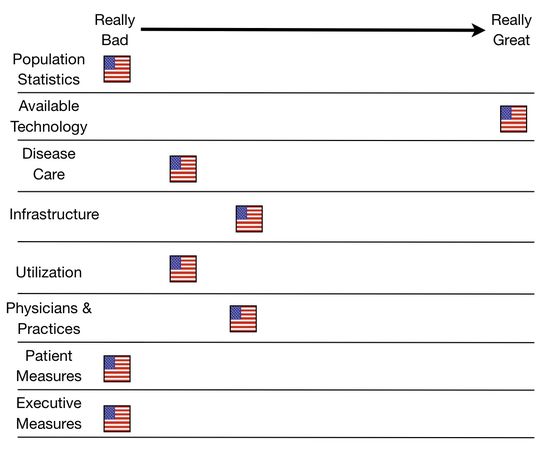
With the exception of available technology, we do not rate well against comparable countries. And that’s the take home message. We can argue about which metric is best to describe the quality of a health care system, but it almost doesn’t matter what you pick. Don’t like population statistics? Fine. Choose another. But unless you think the only important thing is how many MRI machines are available, we’re still going to look bad. Not only does the system not perform up to snuff, but pretty much every stakeholder I discussed agreed that it’s not good.
Sadr and his followers have played their hand well so far in Iraq. They have allegedly been promised seven ministries, and an unknown amount of jobs for coming out for Maliki. They are now pushing their agenda further by demanding that Maliki form a national unity government, while letting him know that if his rivals come up with a ruling coalition they will go with them instead. By setting further conditions, the Sadrists hope to not only get concessions, but also be a real power player in Iraqi politics.


 The Dish