Goodnight Scientist

Chad Orzel nerds out on the children's book Goodnight Moon:

[W]e know that the full moon in the sky covers an angle of about half a degree of arc. On our big copy of the book, the diameter of the moon in the final illustration is just about 7/8" (I only have an English-unit tape measure here), while the distance from the corner of the window to the outer edge of the moon is 2 and 5/8", exactly three times the diameter. So the moon has moved through about 1.5 degrees in the course of the story.

Now, the Earth rotates through 360 degrees in just about 24 hours, which is 15 degrees per hour (the Moon's motion is slightly slower, owing to its orbital motion, but it's not a significant difference for our purposes). This suggests that the bunny's goodnight ritual takes about 0.1 hour, or six minutes. Coincidentally, this is approximately the time required to read the book to [my daughter] at bedtime, as she points out all the important features of every picture ("Mouse right there! Mouse is sneaky!").

Of course, there's another way to estimate the passage of time in the book, which is the clocks shown in the various pictures. The clock in the first picture shows almost exactly 7:00, while the clock in the final picture shows approximately 8:10, for an hour and ten minute duration. Coincidentally, this is approximately the time it takes to get [my daughter] to go to sleep after reading Goodnight Moon …

Chart Of The Day

Drink_graph
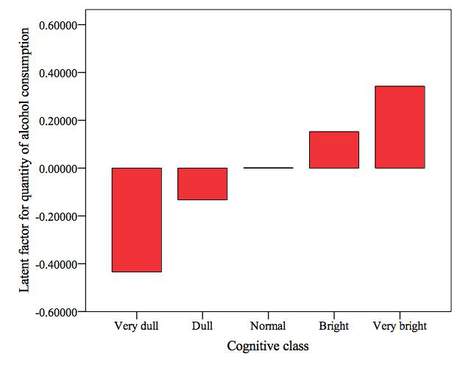
Satoshi Kanazawa reports on the link between smart children, and the larger amounts of alchohol they consume as adults. The studies controlled for “both income and education, as well as childhood social class and parents’ education.” The study concluded:

“Very bright” British children grow up to consume nearly eight-tenths of a standard deviation more alcohol than their “very dull” classmates.

It’s what Oakeshott called “the ordeal of consciousness.” When you have constantly charging brain, you need to shut it off sometimes in order to breathe and live. It’s no wonder so many brainiacs self-medicate in this way. The key thing, as always, is moderation.

Keeping Your Fear-Mongering Straight, Ctd

A reader writes:

I was a bit amused by the 1999 Gay Pride
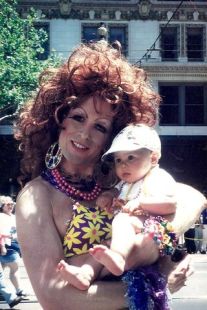
The attached photo was taken during the San Francisco Gay Pride Parade in 1999, when my daughter was nine months old.  We were watching the parade with a group of friends when we were approached by a 6'4" drag queen wearing 6" heels and a floral print bikini.  She asked if she could hold our baby, and how could we refuse?

My wife and I have regularly attended the gay pride parade with our friends, gay and straight, since moving to San Francisco in 1989.  We love the event; it's one big joyous party, a quintessential San Francisco experience.

My wife and I are hardly libertines.  We have never been to Folsom Street and we don't have any particular desire to go.  We hold very traditional family values, we believe deeply in the sanctity of marriage, and we tend to hang out with people (straight and gay) holding similar values.  Nevertheless, when we started our family, we saw no reason to stop going to gay pride.  When the kids were very small, we figured the occasional public nudity and more sexualized moments of the parade would simply go over our kids' heads.  This turned out to be correct:  for them, the parade was just a big, colorful, silly spectacle.

We worried that it might become inappropriate to keep taking the kids to the parade as they got a little older, but this concern proved to be unfounded. 

As the kids got older, the parade became less sexualized and definitely more family friendly.  The organizers began to provide a special play area for families with children.  There is less nudity, and the naked people mostly fade into the background anyway.  The parade seems to be less and less about people getting laid and more about individual freedom and the joy of being with people you love – values that we definitely support and hope our children embrace.

The kids just love going to the pride parade.  Cute kids on the front row of spectators at a gay pride parade attract a fair amount of attention, and so our kids score lots of free candy, mardi gras beads, tchotchkes and stickers.  They've gotten to shake the hands of the chief of police and the fire chief.  We've attended a number of more conventional parades — St. Patrick's Day, Chinese New Year's, Carnival in the Mission District (San Francisco has a lot of parades.), but our kids find the pride parade by far to be the most interesting, most colorful and most fun.

The last couple of years we have been getting together with a bunch of other families from our (Episcopal) church to watch the parade.  Our church's membership for the last twenty years has been roughly half gay and half straight.  Our congregation has a lot of children of both gay and straight parents.  On Pride Day, we watch the parade for a couple of hours and then hop over the barriers to march with the Episcopal Church contingent when it passes by.  The kids, a lovely group of multi-racial, multi-cultural pre-teens, march right behind our church's banner.  I cannot begin to tell you how proud we are of the eagerness and enthusiasm of our children in spreading our church's message of inclusion and acceptance.  The kids get a lot of applause and affirmation, and the experience is incredibly positive.

Your reader worried about the hyper-sexualized atmosphere of the pride parade.  The sexuality is there, of course, just as it is pervasive throughout our culture.  The occasional bare breast or naked fat guy (and the naked guys are always on the hefty side) don't really bother us, and they don't seem to upset the kids.  The really overtly sexual stuff and the unconventional groups like the S&M contingents don't seem to affect the kids either.  Perhaps what we perceive as sexual, our kids regard as just a bunch of adults acting silly.  Maybe I'm deluding myself and maybe I'll change my mind about the parade when our kids hit their teen years.  But I don't think so.

Nevertheless, I can say with all sincerity that I am more comfortable having my kids watch the San Francisco Gay Pride Parade than having them watch some of the mainstream sitcoms that appear in early prime time (during what once was referred to as the "family hour") on national network television.  We used to let the kids watch How I Met Your Mother, but oh my goodness, the things they say on that program, and the situations they portray — at 8:00 every Monday evening — are vastly more sexual, and make me much more uncomfortable as a parent, than anything I have ever seen at the pride parade.

Sorry for the long message.  I am certainly not trying to encourage others to follow our example, and like you, I would never criticize any parents who felt uncomfortable taking their children to a pride parade.  Still, I thought you might be interested by the overwhelmingly positive experience that we, a hetero couple with very traditional values, have enjoyed at these events with our children.
The Shooting Gallery

  Kessels_2

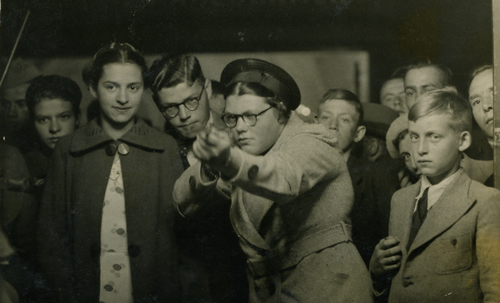
A Dutch woman takes a picture of herself shooting a gun almost every year:

The chronological series begins in 1936, when a 16-year-old girl from Tilburg in Holland picks up a gun and shoots at the target in a shooting gallery. Every time she hits the target, it triggers the shutter of a camera and a portrait of the girl in firing pose is taken and given as a prize.

And so a lifelong love affair with the shooting gallery begins. This series documents almost every year of the woman's life (there is a conspicuous pause from 1939 to 1945) up until present times.

At the age of 88 Ria van Dijk still makes her pilgrimage to the Shooting Gallery.

We Are All Sodomites Now

William Saletan dives deeper into the anal sex propensities of hetero women today:

The most interesting thing I learned from reading dozens of testimonials is that many sodomy enthusiasts have a slight anal superiority complex. They don't mean to boast. It's just that they're more adventurous, enlightened, and fulfilled than other folks are. They're less uptight and more comfortable with themselves. They're better lovers, or their lovers are better. And this attitude is starting to irk some anal virgins. …

So if anal sex goes mainstream, be nice to the vanilla holdouts. And don't be surprised if the revolution is short-lived. As women embrace sodomy, it may lose its taboo appeal for men. Lots of men are coming forward to say they don't like it (examples here, here, here, here, here, here, here, here, here, here, here, and here), and some seem to have been turned off to it by women who wanted it. With buggery on the daily menu, men might start begging for vaginal sex, or even kissing. Won't that be something.

The Dish At Ten: Jonathan Cohn

Jonathan caps off the Dish's anniversary week:

Andrew was no longer editor when I arrived at the New Republic in 1997, so I knew him only from his written work. And, to be honest, I was not such a fan. Yes, he was a brilliant writer. But he was too much of a provocateur for my taste–somebody who seemed to relish outrageousness for the sake of outrageousness. 

Then I got to know Andrew a little bit. And I came to appreciate what I suspect most Daily Dish readers already know: Andrew simply has an uniquely aggressive mind. He genuinely enjoys challenging what other people think, even when that means challenging himself. That's what makes his blog such a bracing and illuminating read: You get to see this intellectual process as it is taking place. 


On Prizes

Adam Gopnik takes stock of why we, as a society, still love literary prizes:

A kind of Devil’s Theory of Value seems to rule: A prize is always assumed to be shining, intact; it is those wrong prize-winners who are discredited by it. When we win it, the world will be restored to its proper balance. We blame the winners, not the prize, for the errors.

Why should this be so?

The bleakest theory is that the purpose of a literary prize is not to reward the deserving but to provoke conversation and controversy within a community. When a prize goes to a Brodsky or a Milosz or a Walcott, the way that once in a blue moon a decent apartment goes to a newcomer in Manhattan, it keeps the game alive.

The real reason that literary prizes are so prized, however, is that prize-giving is intrinsic to the purposes of poetry. From birds to bards, the urge to outdo the other singer is what makes us sing.

After Chekhov

Rush_lee

New Yorker editor Ben Greenman talks about his new book, Celebrity Chekhov:

After a number of books of serious (though sometimes funny) fiction, I had an idea to do an entire book of the stories of Anton Chekhov, with the original characters ripped rudely out and replaced by contemporary celebrities. There are many reasons for this (having to do with the way we process celebrity, the way we process literature, the way we build a fence between “serious” and “trivial” without really thinking through the reasons for protecting that border), but I won’t get into them here.

All I’ll say is that I love Chekhov’s stories, and as I read through them, I was struck again by how perfectly he captures crucial moments in human interaction. I started out thinking he was a kind of photographer — the scenes are so perfectly etched — and ended up thinking he was a kind of pop songwriter. He zeroes in on moments, and while his stories go by quickly, they stay in your mind forever.

(Image from artist Jacqueline Rush Lee's “imprescos”)

Anonymous Assaults

Patrick Brown ruminates on the bizarre world of internet voyeurism and its relation to sexism:

[Film theorist Laura Mulvey] argues that simply looking is a pleasurable experience, and the cinema affords this pleasure by providing an atmosphere in which men are free to look at women, for as long as they please and with clear intent. She says, “At the extreme, it can become fixated into a perversion, producing obsessive voyeurs and Peeping Toms, whose only sexual satisfaction can come from watching, in an active controlling sense, an objectified other.”

On the internet, this seems to be compounded. We’re free to look with impunity, and in some cases, we are free to anonymously harass, as well.

Of course, it is sometimes pleasurable to be looked at, as well. While the internet indulges both of these impulses — to look at and to be looked at — it seems clear to me that we have once again forced the women more often into the latter role.

Despite the great leveling effect that the web has had on the media — it’s given a voice to millions of people who would otherwise largely be silent — we are still creating a system of “sexual imbalance,” in Mulvey’s terms.  This is most acute where the female image actually appears — on fashion blogs, personal blogging platforms like Tumblr, and of course pornography — but it is present, more or less, throughout the net. In fact, I’ve often found that what provokes the anonymous assaults, more often than not, are not pictures of women but arguments made by them.