After enjoying your selection of sportsmen sporting beards, I was compelled to send my two favourites: Peter Disztil and Antal Roth, from the disappointing Hungary team at the Mexico '86 World Cup. When I was a young child, this pair used to give me nightmares.
[W]hat Sullivan calls serious attempts to take responsibility for debt are rare — for Republicans, who (rhetoric aside) simply support very high budget deficits. Those attempts are not rare at all for Democrats, including Congressional Democrats. At least not over the last thirty plus years.
When a party loses there are two reform factions — the We Were Wrong faction and the Double Down faction. And obviously the Double Dow faction won in 2008, because the Republican base really believed that it lost power because it failed to cut taxes and spending.
I think that one factor in the abandonment of Frum/Salam/Douthat arguments is that the Republican political leaders who had an incentive, or a record, to argue the other side of this — that would be Karl Rove and Ed Gillespie, who saw the governing and political benefits of “compassionate conservatism” — saw where the energy was and moved into flat-out opposition mode. But it’s by no means settled that the Republican party can govern successfully without compromising with the welfare state. It sounds right on the campaign trail — support the Constitution! Repeal the progressive era! Cut entitlements that we can’t afford! Have a weekly vote on which programs to defund! — but Frum et al are right to keep questioning whether it will work. There’s a very likely scenario in which Republicans are handed power by angry voters who are surprised when the party makes real cuts, extends tax cuts and… available jobs don’t immediately start surging.
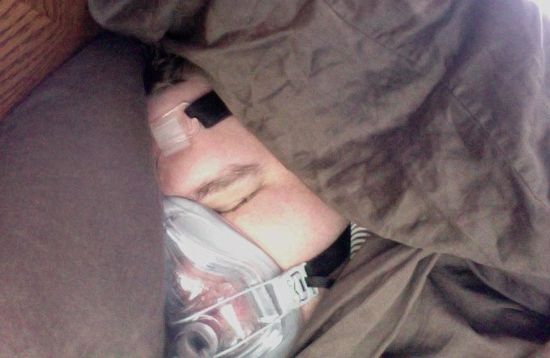
I suffer from sleep apnea so badly that I have episodes of suffocation that wake me up. I have come close to bursting my heart (or at least if felt that way) with the adrenaline rush my body shoots out to make me breathe. I've had my CPAP machine now for over ten years and take it with me everywhere. I am afraid even to nap without it.
Me too. It broke last night. Aaron had to sleep on the floor in the blog-cave. At 6 am, I fixed it with some scotch tape. Aaron slept through the morning. Another:
I know you mentioned how your Aaron first noticed your apnea, but I really can't stress how disturbing an untreated sleep apnea is to a person sleeping next to you.
My last partner had a bad apnea and did not like the way the CPAP machine felt either. When his breathing would stop, I would find myself unconciously sympathetically holding my breath. When it seemed to get excessive, I would jar the bed with my body to knock him back into breathing. And this happened with such frequency it was difficult for me to tune it out enough to fall asleep.
Another:
I just want to thank you for being brave enough to go on national television and show off your CPAP mask. I received my machine last year and have been transformed by the results. No longer am I fighting the urge to nod off at my desk or on the train. I have also discovered that 8 hours of sleep, not 10, is in fact more than enough to survive the day. My only worry has been what people would think if I wore the mask on an overnight flight or what if a future lover might think if I put it on before I go to sleep. It don't think it lends itself well to snuggling or spooning. Now that you have gone onto CNN and showed the world how ridiculous the CPAP mask looks, maybe it's time for me to embrace the mask.
Another:
Thanks to your column, I had myself tested for sleep apnea and it was off the charts. My jaw is very thin, and following a car accident in which I broke my neck and had to take morphine (which makes me sleep harder), I was in the midst of a perfect storm of terrible apnea.
Luckily I live in France, where terrible socialized medicine hooked me up with a machine for free and a technician comes every three months to check on things. I had a hard time getting used to it, but now, after a few minutes, I sleep like a baby. (I do terribly miss smelling my girlfriend sleeping next to me during the night though. That's a big loss.)
Anyway, thanks for turning me on to the thing. My doctors say you may have saved my life (I already had one heart attack, at forty).
Another:
When I hooked up with my partner, I felt so sorry for him that he couldn't get a good night's sleep. With no desire to be connected to a machine, I decided to have the surgery I describe to this day as "The All-American."
Not only did I have my deviated septum corrected, but I also had a tonsillectomy and had my uvula cut out. All at the same time. (There was one other procedure they did, but for the life of me I can't remember what it was.) After my throat healed, I had an interesting outpatient procedure wherein my uvula was "touched up" with a laser. It was an interesting experience to actually smell the scent of my own burning flesh.
Fortunately, I had excellent insurance at the time and it didn't cost me a penny. I also got to live on liquid vicodin for over a month. I still remember weakly begging my partner to "bring me my syyyyruuuup." The only drawback: since the surgery I have been unable to carry a tune. So, karaoke is no longer possible, although I never was a Julie Andrews to begin with, so it's no big loss on my part.
P.S. Best sports bears: Franco Harris and Scott Neidermayer, no doubt. George Best looks creepily like Charles Manson. Surprised they didn't mention Rick Sutcliffe.
Another:
One trick that has worked well during my allergy season has been the use of a neti pot. I was skeptical, but to my surprise it helped a lot.
Another:
My snoring and apnea symptoms went away when I quit eating wheat (so did my seasonal allergies). What has returned is my sense of smell, which had been on hiatus for about 20 years. I'm not one of those militant or trendy anti-gluten goofballs, but I have found the response of my own body to going wheat free nothing short of amazing.
Another:
I've been on the hose for 12 years and couldn't imagine an hour with out it. Had a septoplasty about three years ago and had complications that kept me from wearing the mask for seven days, which were the most miserable days of my life, without a doubt.
I posted your CPAP post here on the cpaptalk forum. You might find this place interesting.
I grew up in Portland, and my initial thought when seeing the map was that Oregon is very independent and libertarian. We don't care about societal pressures or what our neighbors might think. We're going to do what makes us happy and what we think might be fun. And if that includes gay sex, then so be it.
But then my second thought was, "In reality, it's probably because there's lots of lesbians in Oregon."
Another:
I think the answer to your question "What's up with Oregon?" could be answered in one word: Portland. For whatever reason, it seems to be extremely sexually adventurous town. Bisexuality and open relationships don't even raise our eyebrows. Polyamory even edges into the discussion from time to time.
I wish I had some stats on why, but I can only go on my experience. I'm a (99%) straight male that's done more than my fair share of dating and I can't think of a single solidly straight woman I've ever dated here. I've even dated lesbians. How is that possible? You'd have to allow them to explain the complexities of their sexuality because I never got that one myself.
Point is, things that don't fly elsewhere in the country seem to be normal in our little bubble. Also, the percentage of young residents who use OK Cupid in places like Portland is probably much higher than Alabama, the bluest on the OK Cupid map. People tend to settle down early in those parts. The people who escape the South and Midwest (like myself) flee to the coasts – places where being liberal minded about politics, sexuality, and oh, you know, recycling a can, aren't viewed with hostility by their neighbors.
According to a list of the most lesbian-friendly cities, "If Northampton is Lesbianville of the East, Portland is Lesbianville of the West." Guide here.
Our inbox is flooded over this post on absentee voting. A reader writes:
During the 2008 election I spoke with my County Clerk at length about Oregon's unique system. He was a Republican and had once been vehemently opposed to the idea of absentee voting. But after practicing it for a decade, he couldn't stop gushing about how much more smooth and efficient it runs now. Most of the dangers outlined by Tim Lee were also bandied about in Oregon when debating the transition to mail-in ballots, and to the best of my knowledge none of them have actually happened.
I moved to Oregon in 2006 and absolutely love absentee voting. I don't have to worry about making it to a polling place on a busy Tuesday workday. Instead, I have up to a month to make my decision and stick it in the mail at my leisure. This affords me the opportunity to ignore all the last-minute fevered antics by politicos in the last five days as they try to win the very last news cycle and embarrass their opponent with some cutting revelation. Instead of making a "collective decision at the same time on the same day," as you write, I think giving voters the opportunity to make up their own minds at their own pace is a brilliant way to practice democracy.
Another writes:
I just don't get your concerns about everyone voting at once. Election day is already an arbitrary cut off at which point no future events can be taken into account by the voters. What's wrong with having that occur over a month? And how is the harm you foresee not worth getting an additional 10 or 20 percent of the population voting?
Another:
As an Oregon activist who has spent several campaign seasons knocking on local doors and serving in phone banks AFTER the ballots have been mailed, I just want to say your quoted writer's fears on "poor neighborhoods" and abused wives are very much overblown.
Another:
Each mailed ballot in the state contains numerous legal notices that it's a felony to try and coerce or purchase someone else's vote; voters also must sign that that marked the ballot themselves. Two of the scenarios Lee outlines – the boss holding mandatory "voting parties", or the political operative purchasing ballots door-to-door – would likely bring about the heavy hand of law enforcement very swiftly. This sort of large-scale vote fraud would not go unnoticed very long (were someone to show up at MY door offering to buy my ballot, I'd be on the phone to the cops in a heartbeat). A dominant and abusive household member forcing others to vote his way is probably the most plausible scenario, but I suspect that this occurs even with traditional voting (e.g. few battered spouses are likely to have the wherewithal to lie to their abuser about how they cast their ballots).
Another:
As a result of my professional career, I have lived in an voted in several states, including a decade in Manhattan and nearly 15 years in Portland, Oregon, where I always voted by mail. I'm not prepared to say that vote by mail is nirvana for voting problems but it does have several aspects that make it a reasonable option.
1) It is impervious to inclement weather which can be a significant factor in suppressing voter turn out.
2) If your state has ballot initiatives/referendums it makes it easier to cast an informed ballot. Sitting in your home, and with no time pressure using your voters pamphlet, you can work your way through the ballot.
3) You vote at your convenience rather than trying to fit voting in to an otherwise very busy day or contend with unexpected illness, child care or travel issues.
4) It makes it more difficult for candidates to "game" the calendar. Early voting has the same effect. It negates last minute dirty tricks.
Another:
The classic example of a structural barrier to voting is, of course, the soldier serving overseas. Naturally, we cannot expect soldiers, sailors and marines to drive to their local polling place and vote when they are required to be thousands of miles away. So, there are absentee ballots for them. But what about the college student who, as I did, attends college outside his or her home state? Or the disabled person who cannot physically go to the polling place? Or someone who travels for work? In those and in many other instances, otherwise interested voters do not vote because there are too many hoops to jump through. As the South demonstrated during Jim Crow, bureaucratic red tape is a great way to prevent voting. And the people who get caught up in red tape are most likely voters under 30, minorities, and business professionals.
Another:
Sure, Oregon's system has its problems, but voting in person doesn't? The logistics of having to get to a polling place, wait in line, possibly face intimidation/harassment, deal with inclement weather, and balance work and family commitments all on one specific day … I cannot think of a good reason to prefer that to filling something out at your convenience over the course of several weeks. Oregon consistently ranks near the top of the nation in voter turnout. The best numbers I could find after a quick google search put us 6th in the 2002 election.
What I cannot understand is why we don't have internet voting yet. Oh sure, there are all sorts of security issues. But if I can file my taxes and get a credit report online by answering a few simple questions, why can't I log onto vote.gov or something, enter in my SSN, address, mother's maiden name, and cast my ballot from wherever I happen to be at that time? It'd probably be safer and more reliable than the Diebold machines that are easily defrauded and don't even give you a receipt.
The military is holding off on DADT discharges for the moment, as the Obama DOJ appeals the injunction. Ed Morrissey argues this could be the end of the ban:
[L]et’s say for instance that the [DADT] injunction is upheld and it takes a couple of years for the core case to get to the Supreme Court, where everyone expects this to be decided. If the Pentagon has lifted DADT for two years and the military has not suffered any notable ill effects from its gay and lesbian members serving openly, how likely will it be that the Pentagon will reinstate the old policy? Congress will be under pressure to maintain the new status quo if no problems arise from it, and if Obama is still in office, he will press Congress for action to rescind DADT. In fact, he will have more latitude in doing that with Republicans in charge, since Obama won’t have to worry about embarrassing the Democratic leadership of the past two years on the subject any longer.
I don't think the injunction will be upheld. But this is an interesting and plausible scenario if it is.
Greenwald compares the War on Drugs to the War on Terror:
These wars, in an endless loop, sustain and strengthen the very menaces which, in turn, justify their continuous escalation. These wars manufacture the very dangers they are ostensibly designed to combat. Meanwhile, the industries which fight them become richer and richer. The political officials those industries own become more and more powerful. Brutal drug cartels monopolize an unimaginably profitable, no-competition industry, while Terrorists are continuously supplied the perfect rationale for persauding huge numbers of otherwise unsympathetic people to join them or support them. Everyone wins — except for ordinary citizens, who become poorer and poorer, more and more imprisoned, meeker and meeker, and less and less free.
 The Dish