When [Coke and Pepsi] were offered unlabeled, the dopamine reward pathway became active. This makes sense: the pathway helps process appetitive rewards, like sugary drinks, which provide us with a rush of sweet pleasure. However, when the subjects drank a cola with a Coke label, an additional set of brain areas became extremely active. The DLPFC, hippocampus and our midbrain emotional areas reacted strongly to the red cursive of Coke, but not to the blue Pepsi logo. (This happened even when subjects were given Pepsi with a Coke label.) … The end result is a strong preference for Coke, even though it tastes identical to Pepsi. …
Mexican Coke has become my Coke.
I see that glass bottle and I’m flooded with all sorts of dopaminergic associations, those smug feelings reminding me that I don’t drink that generic high-fructose corn syrup crap. I drink the real stuff, the cola made with old-fashioned sugar. But those associations are almost certainly an illusion – my tongue is too crude a sensory device to parse the difference between Coke and Pepsi, let alone between slightly different formulations of the exact same drink.
Alexandra Pajak, a grad student at the University of Georgia, has translated the HIV virus into music, "assigning different pitches to the different DNA sequences." You can listen to different tracks here. David Post hypothesizes:
From the snippets available, it sounds pretty good (especially for such a nasty little micro-organism). And it raises the question: With all of the recent controversy surrounding the patentability of genetic sequences … perhaps we’ve been barking up the wrong tree (as it were): DNA sequences are copyrightable “musical works”!!
Wray Herbert reports on new research that shows the biological root for our self-control is the same as that found in dogs:
It appears that the hallmark sense of human identity—our selfhood—is not a prerequisite for self-discipline. Whatever it is that makes us go to the gym and save for college is fueled by the same brain mechanisms that enable our hounds to sacrifice their own impulses and obey.
Coco Chanel gained … much praise in socialist fashion media. Although Chanel might have seemed an unlikely comrade for socialist fashion, she was a natural choice in that she was merely perfecting, season after season, the smart woman’s work suit that she had designed in the mid-fifties. Of course, women under socialism could not afford a Chanel suit. They could not even find similar styles in the shops. Instead, they were advised to crochet their Chanel suits themselves.
We could go all the way with the Matrix thing. Hook the chickens up to a giant cybernetic simulation that makes them think they’re living the chickeny good life. How much processing power does it take to make a chicken happy, anyway? It’s not like we’re going to have to re-create Renaissance Florence. Once you get the grass- and worm-simulation subroutines going, you’re 90 percent of the way there.
If virtual reality is an acceptable substitute for what we assume is the real world, then why insist on eating actual dead birds? … That’s why I am patenting, then waiting for someone else to invent so that I can sue them, VR: The Vegetarian Restaurant. Everyone gets a knife, a fork, a plate of spackle-grade tofu and a VR helmet that convinces them they’re eating whatever their inner carnivore desires, from wine-poached chicken breast to vivisected velociraptor.
Christopher Werth recognizes the success of giving aid money directly to the poor, without conditions:
[T]he most effective help [Cape Town's Zanele Figlan] receives is the $1 a day the government provides for each of her two youngest sons, which amounts to more than double her monthly income and allows her to make sure they’re well fed. It also means she can afford to send them to a reputable school in a wealthier part of the city, something that was previously unthinkable.
At first glance, simply handing out cash to the poor may seem naive. When cash-transfer programs, as they’re known in the parlance of international aid, first rolled out in Latin America in the 1990s, they were met with skepticism, especially from development agencies more intent on structural reform than redistributing wealth. More than a decade later, however, evidence shows that even modest payments grant the world’s poorest the power to make their own decisions; it also indicates that they make smart choices, especially on matters of health and education.
Today on the Dish, Andrew outmaneuvered Josh Marshall on freedom and weed, and countered Cowen and McArdle on whether children change the equation. Sullum considered the employment provision of Prop 19, while ironically Mendocino county voted against it. Rob Kampia promoted Prop 19 on the ballot for 2012, and Scott Morgan seconded the idea. Andrew responded to Greg Scoblete on aid to Israel, the US was addicted to monetary heroin, and the Dish hoarded reax to the October employment report.
Sarah Palin denied she favorited any tweets on purpose and then they all disappeared. Douthat realized the "limits of Palinism,"Kondracke announced them, and Peggy Noonan joined the chorus by calling her a nincompoop. BP failed their maintenance test in Alaska, Olbermann got suspended indefinitely, and Fox got away unscathed. Larison couldn't foresee a 2012 run by Gary Johnson, polls can't be trusted, and Republicans proposed an agenda of no. Serwer dissected the Latino vote, readers pushed back on gerrymandering, and proposed that Thomas Jefferson preceded Lincoln on taxing the rich. Americans needed healthcare reform for their health, and Ta-Hehisi downsized Americans for blaming their problems on someone else.
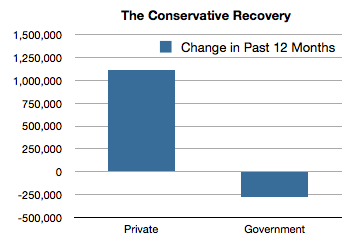
We breathed easy and popcorn popped, the phone book killed privacy, and Hitchens wrote the handbook on cancer etiquette. Julian Sanchez uncovered the key to our obsession with American exceptionalism and Jessanne Collins revealed why the web is filled with crap, though reality television wasn't far behind. MHB here, VFYW here, Malkin award here, Yglesias award here, quote for the day here, dissents of the day here, chart of the day here, FOTD here, and Andrew's Leibovitz gap ad here.
Thursday on the Dish, Andrew argued the lack of a real existential threat from Iran in the third installment of Debating Israel-Palestine. Palin advertised for 2012, with a rising sun that is actually setting in reverse, and Tina Fey dusted off her impression. Palin vowed to never be vulnerable to "lamestream" media (of her choosing), Christianists dressed up in Tea Party clothing, and Bristol Palin can't dance but she could win by trying really hard. James Joyner eyed the 2012 front-runners, and Fox didn't want Christine O'Donnell for a news contributor.
Limbaugh's ranting ran counter to Abraham Lincoln and Adam Smith on tax cuts and Obama could be the black Eisenhower. Americans still badly needed jobs, Steve Pizer and Austin Frakt don't think Republicans will repeal healthcare and Dana Goldstein agreed with Obama that education could offer fertile ground for bipartisanship. Reihan supported Paul Ryan's take on taxes, and Ari Fleischer didn't want to ruin chances for spending cuts in 2012 by enacting legislation now. Rudy Giuliani wanted the Republicans to kill DADT already, readers sounded off on redistricting, and Gallup's poll was worse than Rasmussen's.
Kevin Drum looked on Prop 19's bright side, Yglesias joined him, while readers reacted more strongly. Kanye was feeling for Dubya, and with more civility than cable news, Bloggingheads loved to yell at each other. Ugly mugs fell in love, Alex Balk died a little for the McRib, Annie Leibovitz's photography isn't very expensive, and a niche blog of autocorrects made us laugh. Chart of the day here, Yglesias award here, VFYW here, quote for the day here, MHB here, and FOTD here.
By Alex Wong/Getty
Tuesday and Wednesday for the election, Andrew live-blogged the bloodbath. Rolling coverage of incoming results here, here, here, here, and here. Silver waged war on Rasmussen, and a hefty collection of projections to refudiate are here, here, here, and here. Highlights included O'Donnell's loss and and Alaska humiliating Palin. Yglesias and Karl Smith assessed Palin's 2012 prospects, and Douthat and Andrew joined the chorus for not nominating lunatics. Batty Paladino went down like Al Capone, the base believed Obama doesn't dress "properly," and Packer predicted the next two years won't be pretty.
Some readers dissented over Prop 19 and some defended it, even as it crashed and burned – thanks to the generation gap. We tracked the full reax to its official death, with readers weighing in, and kept an eye on the other state pot initiatives. Jacob Sullum remained positive that Prop 19 helped prove the intellectual bankruptcy of prohibition (elsewhere, San Francisco banned the happy meal).
Frum fisked Boehner and McConnell for their second-hand radicalism, Douthat reminded the GOP to at least try to pass some laws, and Wilkinson seconded Brennan's advice on voting well or not voting at all. Ambinder looked to future legislation, Saletan singled out Boehner's lack of agenda, and the rest of Speaker Boehner reax is here. Meanwhile, the GOP geared up for hearings on the "scientific fraud" behind global warming, and Kinsley mocked Americans for wanting their fat-free chocolate cake politics. Judis asked if we're now Japan, while a first former Real World cast member was elected. Steven Taylor wanted to know what would have to happen to prove the Tea Party's influence on the GOP and Boris Shor fingered the moderate Republicans in the wave. Ackerman eyed McCain's newly elected hawks, and the congressional elections impacted the drumming war machine against Iran. McWhorter gushed over Marco Rubio, and Angle turns out to have mobilized the Hispanic vote. A reader reported on the other big prop in California, redistricting updates here, and readers reactions to the election here.
Monday on the Dish, Andrew lambasted Palin for wanting to be both "Republican Queen Estherand the Tea Party's Joan of Arc," when in reality she most closely resembled the Snooki of the Republican party. Andrew offered thanks that the FedEx bombs didn't work, and that the federal government's system basically did. Andrew thought the Dems showed more promise on fiscal responsibility than the GOP, and Reagan in '83 sounded a lot like Obama today. Andrew argued with readers over the rally's silent plurality, and Muslims rallied (with signs) and helped fight terrorism.
On the cresting election wave, Sam Wang made his predictions, Cook's here, Nate Silver explained how the GOP may outperform expectations, and Louis Masur hearkened back to history. Fallows thought divided government would kill clean tech, Douthat doubted the importance of immigration, and Evan Osnos read the tea leaves from Beijing. Joe Miller could ride the coattails of the enthusiasm gap, Reid could be ruined by it, and O'Donnell blamed Ladybug-gate on her opponent. Chait, Gelman and Drum debated the stimulus' repercussions on the election, and the Tea Party flunked history. Larison and Avent sorted out the GOP's war machine on Iran, and Larry Ferlazzo cautioned about turning beliefs into principles. We kept an eye on another sane conservative idea on social security and the retirement age, David Vitter didn't want to pay for tax cuts, and Alaskan governor Sean Parnell didn't want to speculate on the age of the earth. On the global front, the foreign press loved to hate the Tea Party, Google wanted to dominate the African market, and the Israeli loyalty oath sparked debates about the country's particularistic worldview. Inside Iraq griped on power price hikes, and the drug war in Mexico was less about drugs than about crime, according to Yglesias.
Zach Galifianakis toked up on television, Prop 19 made a last dash for victory, and Sullum showed why if alcohol wasn't always as bad as heroin, neither was pot. Economies loved delusional participants, Walter Kirn loved nachos on roadtrips, and buying little things made people happy. A megachurch pastor came out of the closet, we wished Bloggingheads a happy birthday, and sometimes nothing could be a real cool hand. No Shave November began, and Stephen Fry, speaking for all men, loved sex more than women. Global reality check here, scariest Halloween pumpkin here, quote for the day here, VFYW here, FOTD here, MHB here, and dissent of the day here.
Encounters with fans, friends, and family have made Hitchens "wonder if perhaps there was room for a short handbook of cancer etiquette":
It’s normally agreed that the question “How are you?” doesn’t put you on your oath to give a full or honest answer. So when asked these days, I tend to say something cryptic like “A bit early to say.” (If it’s the wonderful staff at my oncology clinic who inquire, I sometimes go so far as to respond, “I seem to have cancer today.”) Nobody wants to be told about the countless minor horrors and humiliations that become facts of “life” when your body turns from being a friend to being a foe: the boring switch from chronic constipation to its sudden dramatic opposite; the equally nasty double cross of feeling acute hunger while fearing even the scent of food; the absolute misery of gut-wringing nausea on an utterly empty stomach; or the pathetic discovery that hair loss extends to the disappearance of the follicles in your nostrils, and thus to the childish and irritating phenomenon of a permanently runny nose. Sorry, but you did ask … It’s no fun to appreciate to the full the truth of the materialist proposition that I don’t have a body, I am a body.
On November 5, 2010, about 100 km east of Montevideo, Uruguay, Richard Tesore, director of the 'SOS Fauna Marina' holds a baby dolphin in a pool . The little dolphin of about 10 days was found by tourists, apparently showing marks of a fishing net. By Miguel Rojo/AFP/Getty Images.




 The Dish