How Beliefs Change?

Dave Roberts has a theory:

Beliefs tend to be reverse engineered, as it were: People tend to construct an identity around what they (and their tribe) do. That suggests that they will only construct a different identity when they start doing different things. So imagine the same guy who rejected human-caused climate change in the poll.

Imagine that bike riding were made convenient and useful enough that he started doing it. Imagine that his neighbors started getting solar panels, to the point that he felt pressured to do it, and he became a power producer. Imagine he's in the military and his platoon started insulating their tents and carrying solar water purifiers.

Next thing you know, he's a guy who uses solar power and rides a bike. His behavior has changed, so he's telling a different story about himself. That new story, that new identity — the guy who rides a bike and uses solar power — is much more likely to incorporate climate change concern than the previous one.

Hacking At Hacks

Pareene is on a roll, calling out pundits he despises. Here he is on Marc Thiessen:

While the worst thing about Thiessen as a person is his unequivocal support for torture, the worst thing about hiring him to pen an Op-Ed column is that he's a boring, predictable columnist. The man got famous for arguing that plainly illegal treatment of prisoners is in fact both legal and necessary, and then he writes columns about how earmarks are bad. It's like telling Torquemada to film a TV pilot and he comes back with a three-camera sitcom about a lovable fat guy dealing with family life. 

As Russia Forgets Tolstoy

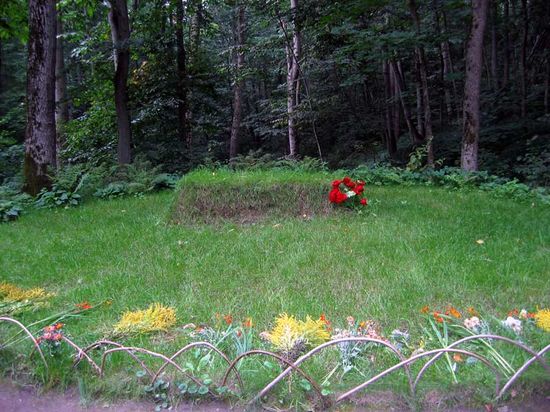
Tolstoy_grave

Prospero revisits the great writer's last days and looks sadly at the country he loved:

Devastatingly, but perhaps unsurprisingly, the 100th anniversary of Tolstoy’s death is hardly marked in Russia. Tolstoy was a man who opposed state violence, who considered the Church’s union with the state as blasphemous, who denounced pseudo-patriotism, and who wrote to Alexander III asking him to pardon those who assassinated his father. These principles are firmly out of fashion in today’s Russia. By turning Tolstoy into an icon, the Soviets ultimately hollowed him out.

A recent political manifesto published by Nikita Mikhalkov, one of Russia’s most odious, wealthy and Kremlin-favoured film directors, is a good example of the country’s dreary move away from Tolstoy’s ideals. Called “Right and Truth”, the 10,000-word call for “enlightened conservatism” draws on the ideas of Konstantin Pobedonostsev, one of Russia’s most reactionary thinkers, who viewed Tolstoy as one of his most dangerous enemies. (He once denounced democracy as "the insupportable dictatorship of vulgar crowd", and saw Tolstoy’s non-violent resistance as a real threat.) As a senior figure in the Church, Pobedonostsev helped to initiate Tolstoy’s excommunication. In 1899 the Holy Synod banned all prayers in Tolstoy’s memory after his death.

A hundred years after Tolstoy’s death, this ban feels very much in place in Russia today.

(Photo: Tolstoy's simple grave.)

Losing Our Fear Of 9/11

Mark Thiessen regrets it:

Can any of us imagine the debate we’ve had in recent weeks unfolding in the days immediately following Sept. 11, 2001? Would any of us have objected to the deployment of millimeter-wave scanners had the technology been available then? The current uproar could happen only in a country that has begun to forget the horror of 9/11.

Conor pounces:

Isn’t that something? In Mr. Thiessen’s view, decisions are best made by putting ourselves in the sort of mindset we had just after watching Al Qaeda murder thousands of our fellow citizens, as if only the immediate aftermath of a terrorist attack affords the clarity necessary to make smart policy. Should time pass, affording emotional distance that puts the threat of terrorism in perspective, he sees it as a bad thing. And an argument is apparently disqualified if on 09/12/2001 it would’ve proved unpopular.

Yglesias has related thoughts.

Ahmadi In Peril?

Reza Aslan keeps hope alive:

The country’s right-leaning parliament did in fact attempt to impeach Ahmadinejad on 14 counts of violating the law, including illegally trading 76.5 million barrels of oil valued at approximately $9 billion and withdrawing nearly $600 million from Iran’s foreign reserve fund without parliamentary approval. These are serious charges that would lead not only to impeachment but, possibly, to arrest and imprisonment. However, according to reports from a number of conservative newspapers in Iran, lawmakers were kept from bringing the impeachment charges to a floor vote through direct interference by none other than the supreme leader himself, Ayatollah Ali Khamenei… On Monday, lawmakers started circulating a petition to begin openly debating his impeachment. They need 74 signatures to proceed. Thus far, they have received 40, and counting.

Part of the mess is due to Ahmadinejad's dictatorial flouting of parliamentary prerogatives; but part is also due to the remarkably successful sanctions regime Obama relentlessly put together.

What China Won’t Do

Evan Osnos says that getting China to lean on North Korea isn't likely:

By the morning after North Korea’s most serious artillery attack on the South in decades, the unofficial American consensus had coalesced around a clear, unsurprising, and ostensibly comforting position: “The United States and its allies should hold Beijing responsible for putting a stop to Mr. Kim’s dangerous behavior,” as the Washington Post editorial page put it. The Times agreed: “China … has the best chance of walking the North back from the brink. It must take the lead.”

Now that this is settled, there’s only one problem: China doesn’t want to take the lead, and chances are that it won’t anytime soon. Adopting that as the ultimate goal of international strategy is probably a recipe for non-action.

Greg Scoblete doesn't think China has all that much power over the Hermit kingdom:

It's possible for China to really pressure the North by cutting off aid, but, as Jian notes, fears of a refugee flood and the prospect of an American military presence directly on their border has thus far stayed China's hand.

Shut Up And Sing: Michael Jackson

A reader writes:

MJ has too many to count, but "Earth Song" definitely takes the prize as the absolute worst. The music video shoves every source of liberal guilt in your face. Trees are brought down by evil bulldozers. A de-tusked elephant lies dead in a valley. Soldiers and tanks occupy a decrepit town. All this and more, while sad, innocent natives look on helplessly.

Luckily none of it matters since MJ and the natives shove their hands into the dirt and everything conveniently springs back to life. In case you still don't get the message (which is … what exactly?), MJ then sings "What about [fill in the blank]" for two full minutes.

Those lyrics after the jump. But first another reader:

The live performance at the 1996 Brit awards is far more worthy of hathos, with Jackson silhouetted against the Earth, grabbing his crotch while bathed in blinding light, surrounded by throngs of the diverse and/or destitute (as well as an ass fanning invasion by Jarvis Cocker), and embracing young and old while striking his best Jesus Christ pose.

Hey

what about yesterday
(What about us)
What about the seas
(What about us)
The heavens are falling down
(What about us)
I can't even breathe
(What about us)
What about everything
(What about us)
I given you
(What about us)
What about nature's worth
(ooo, ooo)
It's our planet's womb
(What about us)
What about animals
(What about it)
We've turned kingdoms to dust
(What about us)
What about elephants
(What about us)
Have we lost their trust
(What about us)
What about crying whales
(What about us)
We're ravaging the seas
(What about us)
What about forest trails
(ooo, ooo)
Burnt despite our pleas
(What about us)
What about the holy land
(What about it)
Torn apart by creed
(What about us)
What about the common man
(What about us)
Can't we set him free
(What about us)
What about children dying
(What about us)
Can't you hear them cry
(What about us)
Where did we go wrong
(ooo, ooo)
Someone tell me why
(What about us)
What about baby boy
(What about it)
What about the days
(What about us)
What about all their joy
(What about us)
What about the man
(What about us)
What about the crying man
(What about us)
What about Abraham
(What was us)
What about death again
(ooo, ooo)
Do we give a damn

Aaaaaaaaah Ooooooooh

A Massive HIV Breakthrough, Ctd

A reader writes:

There are other realms in which Truvada is being used for HIV prophylaxis.  I'm a dental student who sees patients daily for treatment.  This past summer, I accidentally stuck myself with a needle that had been used with an HIV-positive patient. 

No matter the precautions we take during injections, accidents happen.  Thankfully, my school has a fund set up where I could get immediate, free testing for Hep B, C and HIV. Although my risk was minimal, I was put on a month's course of Truvada. 

I have had followup bloodwork done at the six week and three month marks, and am advised to follow up at the six and twelve month marks, as well.  These check to see if my immune system is making any antibodies to HIV, which would suggest I have been infected.  As you mentioned in your post, the Truvada significantly reduces the chance of that infection.

All I can say is that for $100 in copay (I thankfully have insurance, as is required by my state and therefore included in my tuition estimate unless I opt out), I have peace of mind that Truvada significantly reduced the chance of my own infection, as well as my fiance's and our future children's.  Pretty fantastic breakthrough for many, many populations of people who are at risk of an HIV infection.

Another writes:

Thanks for the piece about the exciting Truvada study on PrEP.  But I also have to point out that an equally exciting discovery was published a few weeks ago and has not received as much news: "Researchers Unravel a Secret of HIV Controllers".

I have been positive for almost 11 years and have never taken any medications. My viral load is low (not undetectable) and my Tcells stay in normal range (600-1200) on their own. I've participated in as many research studies as I can in San Francisco, Sydney and now at the NIH.  I've also contributed to the study above on HIV controllers. 

From my perspective, giving fourteen vials of blood every couple of months to research is a small price to pay for being fortunate enough to not have to take HIV meds.  I'm grateful every day to be less than 1% of the population of HIV positive folks who controls the virus on their own. I've also chosen to work in peer support for newly diagnosed gay men and harm reduction programs at the cost of my own career. It feels like I am meant to give back.