Why Name Recognition Won’t Save Romney

Bernstein explains the primary process:

[T]hose who do succeed early will receive (and generate) plenty of publicity, more than enough to make them household names.  So, when you do see early primary polling, remember that name recognition is a big factor in the results so far — and that by the time the voters get involved, that factor will wash out.  

The Daily Wrap

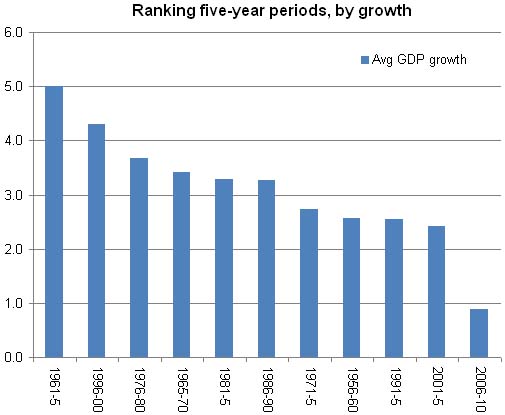
Today on the Dish, Andrew credited the Mormon church for their shift on homosexuality. The mayor of London excoriated Bush on torture, and because he tortured detainees, we can't convict them. But that doesn't mean we should send them to a military commission. Poorer countries were catching up with their richer counterparts, and Mexican journalists couldn't afford to report on cartel violence for fear of their lives. Hani Mansourian made the case against sanctions in Iran, and Joel Wing examined the state of doing business in Iraq.

Andrew joined Michael Goldfarb in riding the GOP to attack the deficit like the Tories have. Lee Drutman undressed the politics of earmarks, Chait fell for the other deficit plan in town, and Jim Cooper didn't have a happy ending to offer Americans. The GOP's solution to the deficit was to cut NPR's funding, and after that, to go after Historic Whaling. We monitored the horserace with Nate Silver on favorability rankings, and James Rydberg's survey illuminated what we think of politicians' character. Alex Massie was pumped to have Limbaugh moderate a GOP debate. Bryan Fischer argued that Jesus kicked ass on the cross and that we should award our soldiers for killing the enemy, not saving lives. Bullying continued as far up as the Catholic church, and rich people could one day do prison time out in the real world.

Palin lashed out at intellectuals (i.e. the Fed), but we remembered how nonsensical she was on the bailout. Palin's "self-sufficient" bears loved to scavenge other people's trash, and Palin still believed she was a victim despite her fame and fortune. The real DWTS fans were outraged about Bristol, and Andrew wasn't ready to give Willow a free pass on "faggot," even while some readers defended her. And even Tripp Palin's aunt wondered why Palin wouldn't put the Trig rumors to rest.

The web was destroying cable, tweets were worth more than you think, women were greener than men,  and readers loved to support the bloggers they love. Sullum saluted Four Loko and bemoaned the nanny state that killed it, and Aaron Carroll warned that we're all expecting too much from the healthcare reforms. Michele Leonhart disappointed, premature ejaculation was evidence of natural selection, and Andrew wanted scanners to find explosives in someone's taint. Chart of the day here, all the secret words here, VFYW here, Malkin award here, quote for the day here, FOTD here, MHB here, and dissents of the day here.

–Z.P.
The Case Against Sanctions

Hani Mansourian fears they will backfire in terms of regime change in Iran. His piece is worth a read. Citing Iraq and Zimbabwe, he notes:

As a result of these devastating effects on the general population, social cohesion and a sense of community greatly deteriorated in both countries, in turn decreasing the likelihood that the massive popular uprising Western governments had hoped would be inspired by these economic sanctions would ever occur…

He fears the same could happen in Iran:

Many years of sanctions coupled with sub-optimal economic policies in Iran have resulted in a weak economy and a fragile middle-class. The latest round of UN, U.S., and EU sanctions on Iran is likely to drive millions into poverty and destitution. As economic opportunities for the growth of a solid middle-class disappear, the young Iranians that have historically been the agents of change in the country will lose their social base.  Ironically, then, sanctions may do more to increase the power of the Iranian government and to weaken the domestic opposition movement, to the ostensible detriment of U.S. interests

The Greener Sex

Women win:

As with the European study, the most significant difference between the genders came in the transport category: Single men's driving habits have a carbon footprint of 13 metric tons of CO2e, compared with women's 9.4 tons.

After that, the most important differences, from a greenhouse gas perspective, were that single women spent more on home utilities and health care, and single men spent more on alcohol, tobacco, and education.

Lisa’s Primary Lesson

Nicole Allan looks back on the incredible comeback of Lisa Murkowski, who becomes only the second person, after Strom Thurmond, to win a Senate seat as a write-in:

Once Murkowski announced her [Independent] candidacy and released an ad explaining to Alaskans why she was running this way, the true craziness began. Minority Leader Mitch McConnell asked her to resign from Senate leadership, and the Republican caucus met to discuss stripping her of her rank on the Energy Committee (which they did not end up doing). In a matter of weeks, Murkowski morphed from one of the highest-ranking, most secure Republicans in the Senate to a party pariah risking her career on what many viewed as a pipe dream.

Her team buckled down on logistics, explaining the write-in process in clever ads and making bracelets with her name that voters could wear into booths. Murkowski firmed up her relationship with native groups, who provided vital support heading into November. The senator also received some help from Miller, whose past reliance on entitlement programs, admission of being reprimanded as a state employee, and combative relationship with the press surely soured some borderline voters on him.

Jay Newton-Small runs through more reasons for her victory:

As I've written before, Murkowski benefited from a sense of panic in the Frontier State from anyone who receives federal money. As the most highly subsidized state in the union — each Alaskan gets, on average, $9,000 a year from Washington — that's a LOT of votes.

Miller, meanwhile, won't let go.

Doing Business In Iraq

Joel Wing examines the hurdles:

In the World Bank’s “Doing Business 2011” report, Iraq was ranked 166 out of 183 countries.

The World Bank found that hiring and firing workers was rather easy, and their pay relatively low at an average of $115.50 per month for a 19 year old. The problems came with starting and ending a firm in the country, and trading goods across borders. Iraq was ranked 174 out of 183 in ease of starting a business. There are 11 procedures companies have to go through that on average take 77 days to complete. There are 14 steps to get a construction permit, that take 215 days to finish. Registering a business on the other hand, was about average in the world, ranked at 96 out of 183, with only five procedures, taking 51 days. Getting credit was difficult, with a rank of 168 out of 183. Legal rights, protecting investments, and enforcing contracts were weak, while taxes were minimal. When it came to ease of closing a business Iraq was the worst in the world at 183 out of 183. Importing and exporting were also difficult and costly. Ease of exporting was ranked 179 out of 183 with ten documents taking 80 days, and a cost of $3,550 per container. Papers for importing took an average of 83 days and bringing in a container costs $3,650. Iraq ended up with the worst mark of any nation in the region.

Prisons Without Walls

Andrew Gelman wonders what we should do with financial fraudsters and other non-violent criminals:

What's the point of putting nonviolent criminals in prison? As I've said before, I'd prefer if the government just took all these convicted thieves' assets along with 95% of their salary for several years, made them do community service (sorting bottles and cans at the local dump, perhaps; a financier should be good at this sort of thing, no?), etc. If restriction of personal freedom is judged be part of the sentence, they could be given some sort of electronic tag that would send a message to the police if you are ever more than 3 miles from your home. And a curfew so you have to stay home between the hours of 7pm and 7am. Also take away internet access and require that you live in a 200-square-foot apartment in a grungy neighborhood. And so forth. But no need to bill the taxpayers for the cost of prison.

How does Gelman expect the average non-violent criminal to support himself under those conditions? It's not as if the formerly incarcerated have an easy time getting work. Adam Serwer flags a new report that provides some hard data:

Given the number of ex-offenders and the best estimate of the associated reduction in employment suffered by this population, our calculations suggest that in 2008 the US economy lost the equivalent of 1.5 to 1.7 million workers, or roughly a 0.8 to 0.9 percentage-point reduction in the overall employment rate. Since over 90 percent of ex-offenders are men, the effect on male employment rates was much higher, with ex-offenders lowering employment rates for men by 1.5 to 1.7 percentage points. Even at the relatively low productivity rates of ex-offenders (they typically have much less education than the average worker), the resulting loss of output that year was likely somewhere between $57 and $65 billion.

What Tweets Are Worth

Felix Salmon crunches the numbers:

Twitter … jealously guards access to its full stream of tweets (roughly 1,000 per second, these days). As of now, however, it’s signed a deal with Gnip whereby you can get a randomly-selected 50% of those tweets for $360,000 a year, which works out at $30,000 a month. You’re not allowed to republish them, but that’s OK—the people willing to spend that kind of money are likely to be high-frequency trading shops who want to keep the data as private as possible in any case.