The Church And Time

Ryan Hamm describes what he has learned from the church about how to engage the passage of time:

It was a subtle, but meaningful shift when I began to learn about the church calendar. I saw how our everyday lives were, in fact, framed by a way of thinking that meant more than eight hours of work. And the church calendar instructed me that each part of life was savored and used, not discarded in favor of something more palatable.

To a great extent, the church calendar is the reason I learned to sit in mourning (though never hopelessly) instead of demanding that everything be fixed right away. It’s why I learned that Easter is so much richer when you’ve gone though the joy of Palm Sunday, the reflective servanthood of Maundy Thursday, the ache and horror of Good Friday and the weird in-between of Holy Saturday. It’s why I came to treasure the Sunday liturgy that takes us through confession to absolution to the receiving of Christ’s body broken for us and his blood shed for us.

And it’s why my December turned into Advent..

But Advent is also dramatic irony. Because we have to pretend to wait for something that we know has already happened. We know the end of the story. So it's even more ritualistic a waiting, which means an even more contingent relationship with time. And in a way, because the church's calendar follows the same path, in slightly different ways, each year every year, all of it is about waiting, living in time in expectation of something out of time.Which is why it's all, in the end, ritual – the only way of living on earth that has any real approximation of existing out of time.

Longtime readers know how much I can't stand Christmas. A lot of it has to do with bad memories/traumas growing up that are best left between me and my therapist. But some of it has to do with the gap between the meaning of Christmas in a Christian as opposed to a pagan sense. What we are supposed to be waiting for in Advent is the intervention of the force behind the entire universe into human history. I find this idea – the Incarnation – so fantastic a doctrine, so immense and profound a concept that the whole idea of celebrating it by eating, drinking, visiting airports, watching TV and giving presents is just, well, weird.

Of course, I'm not sure how one can adequately celebrate God's sudden appearance on the edge of the Milky Way two millennia ago. But Advent seems much more doable than Christmas to me.
When Less Freedom Is More

Mark Vernon on marriage:

Think of the business of falling in love. In a city like London, the choice of potential lovers is almost infinite. And yet, the proliferation of online dating sites suggests that anxiety about finding a partner is booming. Why is there this contradiction? [Philosopher Ivan] Illich would diagnose that we’re trapped in a cultural confusion: we’re encouraged to think relationships are about making the right choice, when actually they’re about making a commitment.

The Future Of Online Ads?

David Zax reports on a new type of YouTube ad that allows you to skip or fast forward:

Viewers were presented with a pop-up video featuring a large "fast-forward" button. Click it once, and the ad accelerates rapidly, while a hurried voice gives an elevator-pitch version of the message the ad intends to communicate. … The future of online video advertising, then, may look something like the the typical Tivo experience: more minutes of ads, all seen in a rushed blur–though this time around, with branded audio to make sure the viewers catch at least some of the content they're trying to skip.

The Myth Of Tokyo Rose

Vorjack responds to Hemant Mehta's challenge to find another historical figure (besides Jesus in his estimation) that may not have existed. Vorjack recounts the history of Tokyo Rose, the "siren of the Pacific, calling out to the lonely American servicemen in a sultry voice, carried by Japanese radio waves … [who] taunted them, insulted them and foretold their eventual demise":

[W]hat interests me is the way in which memory was constructed. Somehow, in the pressure-cooker atmosphere of the war, rumors had become reported facts. The stories told by the GIs were picked up by the media, and Tokyo Rose became a real character to the American public.

What Maps of China Reveal

Fallows:

This cable, in particular, discusses the Chinese government's requests to the U.S. government, to make Google fuzz up or alter some of its Google Earth imagery, to avoid revealing "sensitive" locations. This is a longer discussion for another time (previous mention here or here), but the perceived subversive power of maps and satellite images in many societies is profound. For instance, as I've mentioned before, Google Earth shows a gigantic airport on the west side of Beijing (right) that I have never seen on a Beijing city map. I've meant for months to do a post about the odd aspect of online satellite imagery of China: if you go to a site with both a "map" and a "satellite" view and click back and forth, you'll see that they don't exactly match. There's an offset built into almost all of them. Main point: the cables show that the Chinese officials are well aware of what these images can mean.

Face Of The Day

107295346

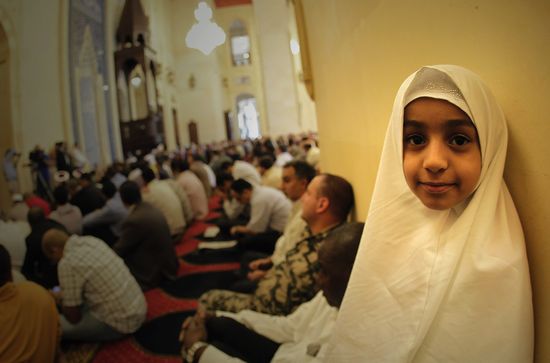
A Lebanese Muslim girl stands near men praying for rain at Mohammed al-Amin mosque in downtown Beirut on December 3, 2010. The special Muslim prayers known as Salat al-Istisqa – a ritual practiced since the time of the Prophet Mohammed – are frequently held across the Middle East, where water is a precious resource. By Joseph Eid/AFP/Getty Images.

Dark ≠ Deep

Peter Steinfels questions reviewers who praise the new Harry Potter movie for its darkness:

Dark means serious. Dark means shadows. Dark means not evading the sad and inexplicable complexities of life—or even worse. Dark is grownup. … Profound = deeper = darker. I understand the subterranean metaphor. But could we turn it around? What of the image of light? Though darkness is inescapable in our faith, could we write, even if somewhat paradoxically, that a poem touched a deeper, brighter place than any before it?

A Poem For Sunday

107228791

"Psalm" by Mark Jarman first appeared in The Atlantic in June, 1997:

Lord of dimensions and the dimensionless,
Wave and particle, all and none,

Who lets us measure the wounded atom,
Who lets us doubt all measurement,

When in this world we betray you
Let us be faithful in another.

(Image of steel workers at Ittehad Steel Mill in Islamabad, Pakistan on November 30, 2010. by Carl De Souza /AFP/Getty Images)

Breaking Up With Hotmail

Jack Shafer pens a Dear John letter:

I have never been embarrassed to have a Hotmail address—something I can't say about my AOL account. In fact, I wouldn't be writing this today if Hotmail had stuck to being Hotmail. But no, these days it wants to stand between me and the entire Web, monitoring my every step. When I sign on to collect Hotmail, it immediately starts hectoring me to connect my account to Facebook, MySpace, and LinkedIn. It implores me to "Share something new" with people in my network. It begs me to upload photos. Right now, the opening page of Hotmail is alerting me to the upcoming birthday of somebody I don't even know.