A Question Of Character

by Zoë Pollock

In an interview with Meg Pokrass, Daniel Handler rants against the idea of "likeable characters" in fiction:

Characters are in books; you’re not going to have lunch with them. Moreover, the best books are full of trouble, so the characters are either in trouble or causing it. Most people aren’t likable in such situations. … It’s like saying that the great thing about Kind Of Blue isn’t Miles Davis, but the trumpet itself. Such a compelling instrument!

Thus, character is bunk. There is plot, and there is voice, and they conspire to create an illusion we call “literature.” It is a glorious illusion and a compelling one. When a writer tells me they’re worried about a character they usually mean there’s a flaw in the plot, or the prose just isn’t pulling things together.

(Hat tip: Kyle Minor)
How To Make The Perfect, Painful Snowball

2307790614_4630c7d8b5_o

by Zoë Pollock

Brett and Kate McKay lay down the rules:

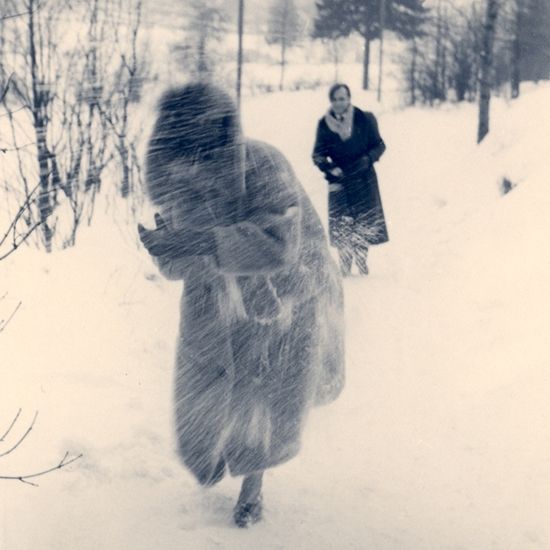
Soakers are snowballs dipped in water. The water causes the snow to melt a bit and ice up, turning a nice fluffy snowball into a cold, hard ice ball. Getting hit with a soaker feels like getting hit with a baseball. I’ve been hit many a time with these treacherous projectiles, and it hurts like hell.

Never use soakers in friendly snowball fights with children and little old ladies. However, if you and your buds want to make your annual winter capture-the-flag game a bit more interesting, i.e. more painful, make it a soaker-only game. If your wife asks you why you have a bunch of welts on your body, tell her you got in a fight with a Yeti.

(Image by Flickr user BostonBill)

Beyond Scrooge

by Zoë Pollock

Daniel Arizona considers why many of us admire Dickens around the holidays but don't often read him:

Much in the way that Elvis will be more famous for being Elvis than for his Sun recordings, Dickens will be forever remembered and commodified for the vibe that his name conjures up rather than the social realism of “Bleak House” or the hilarious diction of Mr Micawber. One day perhaps his mass popularity will translate into mass curiosity and finally into mass appreciation. In the meantime, the basic Dickens DNA will continue to replicate in the stories we tell about life and love, poverty and scroogery. For that God bless us, every one. 

The View From Your Window Contest

Vfyw-contest_12-25

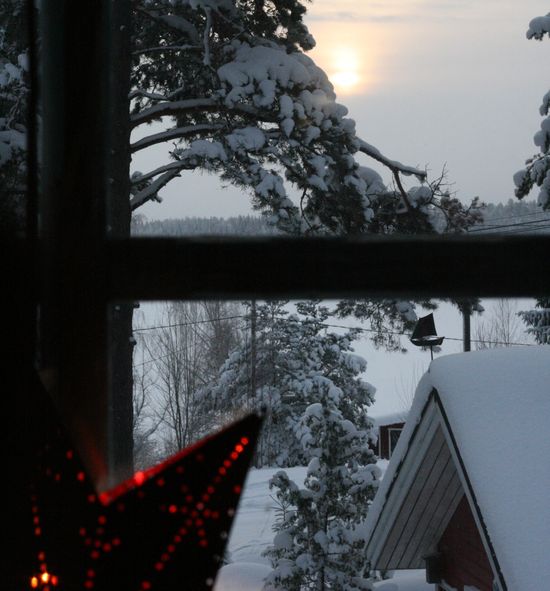
You have until noon on Tuesday to guess it. City and/or state first, then country. Please put the location in the subject heading, along with any description within the email. If no one guesses the exact location, proximity counts.  Be sure to email entries to VFYWcontest@theatlantic.com. Winner gets a free The View From Your Window book, courtesy of Blurb. Have at it.

Grassroots Son Of God

by Zoë Pollock

William Easterly puts the power of Christmas in perspective:

Caesar Augustus was the greatest Emperor of the greatest Empire. He could force the  whole population to move back to their ancestors’ villages just to pay their taxes. Herod was governor of Judea, a backward province that Caesar likely paid little or no attention. Herod could order a massacre of all children under the age of two in Bethlehem, without having to appear before the International Criminal Court.

Yet history would later show that the most powerful person in the world that night was a newborn infant, conceived out of wedlock to a peasant girl, born in a manger.

Is this story of any interest to non-Christians? Is it historically accurate? I don’t know, but I think it’s a great story. It’s a story of transformative power that comes not from the Palace up above, but from the Manger down below.

The Economics Of Gift Cards

by Zoë Pollock

Jason Zasky interviews economist Joel Waldfogel, on why we still buy each other gifts even if its not economically efficient to do so:

Normally we buy things for ourselves when the value exceeds the price, and in so doing, this free choice by individuals maximizes society’s benefit. But gift-giving is entirely different because someone else is choosing for you. …When you give something that is truly awful—that is, from the standpoint of how satisfying the recipient finds it—it’s not okay for the recipient to tell you it’s awful. So there isn’t the sort of feedback that we normally rely on to promote efficiency. That’s a good thing. I think it would be bad to be rude.

But the fact that gift cards were almost non-existent 15 years ago and now account for about a third of holiday gift-giving means that in some sense [the inefficiency of gift-giving] isn’t persistent.