Another MSM disgrace.
Month: December 2010
If The Government Can Force You To Buy Healthcare … Ctd
Conor is still worried about the individual mandate. Cranking the debate to 11, Megan throws abortion into the mix. A reader writes:
What keeps getting lost in the discussion about the so-called "mandate" is that it is simply a tax penalty for people who don't purchase insurance. If that form of incentive is unconstitutional, as some are arguing, then the intellectual impasse that you immediately run into is that incentives in the form of tax breaks are also unconstitutional. Tax breaks for specific economic activities are functionally and mathematically indistinguishable from tax penalties for failing to engage in specific activities.
For example, Ryan's health-care proposal, much-loved by many self-professed conservatives, centers around tax vouchers that individuals can use to purchase health insurance — i.e., tax breaks for buying insurance. But that is equivalent to imposing a tax penalty on everyone who doesn't purchase health insurance. Would the current "mandate", therefore, suddenly become constitutional if Congress simply raised taxes on everyone (something it surely has the power to do), and then gave a tax break to everyone who gets insurance, which would have exactly the same effect as the current bill?
For that matter, what about tax breaks for all sorts of specific purchases, from houses to healthcare, that have been in the tax code for years?
Megan's rebuttal to this line of thought:
I think there actually is a way to sort of do this through the income tax code–lower the standard deduction by $750, then offer a $750 allowance to anyone who has health insurance. But they didn't do this–no matter how much it is claimed retroactively that this is effectively what they have done, legally they haven't.
Moreover, if they had done it this way, it wouldn't work. While such a maneuver would undoubtedly pass constitutional muster, it then wouldn't operate the way the government needs it to–which is to say, as a penalty, modifying behavior. That's because too few people pay much in federal income taxes–and the standard deduction does not affect your payroll taxes, which they do pay. Worse, the people who don't pay taxes are the people most likely to a) go uninsured and b) be deterred from going uninsured by the threat of a penalty.
Freddie dismisses Conor's fears:
This is another example of the addiction to metacommentary on the Internet. Balko doesn’t like Obamacare. You don’t like Obamacare. Drum and Chait do. Fair enough; that’s democracy. But rather than stick to the issue at hand, you try to make some sweeping constitutional claims to get to overriding health care reform. It’s just like abortion; some people want to outlaw it, some don’t. But the people who do can’t just say that they want to outlaw it. They have to develop this narrative where Roe v Wade is this uniquely disenfranchising, anti-constitutional decision. But that’s a function of where you stand on the issue of abortion, not on this second-order consideration of what the Supreme Court can and can’t do.
What Else Could Orszag Do?
Ezra Klein is more sympathetic than Fallows:
The question I've had trouble answering is what I'd have told Orszag to do instead. Life doesn't end at 41. Writing columns isn't for everybody. And what does serving in government — even high up in government — prepare you for in the private sector?
And if the answer is "helping firms navigate government," which formulation of that answer wouldn't seem sleazy? Being a lobbyist isn't better than being global VP for Citigroup. If anything, it's worse. Perhaps becoming head of public policy for a company like Google plays better in the media, though it's really not different on a fundamental level, and in its explicit focus on Washington, may be worse. Waiting to take the job might have quieted some of the criticism, but the job might not have been there for him in five years, and at the end of the day, it would've had the same problems.
Quotes For The Day
"Obsessed as he was with the Jews, Nixon never came close to saying that he'd be indifferent to a replay of Auschwitz. For this, Kissinger deserves sole recognition. It's hard to know how to classify this  observation in the taxonomy of obscenity. Should it be counted as tactical Holocaust pre-denial? That would be too mild. It's actually a bit more like advance permission for another Holocaust.
Which is why I wonder how long the official spokesmen of American Jewry are going to keep so quiet. Nothing remotely as revolting as this was ever uttered by Jesse Jackson or even Mel Gibson, to name only two famous targets of the wrath of the Anti-Defamation League. Where is the outrage?" – Hitch.
"I know something about Kissinger's maneuvering for the Jewish state and for the Jewish people.
I and a few Harvard colleagues were in touch with him, actually met with him during the dread days of the Yom Kippur War when Israel's very survival was at peril. (Henry Rosovsky, Samuel Huntington, Michael Walzer, Thomas Schelling and I comprised the group.) Dr. K. confided to us how difficult it was to persuade his bigoted boss that a great deal of American arms (and sufficient Lockheed C-130s "Hercules" aircraft to deliver them) were needed and needed instantly. There is no doubt in my mind that Kissinger rescued the third commonwealth with these munitions.
Imagine, by the way, if George McGovern had defeated Nixon in the 1972 election. McGovern's enmity to Israel was and is well-documented. There would have been no military aid and no Israel. So, if Kissinger needed to flatter Nixon in order to convince him, that flattery was also a blessing," – Marty Peretz.
(Photo: Chip Somodevilla/Getty.)
The War On “Christmas”
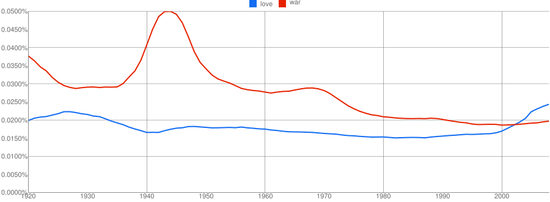
No evidence here. And then this (yes, the time is being sucked):
He Who Makes Plastic Look Real, Ctd
Frum concedes:
Based on Mitt Romney’s campaign book (quite good if you discard the first 1/3 and the final chapter) – and some of his speeches to business audiences – I think I know what Romney would like to do as president. But faced with opposition, or a rebellion from his base, or some other difficulty: who knows?
Chait finds common ground with Frum's slightly slack-jawed awe:
Sadly, I think Romney has virtually no chance to win the nomination. He is trapped in the position of both desperately needing to repudiate his signature achievement and being unable to risk another flip-flop. It's a real loss for American politics, and irony.
Irony mainly.
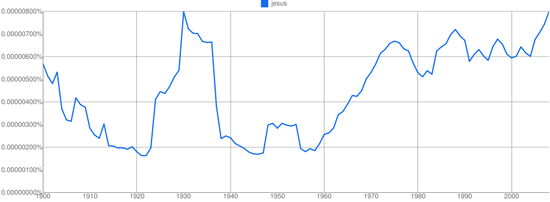
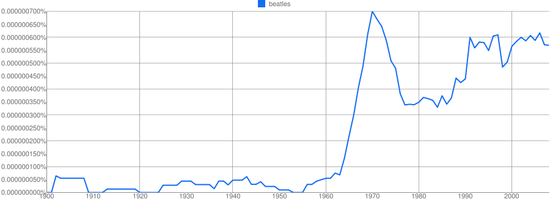
Jesus vs The Beatles
That Palin Can’t Hunt
Sarah's reality show is unraveling what red state chops she thinks she has:
I have a feeling that real hunters among my readership will back me up … Fact is, Sarah Palin gives hunting a bad name, and it has nothing to do with the whole cruelty to animals argument, which I’ll leave for someone else to hash out. It’s based entirely on the fact that she’s so clueless and incompetent behind a gun that she ought to trade her rifle in on a tactical nuke, which doesn’t require the pinpoint accuracy a hunter needs to make meat without causing unnecessary suffering among the game population.
She is what Levi Johnston always said she is. A phony.
The Ryan Defense
Paul Ryan explains his vote in favor of the tax cut deal:
It's a useful summary of current Republican ideology. I don't disagree with much of it, and think his pragmatism makes sense. But let's be honest: the Bush tax cuts are unaffordable in the medium and long term. They were sunsetted for a reason, and Ryan's refusal to acknowledge that is a sign of the GOP's fiscal unseriousness.
Yes, low taxes are great. Now let's cut the long-term spending to match them. And if we cannot, then some tax hikes – or ending tax breaks – will be essential for any compromise.
The Assange Rape Case, Ctd
A reader writes:
As an attorney who has handled a couple of rape cases and worked with numerous others who handled both sides, I think, in all likelihood, there's only one answer to that question: no one will ever know. This is what bothers me most about the "withdrawal of consent" cases. It's not like people fill out paperwork before, during, and after sex detailing the contours of consent. It's sex for god's sake!
It's possible she said stop and he didn't hear it (how quiet is your sexual activity?). It's possible he heard a "no" but confused them with all the other "no's" that were of a very different sort. It's also possible that no one was aware that the condom was broke until afterwards (although from what I've heard, that's not true). Of course, it's also possible he heard her say no, understand what she meant, ignored her, and continued to have intercourse against her will.
Many of the prosecutors I've worked with absolutely hate these types of sex crimes. As one attorney once told me: "Of all the cases I see, I feel like 50% of them are b.s. and 50% of them are certifiable felonies, and I have no idea how to tell them apart." For this reason, most of these kinds of cases never see a courtroom (at least here in the U.S.).
So to me, this moral quandary is very similar to the death penalty debate: How many innocents are you willing to put in jail in order to get the actual criminals? And remember, Assange would be innocent if he actually did not hear her object – not that there's any way to certifiably prove such a thing one way or the other. Which is precisely the problem.
Another writes:
I'm a longtime reader, but this is my first time writing in to respond to a post. The reader you quoted saying that "It seems unlikely to me that anyone would include a situation that did not include an explicit 'no' under the category of rape, but then I've learned that feminists often believe things that I find impossible to imagine" hasn't cut to any chase at all, unless you count a crabby and ill-defined crusade against feminism. Any serious consideration of rape shows that he's way off-base. I'm a law student, and I can tell you that American rape case law includes plenty of examples of rape without an explicit "no," including but not limited to victims who are minors, mentally incompetent, drunk, drugged, coerced, or, as in one of the actual charges against Assange, asleep.
Obviously we now know the facts alleged, so speculation on what Assange might have done is moot, but I think that publishing and endorsing this reader's ill-considered and incorrect ideas is a disservice to your readers. Rape law is problematic enough without people spreading misconceptions about it.
 The Dish