The Even Index

A reader writes:

 A discussion on Megan McArdle's blog gave me an idea for the "Even Index": (google hits for "Even [Name]") / (google hits for "[Name]"). Effectively, how often is their name preceded with the word even? You do unsurprisingly well:

Rush Limbaugh7.69%
Richard Nixon5.30%
Michael Kinsley3.17%
Michelle Malkin2.59%
Andrew Sullivan2.38%
Ron Paul1.93%
Adolf Hitler1.86%
Mickey Kaus1.82%
Dave Weigel1.81%
Christopher Hitchens1.44%

James Fallows1.36%
Jeffrey Goldberg1.14%
Barack Obama0.74%
Megan McArdle0.62%
Glenn Beck0.42%
Lew Rockwell0.40%
Josh Marshall0.36%
Jonah Goldberg0.35%
Ezra Klein0.27%
Matthew Yglesias0.13%
Amanda Marcotte0.09%
Ana marie Cox0.04%
Ta-Nehisi Coates0.00%

I'm not sure what this means. If it represents counter-intuitive thinking, it's hard to see Kinsley and Limbaugh in the same company. Or is it? Still, I beat Hitler.

The Afghanistan Review, Ctd

107633311

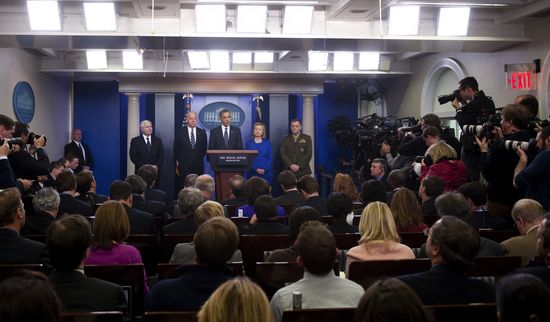
Michael Crowley was underwhelmed by the press conference:

Everyone present agreed there had been tangible improvements on the ground. Military progress since late summer, Gates said, is "palpable" and "has exceeded my expectations." Yet no one noted the obvious caveat, which is that after a 40% increase in ground troops over the past year, anything less would be a massive failure. And although U.S. officials believe that the war cannot be won just militarily, but will also require some kind of political reconciliation, there was no specific update in either the briefing or the review about the progress of reported fitful negotiations with Taliban leaders.

There's no way forward without Pakistan's commitment and considerable doubt if they can handle it. One "senior US official" told Ignatius that the Pakistanis,

despite their perennial jitters about India, now have 140,000 troops in the northwest border area, more than the United States has in Afghanistan. "They are extended at this point as far as they can be," he says.

The U.S. military official, standing at his map, says Washington should realize that the Pakistanis "are unable to conduct significant new operations without additional troops. That's not a criticism, it's a reality." This official notes that the Pakistani military has lost 1,500 to 2,000 soldiers fighting the extremists, with three to four times that many wounded. Civilian casualties are in the tens of thousands. If America experienced this level of casualties, he says, "we would probably call it a second American Civil War."

We have done about as much as we can alone. We need to invade Pakistan to do the rest. Which would be, to say the least, counter-productive. 

(Photo: President Barack Obama speaks about the US strategy for military and civilian operations in Afghanistan and Pakistan following a two-month review process of the nine-year war, in the Brady Press Briefing Room at the White House on December 16, 2010. Alongside Obama are: (L-R) US Secretary of Defense Robert Gates; US Vice President Joe Biden; Obama; US Secretary of State Hillary Clinton; and Marine Corps General James Cartwright, vice chairman of the Joint Chiefs of Staff. By Saul Loeb/AFP/Getty Images)
Yglesias Award Nominee

"It’s offensive that people would use Christianity for political leverage with an argument that is so baseless that I got to say, my breath is taken away. Do we want to start with the most obvious one about who else is not going to be home on Christmas day? Troops in Afghanistan. … The Republican Party has the upper hand in so many ways; in these areas they need to just shut their mouth. They’re embarrassing themselves," – Joe Scarborough, in response to Jon Kyl saying Harry Reid is "disrespecting" Christians and Jim DeMint calling Reid "sacrilegious" to consider keeping the Senate in session through January 4.

God, Fair Weather Fan

Andrew Exum reacts to the Afghanistan policy review:

[T]he war in Afghanistan is cyclical in nature. As one Afghan employee of a nongovernmental organization told a member of General Petraeus’s staff recently, “In Afghanistan, God is very fair. He gives both sides a chance. In the summer, he is on the Taliban’s side. In the winter, he switches sides and is on yours.”

The United States and its NATO allies are busily attempting to consolidate the gains of 2010 by establishing reliable local security forces and connecting the Afghan government to traditional authority structures in southern Afghanistan. But we will not know for sure how well the strategy is going in Afghanistan until late summer, after the Taliban has attempted to return to control in the south and God has again changed sides. 

Time Suck Of The Day

Hippie

Alexis finds it:

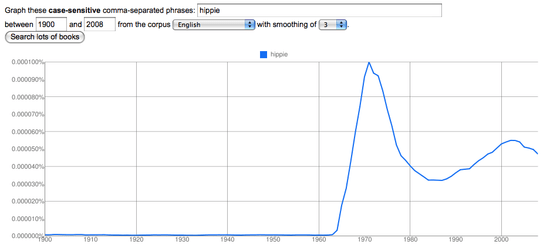
Allow me to introduce you to a most excellent time-wasting tool. It's called the Books Ngram Viewer, and it allows you to track the plot of words and phrases through time. The service draws on the absolutely massive Google Books corpus. Google estimates they've scanned and OCR'd more than 10 percent of all the books ever published, and they use … about a third of the total books in the tool. So, perhaps this isn't a perfect tool for research, but man is it fun to play with.

The literary history of "hippie" is above. Put other interesting finds in his comments section.

More Leisure, More Stress

Reihan goes on an enjoyable tangent:

Consider the rise in the amount of leisure U.S. adults have experienced over the last several decades. One reason we feel harried and stressed despite an increase in total leisure time is that there are more competing uses for leisure time in an affluent society.

Our brains hunger for novelty, and our service-driven economy devotes a great deal of brainpower to the manufacture of novelty. This novelty helps shape and structure our identities as we choose our various portfolios of “eclectic” preferences, interests, and affiliations. And so new identity groups and subgroups are arising all the time, and merging, splitting, budding, absorbing each other, etc. 

The Feedback Loop

Greg Scoblete ponders it:

On the one hand, continuing to bomb Afghanistan (and Pakistan) runs the risk of generating more ill-will and more recruits for the Taliban and/or al-Qaeda. In this sense, NATO strategy could easily be stuck in a terrible feedback loop (if it isn't already): we bomb insurgent targets (even those strictly affiliated with al-Qaeda), passions are aroused, new fighters join the fray, those fighters are bombed, and around and around we go.

On the other hand, how much can the U.S. really opt out of this feedback loop? Imagine a dramatically scaled back effort that sees the U.S. and NATO not only draw down most of its combat troops from Afghanistan but also limit its drone strikes to very "high value" and hard to reach targets. Presumably this would still enrage future Faisal Shahzads, would it not?

The Daily Wrap

Today on the Dish, amidst fears that the clock was running out, news broke of a weekend vote to repeal DADT, and Scott Brown got on board. Andrew lauded Lieberman's role in the whole process.

On other political fronts, Steve Benen debunked the GOP mandate, Bill Connelly alerted us to a wave of Republicanism in state legislatures, Hugh Hewitt struggled to explain the consistency of GOP promises and the tax deal, Steinglass rolled his eyes at McCain's song and dance over earmarks, and Ezra Klein called out deficit frauds. Douthat tried to give Romney's pandering the benefit of the doubt while Larison shattered any doubt. Bloggers and readers debated at length the healthcare mandate.

Looking abroad, Ackerman thumbed through the Afghanistan review, more bad news here, and Exum recommended cutting down the flow of cash to the country. Reza Aslan suggested a certain alliance between the US and Iran while Joel Wing had trouble seeing one between Iraq and Saudi Arabia. Greenwald highlighted the horrible prison conditions of the alleged Wiki Leaker, Serwer responded to the American charges against Assange, and a reader pointed out a likely reason why Sweden wants him back.

In assorted coverage, Britain's former drugs minister called BS on the Drug War, a reader explained why a lot of teens smoke pot over cigarettes, Bruce Schneier envisioned the future of cyber security, and Tom Friedman sparked a history lesson. Fallows questioned the Orszag row and Chait added two cents. As Palin's poll numbers continued to weaken, her ratings continued to soar – and captivate Andrew's attention.

Feministe had advice on dealing with racist relatives over the holidays, a reader took offense to some un-PC Dish humor, another dissented over the portrayal of Assange's alleged rapes, and another wanted a clearer picture of what actually happened (BBC clarified the charges).

Andrew got creeped out over Glenn Reynolds' take on communist sympathizers. Malkin awards for Louie Gohmert and Limbaugh and an especially strong Yglesias for John Nolte. The Dish spotlighted crusty punks and awkward pregnancy portraits. Readers both vented over awful tropes in English 101 and illuminated more toys with bodily fluids. An especially amazing VFYW here, FOTD here, and MHB here.

— C.B.