Face Of The Day

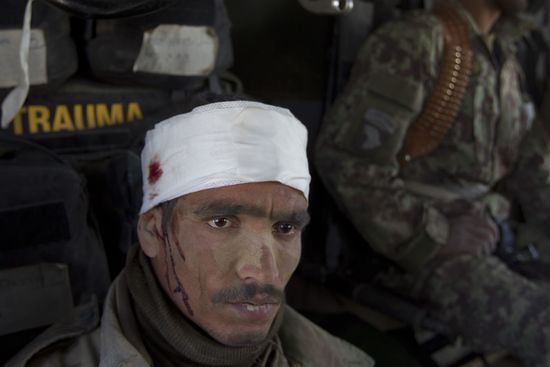
KANDAHARPaulaBronstein:Getty

Wounded Afghan National Army (ANA) soldiers on board a Blackhawk UH-60A helicopter are transported to a local hospital during an air mission in Kandahar December 12, 2010 in Kandahar province, Afghanistan. According to sources a large Improvised Explosive device (I.E.D) caused casualties amongst both U.S and A.N.A forces as well as over a dozen wounded. The horrible story can be read here. It appears that six US soldiers were killed. Tyler Hicks has an amazing slide-show of the horror here. This haunting image by Paula Bronstein /Getty Images.
We’re All Archivists Now

5229147884_3ed1105559_o

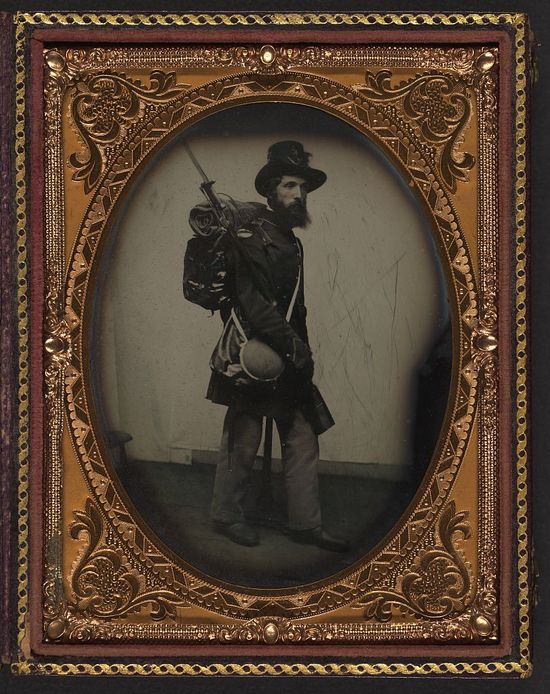
Alexis Madrigal responds to the release of  700 Civil War portraits from The Library of Congress and sees the bigger picture:

The digital age continues to refashion what we want and expect from our cultural preservationists. The vaults at places like the Library of Congress and Smithsonian have long contained far more than could be displayed or appreciated in physical space. Curators cut a narrow path through all that information; they told tell stories. That part of the job hasn't gone away, but now we also want to be able to tell our own stories.

Cultural preservation institutions now have to enable a much broader group of individuals to use their collections, not just professionals and dedicated researchers. And I love that the Library of Congress and other repositories of knowledge are beginning to open their archives to us digital travelers.

(Image of Private Albert H. Davis of Company K, 6th New Hampshire Infantry Regiment from between 1861 and 1865)

The Authorial Mask

Jonathan Franzen describes how he used his own experiences to fuel his writing:

What made direct revelation impossible was partly my sense of shame and partly a wish to protect third parties, but it was mostly because the material was so hot that it deformed the writing whenever I came at it directly. And so, layer by layer, I built up the masks. Like with papier-mâché, strip after strip, molding ever more lifelike features, in order to perform the otherwise unperformable personal drama.

Over at the Book Bench, Macy Halford watches Franzen on Oprah and reports back: "oy."

Confessions Of A Cuddler

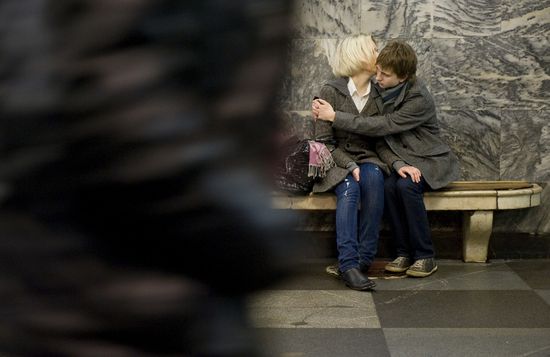
BUNDLENataliaKolesnikova:Getty

Dave Johns explores his own propensities for snuggling, what it says about masculinity, and our long national battle with the non-sexual cuddle:

In fact, this very conundrum weighed on the minds of certain early American purity experts—the Puritans—who practiced an odd form of nonsexual snuggling known as "bundling." Bundling occurred when a courting young man wound up at his love interest's home in the evening, and was invited to spend the night in bed with her. They were given separate blankets, and sometimes placed on either side of a "bundling board" that ran along the mattress from head to toe, so as to impede hanky-panky. If the bundling board did yield, and pregnancy occurred, the couple was expected to marry.

The British mocked bundling as a tawdry American tradition, but in fact there is evidence it came from Europe and was practiced from Britain to Holland to Switzerland, perhaps dating as far back as Roman times.

(Photo: A young Russian couple embraces while waiting for a train at a metro station in Moscow on February 4, 2010. By Natalia Kolesnikova/AFP/Getty.)

A Poem For Sunday

A reader writes, "Any comparison of pubs and churches brings to my mind 'The Little Vagabond' by William Blake":

Dear mother, dear mother, the church is cold,
But the ale-house is healthy and pleasant and warm;
Besides I can tell where I am used well,
Such usage in Heaven will never do well.

But if at the church they would give us some ale,
And a pleasant fire our souls to regale,
We'd sing and we'd pray all the live-long day,
Nor ever once wish from the church to stray.

Then the parson might preach, and drink, and sing,
And we'd be as happy as birds in the spring;
And modest Dame Lurch, who is always at church,
Would not have bandy children, nor fasting, nor birch.

And God, like a father rejoicing to see
His children as pleasant and happy as he,
Would have no more quarrel with the Devil or the barrel,
But kiss him, and give him both drink and apparel.

The Wounded Healer

Vaughan Bell measures the professional against the personal in the life of counter-culture psychiatrist R.D. Laing:

Madness, [Laing] argued, was a transformative experience, rich with personal meaning, that functions like an existential rite of passage. Delusions and hallucinations were the expression of the unmentionable, illustrating the emotional double-booking keeping of the family with an unignorable tear in the fabric between the conscious and unconscious mind.

When you talk to psychiatrists from Laing’s generation, they are rarely complimentary. The fact he fuelled the ‘anti-psychiatry’ movement (unwittingly, he claimed) is secondary to the fact that they chiefly remember his decline from a brilliant thinker to a tacky drunk.

If Assange Is A Savior…

Tim Challies questions the philosophy of Wikileaks:

[Assange] hopes for a perfect market and believes that we can achieve perfection if we just have perfect information. …

Naturally the Christian must disagree here. There can be no perfect market when markets are run by humans who are, at heart, entirely imperfect. There can be no market utopia this side of eternity. There can only be varying degrees of corruption. And what this means is that Assange’s entire philosophy is broken and impossible to achieve. …

We tend to imitate. It may not be long before we all expose one another, or we at least all live with the fear of exposure. It may not be long before there is more virtue in stealing information and making it public than there is in seeking to make good and wise decisions and asking others to trust that we’ve done what is best.