Praying As Protest

Prayalex

by Patrick Appel

From EA's gripping live-blog:

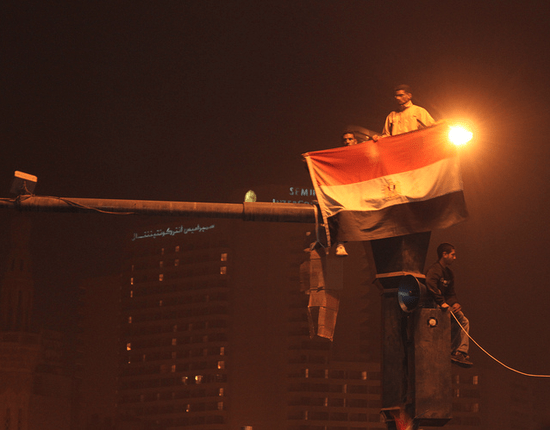
1315 GMT: Al Jazeera showing images of lines of protesters praying in the street while, behind them, smoke rises from a police kiosk burning on one of Cairo's major bridges.

1312 GMT: From Alexandria, Al Jazeera's Rawza Regeh reports a "huge fire" with ambulances and fire engines moving to and from the scene.

1310 GMT: From Suez, the Al Jazeera correspondent reports protesters have taken over the police station and freed detainees.

(Photo from Human Rights Watch's Peter Bouckaert, via the Guardian  — C.B.)

“We Are Saying Enough For This Regime”

by Patrick Appel

New video from the AP:

Robert Mackey is live-blogging. He translates:

Near the end of the clip, amid the chaos of the scattering crowd, a protester shouted directly into the camera lens: "We are saying enough for this regime! This is a corrupt regime!"

He also reports that journalists are being beaten:

Journalists working for The BBC and Al Jazeera have been beaten by the police in Cairo, the networks report. Minutes ago a heavily bandaged journalist for The BBC's Arabic service in Cairo described being brutally beaten with iron bars by plainclothes officers who seemed to be "targeting journalists," attempting to report on a protest by about 15,000 people in a square.

This Would Have Worked Why?

by Conor Friedersdorf

I've got to respectfully disagree with Glenn Reynolds, whose says this about the uprisings in Egypt, Tunisia, and Yemen:

Unfortunately — and I certainly hope I’m wrong — this may turn out to be a populist Islamist explosion of the sort that better followthrough on the original neocon plans for middle east democracy (then bashed by Kissenger et al. as unrealistic) might have forestalled. Had we pushed the overthrow of tyrannical Arab regimes post-Iraq (as some unsuccessfully urged) there might have been a wave of truly democratic revolutions, with Iraq explicitly the model, leading to Egypt as the “prize.” We are now seeing, at least potentially, such a wave, but the U.S. has been propping up Mubarak — thanks, Joe! — the Saudis, and other despots since we lost our pro-democracy mojo in 2005 after the Cedar Revolution, for reasons that are still not entirely clear.

That means the risk that power will coalesce around the only organized groups on the ground — the Islamists — is much greater now than it would have been then, and we are likely to be less favorably perceived. It’s possible, of course, that things will still go well — don’t write off people’s enthusiasm for freedom — but circumstances aren’t as congenial as they might have been.

What I won't challenge here is any characterization of what is going on now in Egypt, Tunisia or Yemen. I know far too little about what's happening. But the alternative history where we doubled-down on Iraq by pushing the overthrow of tyrannical Arab regims? Look, the coverage I remember from those days on Instapundit was largely "good news from Iraq" updates. But what was actually happening on the ground in pre-surge Iraq is that we were losing control of the country, Shiites and Sunnis were murdering one another, Iran was causing us all sorts of problems, and we were losing the war.

On what is Professor Reynolds basing the idea that things would've been better if only we'd also toppled Saudi Arabia and Egypt? Did any of the neo-con plans in the countries we actually invaded work out as they predicted? If you click through to that "Egypt as the prize" link, you'll be brought to a Power Point presentation on the overthrow of Saudi Arabia and Egypt that isn't even much of a prediction. It's just a bunch of bullet points. Here's what the last one says: "Iraq is the tactical pivot. Saudi Arabia the strategic pivot. Egypt the prize." This is the source cited in an argument for the overthrow of governments in two more countries? It isn't even clear to me if direct military intervention is being called for.

I don't mean to suggest that we shouldn't be worried about the possibility of a populist Islamist explosion in Egypt. How the most extreme US meddling in Saudi Arabia and Egypt would've forestalled that I cannot imagine. The worldview articulated by Professor Reynolds in that post is like a caricature of what I worry that a Republican presidential candidate might think deep down. "If only we'd have shaken things up more it might've worked out fine!" He and I have drawn very different lessons from the debacle in Iraq.

Egypt Erupting, Ctd

EgyptGetty

by Patrick Appel

The Guardian is live-blogging Egypt. Their summary of the morning news:

Mohamed ElBaradei, one of Hosni Mubarak's fiercest critics and a former UN weapons inspector, has been detained after appearing on the streets in Cairo. Before he was detained ElBaradei claimed that Mubarak's regime was on its "last legs".

Riot police fired teargas, water cannon and sound bombs to disperse protesters immediately after Friday prayers in Cairo. Teargas was also used in Alexandria. There are reports that a journalist from al-Jazeera and one from the BBC have been injured in the violence.

The regime has closed down internet access and several mobile phone networks in an apparent attempt to prevent protesters mobilising. The UN general secretary Ban Ki-moon, human rights campaigners have condemned the censorship. WikiLeaks has released a new batch of secret US embassy cables that detail police brutality in Egypt.

• Despite a massive security crackdown protests have continued amid reports that crowds have gathered outside the Mubarak's presidential palace. Several leading members of the banned Muslim Brotherhood were arrested overnight after the organisation said it would take part in the demontrations for the first time.

The United States and Tony Blair have issued ambiguous statements calling for both sides to end violence. Iran provocatively claimed that the demonstrations in Egypt and elsewhere echoed the 1979 Islamic revolution.

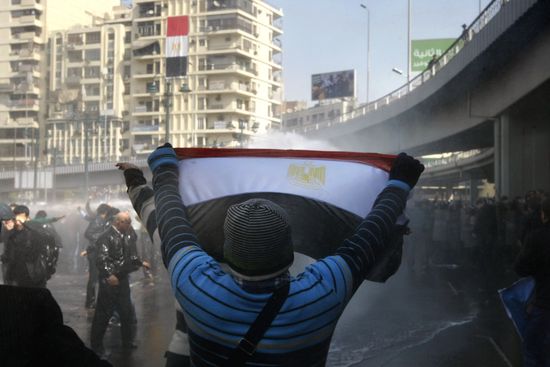
(Photo: An Egyptian demonstrator waves his national flag as he confronts riot police during a protest in Cairo on January 28, 2011. By Mohammed Abed/AFP/Getty) 

Republicans Will Keep The House?

by Patrick Appel

Isaac Wood takes an early look at the 2012 House races:

Whatever the result of the presidential race, there is one constant that should be sobering for Democrats chomping at the bit to recapture the House majority. Over the 13 presidential elections of the past 50 years, only twice has either party registered a net gain of 25 or more House seats, the threshold Democrats must cross to regain control of the chamber. At least for the past half-century, the true wave elections have come in midterm years (2010, 2006, 1994, 1974, 1966) while the presidential years have seen calmer seas.

Awaiting The “Friday Of Anger”

Screen shot 2011-01-27 at 8.05.16 PM

by Chris Bodenner

An Egyptian reader writes:

Today is when Muslims gather at noon for Friday's prayer. It's being called "Friday of Anger", where people are planned to take the momentum of their gathering for prayer to the street to join protesters. Muslims are calling for Christians to join prayer and take to the street. The protests have shown solidarity between Muslims and Christians, especially after the New Year bombing in Alexandria. One common chant among protesters is, "Hey Muhammed (common Muslim name) say to Bulis (common Christian name), Tomorrow Egypt will be like Tunis (Tunisia)".

Twitter and Facebook are now reported to be blocked again after they were accessible yesterday morning.  I'm getting confirmation from a lot of people and just saw on AlJazeera that all Internet connections is down in Cairo and other areas in Egypt. It seems like testing it because it's on and off and in different times in different areas. Also, I got confirmation from many people on Twitter that SMS service is down too. It seems like the government is preparing to crack down hard on today's protests, which are expected to huge.

At the end of the first day, two were killed and were buried in silence. When a 3rd was killed, and his family tried to get his body from the morgue, the police refused to deliver the body in fear of his funeral turning into a big protest. The number of people outside the morgue began increasing and turned more violent as the security forces began clashing with them. Wednesday night, the protests burned Al-Arbeen police station which is the closest to the morgue.  (Here and here is footage of people gathering around the morgue, and here is the burning of the police station.)

Now, ElBaradi, the Nobel laureate and pro-democracy figure, has came back to Egypt. He'll be attending the Friday prayer in Giza (west of Cairo and part of Greater Cairo) and will be participating in the protests afterward. But people are calling on him to go to Suez and attend the prayer there to end the security forces violence in the city. (For example, this tweet is translated, "Let's focus the call to ElBaradi to go to Suez and he'll go… and Suez will the major tipping point")

On the media front, Mahmoud Saad (a famous talk show host and journalist) refused to go on the air for the talk show that he co-host on the State TV protesting the state TV coverage. He is said to be on "Open Vacation". He denied the rumor of his resignation and said that he's on contract with the state TV so he can't resign or be fired.

Mona ElShazly (the famous host of "El-Ashera Massaen" (The 10 PM) talk show on the privately owned TV channel "DreamTV") opened her show with a long talk about press freedom where she raised questions about the coverage of the state TV and the government media outlets. She said that she doesn't know if this will be the last show this week or just the last show. During the interview later in the show, one of her guests, for the first ever on TV in Egypt (as far as I can remember), someone was calling on the Egyptian president to not nominate himself again. Another called on him to name a VP.

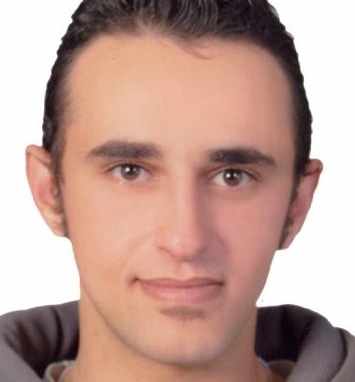
(The above photo by Nora Shalaby is labeled, "Mubarak hung from a pole")

The Daily Wrap

Today on the Dish, we tracked the momentary lull in Egypt, an Egyptian Dish reader gathered all the relevant links, and #jan25 became defunct. Youths led the revolt, clashes erupted in Suez (videos here) and beyond, and Claire Berlinski explained why Americans should care (hint: it's your tax money). Egyptians didn't want to drink a sweet drink made from rotten fish, and financial markets reacted. Elliott Abrams delinked the protests to Israel, a reader penned a letter from Cairo, the Muslim Brotherhood decided to join Friday's protests, and the Egyptian army benefitted from a luxury Officer's Club. Protests spread to Yemen, Amira Al Hussaini collected Arab reactions on Twitter, Chris stayed vigilant with fresh videos and put the protest in context. Larison rated Lebanon's new PM, Conor egged on Ezra Klein about China's rise, and Chris captured the shock and horror of the murder of Ugandan gay rights advocate David Kato.

Conor agreed with Mark Levin (for one sentence), took Barbara Ehrenreich to task, urged Arizona Republicans to grow up, and wouldn't back down on why vile rhetoric doesn't work. Conor picked on Gingrich's ridiculous passion for ethanol, Mitt threatened to skip Iowa, and James Poulos saw a generational shift in Obama's campaign during the SOTU. Obama answered one question on prohibition, and Conor weighed the crimes of Spitzer against Clinton's. Readers rebutted Millman, and regaled us with their dental woes. The Hirschorn stood up to the Smithsonian on behalf of free expression, Facebook forced your friends to advertise, and Whiskey bloggers ruined whiskey blogging. Patrick visited the United States Of Swearing, people exercised in intersections with i-pods, and Palin capped off the week with a WTF moment.

Chart of the day here, cartoon of the day here, VFYW here, MHB here, quote for the day here, and FOTD here.

–Z.P.

More Dental Woes

by Conor Friedersdorf

A reader writes:

My family suffers from a genetic disorder that causes enamel dysplasia.  In a nutshell, by body does not know how to create the protiens that create enamel.  Therefore my teeth are spotted, pitted, and destined to rot out regardless of the amount of cleaning I do.  This condition is a dominant gene.  My father had it, and my three siblings all have it.  My sister had fillings put into her baby teeth and three of my 12 yr old molars came in with cavities.  Any future children are likely to have this.  Don't even get me started on my own internal moral debate about bringing children into this world knowing they too might have to deal with this.  If there was a way to isolate this gene out of my kids I'd take it in a heartbeat.

I've been to three dentists and all agree that my molars need to be capped and all my other teeth need vaneers to prolong the life of my teeth as much as possible.  They look at me with a straight face and tell me I need $50k of dental work, and all three have been suprised when I refused treatment without any coverage.  I get the, "…but it's your teeth!"  Yeah, it's my bankruptcy too. 

All of them want to do all the work at once so they can set a proper bite, so phasing this over time isn't an option.  I still get two offices pestering me as to when I'm going to start in a way that makes me feel like they are more concerned about the money than my teeth or finances.  My medical insurance says it's dental, and my dental says it's cosmetic.  Even if my dental covered it, they only cover $2000 a year.  Oh and I might have to get all the caps and vaneers replaced every 10 years.

So I sit here, knowing my teeth will start rotting soon.  I figure I'll just take it one tooth at a time (hopefully).

Says another:

I'm a doctor at a public hospital that is a safety net provider for the uninsured, in addition to a Level 1 trauma center.  It's a front row seat at the circus that is our health care system, one that affords an unusually clear view of its myriad cracks. 

With eye care, the major problem I've encountered is getting glasses.  It's a long wait for a routine exam here, but the real obstacle is that $70 for a new pair of single-vision glasses can be a princely to the point of unobtainable sum for someone who is poor.  Bifocals, that scourge of middle age, are even more expensive.  For nonrefractive eye problems, I haven't seen much in the way of access problems, even for uninsured patients.  The optometrists and ophthalmologists work together well.  Salaried providers are perhaps less likely to get into the inter-specialty turf wars that can flare in the fee-for-service world.

Dental care is another matter entirely.  Brain abscesses or meningitis from bad dentition isn't common, although I have cared for patients with those conditions over the years.  There are plenty of other interactions between oral and general health that we have a hard time managing properly, however, because of inadequate access to dental care.  One of the medications I prescribe more commonly than I would like (but less commonly than five years ago, so I suppose that's progress) causes significant gum disease.  It is partly preventable with assiduous dental hygiene, but some patients get into trouble despite that.  Moreover, homeless patients, even ones who take their medications regularly (and more of them do than many people might realize), can have trouble flossing twice a day.  Some of these side effects can be mitigated with more frequent dental cleanings, but even the modest sums the local dental schools charge in their student clinics are beyond the reach of many of my patients.  When the necessary procedure is a root canal, extraction, or something pricier, the barriers to care are even more frustrating, because the underlying problem is often more acute. 

The horrendous effects of methamphetamine on dental health are well-described.  It's frustrating to see someone manage to beat meth, no easy task, but not be able to get the reconstructive dental work without which a job will remain out of reach, quite possibly increasing the risk of relapse. 

When the economy tanks, more patients seek our help because they lost their jobs and then their insurance, right when the budget ax is falling.  Having worked at my hospital through several economic downturns, I have become accustomed to people who were solidly middle class a year ago, or even less, on our wards and in our clinics, saying, "I thought all you guys did was take care of gunshot victims and drug addicts… I never thought I would find myself here… thanks.."   I almost wonder if an uptick in these patients might be a leading indicator of an economic downturn.  These are also people for whom the lack of a pair of glasses or timely access to dental care, something they never imagined for themselves, has become a reality.

And one more:

In 2003 my mother started taking the anti-osteoporosis drug Fosomax to help rebuild her bones. In 2005 a not-so rare side effect of the drug caused her to jaw to start deteriorating to the point where a massive infection of her jaw, gums and teeth required rather dramatic reconstructive "dental" surgery. In late 2006 she was diagnosed with Pancreatic Cancer. Shortly after this study from Harvard and Dana Farber Cancer Institute linking pancreatic cancer to periodontal disease was published my mother was dead.

There are many other medical ailments, some potentially fatal, that are likewise associated with dental diseases. Nobody will ever convince me that oral health is not 100% part of medical health. And an insurance company that says otherwise can go to hell.

Face Of The Day

Picture 23

by Chris Bodenner

An Egyptian reader writes:

It's Khaled Said's birthday today, and people are using the occasion to carry the momentum till tomorrow. Khaled Said is a young man who was brutally murdered in the street of Alexandria last summer by plain-clothed policemen who found out that he got a hold of a video that showed policemen splitting drugs they had just captured from drug dealers.

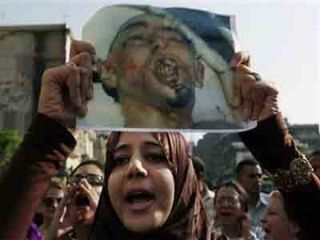
The photo of the young man's broken face as he lays dead in the morgue spread like fire in the Egyptian blog sphere and in the streets. It gave a face to police brutality.

Today, he would've been 29. Protesters-in-Egypt-carrying-photo-of-Khaled-Said-360x270 find justice for Khaled, it's called "We're All Khaled Said". ("ElShaheeed" means the Martyr.) After the events in Tunisia, when the people in Egypt and everywhere in the Arab world realized "Hey, maybe we can do that too," this group created an event page on Facebook calling people to protest on Jan 25 the "Day of the Police" (which celebrate police officers courage against British military in the Suez-Canal city of Ismalia where 50+ officers where killed in clashes in 1951). The Day of the Police became a national holiday in recent years and it was fitting to protest police brutality on the day of the police. About 80,000 people RSVPed the event on Facebook.