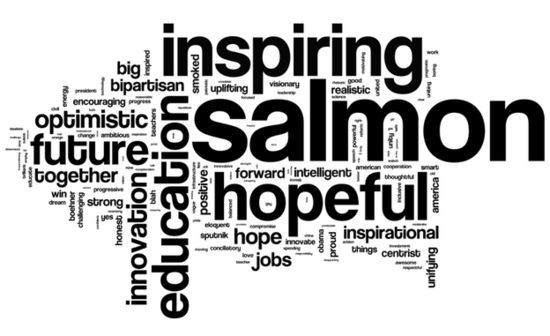
Apple And Our Culture, Ctd

Girl Walk // All Day from jacob krupnick on Vimeo.

by Chris Bodenner

A reader writes:

After reading your musician reader's note about the iPod's utility as a creative tool, I felt compelled to chime in. I'm a musician too, and like pretty much every other musician I know, I'm a devotee of Apple's products. It's very true that Macs and iPods are flat-out indispensable for producing and recording modern music. And I think the taste and elegance of their industrial and software design, their stores, and even their advertising is a net plus for our culture.

But.  There is a negative, or at least an artistically-questionable sea change in music, which has been abetted by the success of the iPod: the death of the album.

When's the last time you made a conscious effort to listen to ten tracks in a row from one artist? Personally, my life is on shuffle, and I'd wager most people around my age (32) and younger are on the same trip.

Of course, I'd never want to "go back". If I told my 12-year-old self that I'd soon be able to carry 5,000 songs on a portable touchscreen telephone, I would be pretty excited about that. But here's the thing: artists know that people don't listen to albums start-to-finish anymore. Does that affect the creative process? I think so. Most "concept" albums may be overwrought, but with the bad stuff, we also got the Stevie Wonders, the Harry Nilssons, The Beatles of the world. From the mid-'60s through the early-'90s, we got a lot of capital-'A' Albums. There will be exceptions, but frankly, all that's over now.

It also saddens me some that my child won't experience the same tactile relationship with music that I once did: helping my father clean his vinyl records with a silk brush. You listen to music a little differently when changing songs is that much of a pain in the ass. And the music itself has a lot more perceived value when the medium itself requires some modicum of care.

I'm no luddite. And I know Apple didn't invent the mp3. But as we praise them, and enjoy the convenience of digital music, I do find myself just a little bit wistful over what we're losing.

And then you have artists such as Gregg Gillis, who breaks down albums even further – by shattering individual songs into pieces and reassembling them into tracks greater than the sum of their parts. But ironically, those tracks are then seamlessly stitched in albums with the intent of being listened to as a single piece of music. And you get fan-based projects like this:

We’ve set out to combine the amazing talents of improvisational dancer Anne Marsen (and a supporting cast of contemporary dancers) with the epic new Girl Talk album, All Day, creating an album-length music video of grand proportions. We’ll continue shooting through the spring of 2011, then plan to screen the piece, in full, in public, as well as make it fully available for free online.

First installment seen above.

The Decline Of Studying

by Patrick Appel

Room For Debate asks how much smarter college makes students. Philip Babcock's contribution:

Full-time college students in the 1960s studied 24 hours per week, on average, whereas their counterparts today study 14 hours per week. The 10-hour decline is visible for students from all demographic groups and of all cognitive abilities, in every major and at every type of college.

The Real State Of The Union

by Conor Friedersdorf

Unlike every president in memory, I'll level with you:

– Adults and even children are being raped with impunity by people who aren't punished even when they're caught.

– Lockheed Martin is imprudently, alarmingly large and powerful.

– Sex slavery is surprisingly common.

– Our southern neighbor is beset by murder and mayhem, partly due to our failed drug prohibition policies.

– We're spending much more money than we're taking in, and the interest on the debt alone is getting increasingly burdensome. Our most popular entitlements, as currently constituted, are wildly unsustainable.

– Due to a federal government whose scope far exceeds the expectations of the framers, the presidency is an unmanageable job.

– Our largest state is being bankrupted by a pension crisis that isn't likely to be fixed.

– Paramilitary forces routinely break into the homes of Americans with battering rams, and with surprising frequency they get the wrong address, shoot pets, or injure or kill people who are innocent of any crime.

There's a lot of other bad news. Improving as a nation requires us to acknowledge it as a first step. Feel good national moments come easy. We're richer than most everyone else. We win gold medals at the Olympics. Our hour long television dramas eventually bring their protagonists together in the romances we've wanted to see happen all along. Our beer improves in quality every year. So it isn't feel good moments that we require from our president. Instead he or she ought to use the bully pulpit to force us to confront serious problems – especially ones that the average American doesn't even know about.

It isn't any surprise that instead we get a SOTU address designed to cast the president in a likable light. But I wish pundits would stop judging the speech by that metric. Surely we can imagine fantastic iterations on this annual civic tradition. Judging presidents on the risky, civically enlightening speech they might've given – and labeling anything less a disappointment – would tranform the political calculus. Expect more, get more. Decide that anything better than the status quo is an unrealistic expectation, and it will never happen.

Headline For The Day

by Zoe Pollock

"Ohio to put prisoners down like dogs, literally." Christopher R. Walker reports:

The Ohio Department of Rehabilitation and Correction announced Tuesday that it will use pentobarbital, a common anesthetic used by veterinarians to euthanize pets. Oklahoma also adopted the drug last year, conducting three executions since the reformulation. But Oklahoma uses a three-drug cocktail — Ohio will be a trendsetter in making sole use of pentobarbital for execution.

What States Are Worst At

In a map:

The-United-States-of-Shame

by Patrick Appel

E.G. at DiA ponders the cartographer's choices:

Some of the shame points are a little arbitrary (really, they couldn't find anything more damning for Florida than its rate of identity theft?) and others are perplexing (there's no state dumber than Maine? I can think of a couple contenders). But in other cases the simple caption points to issues that no doubt deserve more attention. Why is South Dakota, for example, the state with the highest rate of rape? Does that have something do with the share of the population living on Indian reservations? Perhaps with difficulties of rural law enforcement?

3D Doesn’t Work With Our Brains

by Zoe Pollock

Walter Murch, respected film editor and sound designer of Apocalypse Now fame, ends the debate:

The biggest problem with 3D, though, is the "convergence/focus" issue. A couple of the other issues — darkness and "smallness" — are at least theoretically solvable. But the deeper problem is that the audience must focus their eyes at the plane of the screen — say it is 80 feet away. This is constant no matter what.

But their eyes must converge at perhaps 10 feet away, then 60 feet, then 120 feet, and so on, depending on what the illusion is. So 3D films require us to focus at one distance and converge at another. And 600 million years of evolution has never presented this problem before. All living things with eyes have always focused and converged at the same point.

Banning What’s Good For Us

by Patrick Appel

Radley Balko complains about a New York bill that "ban the use of mobile phones, iPods or other electronic devices while crossing streets — runners and other exercisers included." Adam Serwer seconds him:

[B]anning cellphone use in cars also doesn't actually reduce automobile crashes, so there's no reason to believe that banning jogging with an audio device would reduce a negligent number of pedestrian fatalities. Listening to music while running seven miles makes doing so substantially more bearable, so I doubt a ban would even be effective. But if you want people to excercise more, banning the one thing that mitigates the pain of doing so strikes me as a particularly dumb idea, because if the ban actually worked it would probably reduce the amount that people exercise.

What Should The Right Talk About?

by Conor Friedersdorf

Over the weekend, Senator Tom Coburn noted on Meet The Press that he is disgusted with the political media on the right and left. Asked what he meant during a subsequent talk radio interview – the host was incredulous that a Republican had attacked the media machine on the right – he expanded on his critique:

When we spend all our time talking about rhetoric and pointing our fingers, what we’re doing is ignoring the death knell to our country, which is our debt and our spending. And so we’ve taken a week and a half, and done nothing but talk about incivility, and this person said this, and this person said that. And all it’s done is take us off our message, which is this country’s in trouble because we’re spending money we don’t have on things we don’t need.

Here's how his questioner, Hugh Hewitt, responded:

…if you do not challenge the left’s abuse of language, and its manipulation of storyline, the narrative becomes true. I talked about it with your colleague, Jon Kyl, yesterday. To even talk about it is to buy into the idea that what you and I are doing right now somehow contributes to a climate of hate.

Would you have us be silent in conservative media?

What follows is a conversation between two kinds of conservatives: Senator Coburn, whose focus is America's debt problem (I wish there were more like him), and Hugh Hewitt, whose highest priority is being an apologist for the talk radio right.

Tom Coburn: No, I wouldn’t have you be silent. I’d have you make your point the first five minutes of the show, and then move on to what the real problems are in the country.

Hugh Hewitt: But five minutes does not, you know, my show has got three hours with a rolling audience, with the average time spent listening of a half hour or an hour. And if you don’t talk into the media narrative, you abandon it. I mean…

Tom Coburn: Okay, so talk five minutes out of every thirty minutes. But spend the other twenty minutes on what the real problems in the country are…

The most surreal part of the exchange is when Hewitt insists that the United States Senator ought to be spending more time defending talk radio: "Well, here’s what I know, Doc, is that if Tom Coburn doesn’t defend conservative media, conservative media isn’t around to make the arguments about the debt limit." What explains the belief that talk radio will be swept from the airwaves if Republican officials don't offer enough sound-bytes defending it? He's too smart to believe that, and he was just getting started:

…if we’re not careful with the left’s narrative, Senator, we will be back to the days when the Wall Street Journal has a nice op-ed that’s read in boardrooms and in country clubs across the United States, and all of media is controlled by the left and the way left, and we’ll never hear Tom Coburn’s arguments again.

It's always fascinating to hear these hosts harken back to the days before their medium exploded. To listen to them talk, you'd think that the conservative movement hadn't a hope of accomplishing anything until Rush Limbaugh became a nationally syndicated broadcaster in the early 1990s. Don't get me wrong. I share the opinion that the American media of several decades ago had its ideological blind spots. And I'm thrilled that the Internet has given the public many more options for news and opinion than ever before, especially for conservatives and libertarians.

But I have a question for Hewitt. In 1980, before the talk radio explosion, Fox News, or Power Line, Ronald Reagan won the White House. Four years later, despite his detractors in the establishment media, he cruised to a second term. Now skip ahead to the time after talk radio's rise. It's been a terrible period for the conservative movement's professed goals: despite Congressional wins in 1994 and presidential victories in 2000 and 2004, we've seen the size and scope of government increase, the erosion of federalism, and an explosion in the national debt.

So Professor Hewitt, for conservatives out there who care about actual policy accomplishments and the health of the country as opposed to returning Team Red to power – who want to shrink government and protect civil liberties – what evidence do you have that talk radio is a useful ally, let alone an essential one?

It doesn't surprise me that talk radio hosts spend so much of their time talking about being victimized by the left, and spinning absurd fantasies about their impending extinction. It's always seemed to me that most people in the medium are more interested in its success than advancing a sane conservative policy agenda. In a conversation with Senator Coburn, one of the few guys who is focused like a laser on shrinking government, you asked him whether Sarah Palin has been unfairly victimized, and said that he should spend more of his time defending people like you. Do you see why I am skeptical of your medium?

Why Three-Fifths Wasn’t Better Than Nothing

by Patrick Appel

Noah Millman rebuts a Dish reader:

The three-fifths compromise was, from a purely practical perspective, a positive inasmuch as it weakened the South relative to the North. But it was hugely negative from an ideological perspective because it established in America’s founding document that slaves were not analogous to women and children – that they were something less than full (nonvoting) members of the community. Cattle, free children and slaves all could not vote. Cattle had no representation, free children had full representation, and slaves had partial representation. That’s a pretty perfect expression of the ideology of white supremacy that was a necessary component of the slave system as practiced in the United States. Which is precisely what it is understood to be today, and precisely why it is considered so offensive in retrospect.

I've updated the title of this post, which was originally accidentally entitled "Why Three Fifths Was Better Than Nothing." The original Millman post, which appears to be unaccessible because the American Scene's server is down, very clearly argued that it would have been better for slaves to not be counted at all or counted fully. Since readers are unable to read Millman's full argument, I'll quote another section:

Had slaves been granted zero weight for apportionment purposes, that would have weakened the South practically and would plainly have said that slaves are not in a condition analogous to women and children – full human beings who are nonetheless dependent on other human beings for, among other things, representation. That would, obviously, have been optimal from an anti-slavery perspective.

Had slaves been granted full weight for apportionment purposes, that would have strengthened the South practically, which would have been very negative from an anti-slavery perspective. But it would also have implied that slaves were, indeed, analogous to women and children – fully human, but dependent on others because of their condition. This was the official ideology of the slave power, but essential features of the slave system – most notably the fact that slaves were not merely owned but traded, which made normal family life among slaves a legal impossibility – were always incompatible with any true recognition that slaves were fully human. Any such formal recognition, then, would be an ideological victory against slavery.