Favoring Inner Success

David Brooks leans towards it:

We are living in the middle of a revolution in consciousness. Over the past few decades, geneticists, neuroscientists, psychologists, sociologists, economists, and others have made great strides in understanding the inner working of the human mind. Far from being dryly materialistic, their work illuminates the rich underwater world where character is formed and wisdom grows. They are giving us a better grasp of emotions, intuitions, biases, longings, predispositions, character traits, and social bonding, precisely those things about which our culture has least to say. Brain science helps fill the hole left by the atrophy of theology and philosophy.

A core finding of this work is that we are not primarily the products of our conscious thinking. The conscious mind gives us one way of making sense of our environment. But the unconscious mind gives us other, more supple ways. The cognitive revolution of the past thirty years provides a different perspective on our lives, one that emphasizes the relative importance of emotion over pure reason, social connections over individual choice, moral intuition over abstract logic, perceptiveness over I.Q. It allows us to tell a different sort of success story, an inner story to go along with the conventional surface one.

Facing Death

Robert Zaretsky compares Hitchens to Hume:

When asked about his health, Hume replied that he was dying as quickly as his enemies could wish, but as cheerfully as his friends could desire. In his interviews, Hitchens has been no less wry, no less courageous. We are born, he said, "into a losing struggle and nobody can hope to come out a winner".

Quitting The Philosophy Of Religion

Julia Galef catches up with the professor who did so last September:

I have to confess that I now regard “the case for theism” as a fraud and I can no longer take it seriously enough to present it to a class as a respectable philosophical position—no more than I could present intelligent design as a legitimate biological theory. BTW, in saying that I now consider the case for theism to be a fraud, I do not mean to charge that the people making that case are frauds who aim to fool us with claims they know to be empty. No, theistic philosophers and apologists are almost painfully earnest and honest… I just cannot take their arguments seriously any more, and if you cannot take something seriously, you should not try to devote serious academic attention to it.

He explained his decision:

“There are certain things [an evangelical like William Lane Craig] takes to be metaphysical intuitions, like that it’s undeniable that the universe must have had a cause—and for me it’s not. My intuitions are quite different,” Parsons says. And what then? He adds, “And then, once we’ve reached that point, there’s just no further to go."

New Healing

Ruth Davis Konigsberg's new book seeks to debunk the theory that there are five stages of grief, first coined by psychiatrist Elisabeth Kubler-Ross. Josh Rothman explains:

Kubler-Ross's stages entered the national consciousness in 1969, when she published a book called On Death and Dying. Kubler-Ross, a psychiatrist at Billings Hospital in Chicago, was as surprised as anyone when her book became a bestseller. In fact, On Death and Dying wasn't about grief per se, but instead about dying patients, and about the experience of dying "in a society bent on ignoring or avoiding death." Her central argument was that a terminally ill patient needed to be told the truth about his condition in a timely way, so that he could "work through his own grief and show his family by his example how one can die with equanimity." Working through one's own grief about one's own death involved the now-famous five stages.

Paul Wilner reviews Konigsberg's book, The Truth About Grief: The Myth of Its Five Stages and the New Science of Loss:

“Instead of rushing about to find the  healthiest way to grieve, it would be more helpful to update ourselves on what little science that has been conducted in this area tells us: that most people are resilient enough to get through loss and reach an acceptable stage of adjustment on their own,’’ [Konigsberg] writes. “A smaller minority will have a much harder time of it, and clinicians should focus their efforts on tailoring interventions for this group that are based on evidence, not myth.’’

That might be bad news for the grieving industry, but could be a big relief – and a welcome respite from a guilt trip – for the rest of us.

More information can be found on her website, The Truth About Grief.

Speculating On The Spectacle

Sam Rocha wonders whether politics, and the occasional spectacle it creates, "is a palliative cure for boredom":

I suspect the reason people read these things—including the commentary here at [Vox-Nova]—is because they are bored. Now, you may object saying that you choose to read or write here for principled reasons. You may in fact have a busy life, full of things to do, and come here for reasons that seem unrelated to boredom. But, I ask (myself first and foremost): What is boredom but loneliness, alienation, lovelessness, and the desire for something to occupy the time in a way that puts those stark realities at a distance? What is boredom but not quite feeling at home in the place you are? …

I fear to say it and I have little idea of what to do about it but, at least for the moment, I must admit that the more I am here, writing about the “News”—albeit in sly, “intellectual” ways—the less I am elsewhere: with my family, my students, myself, a stranger, with God. And that “elsewhere” is much more important. But, despite its obvious import, value, and beauty: it is boring, ordinary, and real.

So I seek the idol, the spectacle instead. And the real, iconic God feels absent.


Writing On The Water

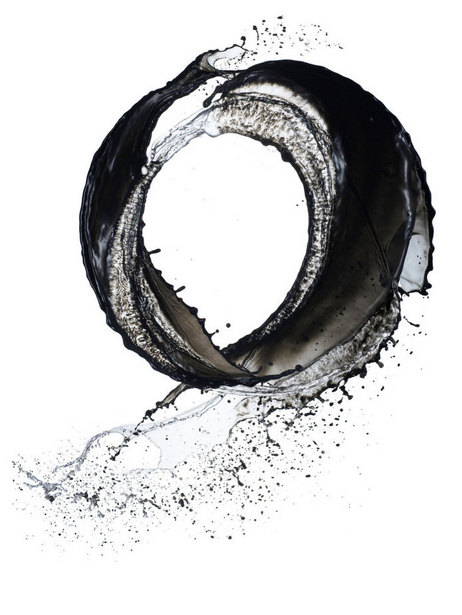
Shinichi1_vert

Robert Krulwich examines the art of Shinichi Murayama:

He has an image in his head and some instinct, some deep knowledge of water, time, muscle tells him how to move so that these shapes can form, then hang momentarily in the air until the pull of the planet drags them (gently when viewed in this high speed camera) back to Earth. … "If there is magic on this planet it is contained in water," the scientist Loren Eiseley once wrote. And apparently, judging from this video, water has whispered some of its secrets to Shinichi Murayama.

Please Turn Your Ears On

Scott Adams insists being "married is a lot like being deaf":

If you hear the same person talking day-after-day, you literally lose the ability to hear what that person is saying. … As I'm sure you've learned,  it's impossible to speak to a spouse if he or she is near running water, or using power equipment, or concentrating on something else, or eating something crunchy, or wondering if the squeak in the distance is the cat dying, or there is a child within a hundred yards. Amazingly, that covers 90% of every conversation you might attempt at home.

Recently I discovered that spouses, like computers, must be booted up before they can hear what you say. 

Ego Trumps Sex, Pizza

Roni Caryn Rabin reports on two studies that suggest this generation's students choose feeling good about themselves over other common pleasures. In one study:

[A] group of 152 University of Michigan students were asked about their favorite activity, but were given an expanded list to choose from that included receiving a paycheck, seeing a best friend and drinking alcohol, in addition to eating a favorite food, engaging in a favorite sexual activity and having a self-esteem-building experience. Again, self-esteem trumped all other rewards.