True Nihilism

Larison says his piece:

Obviously, the killer was deranged, but the same could probably be said about Leon Czolgosz, the anarchist assassin of William McKinley. That doesn’t make their destructive goals any less political. Nihilism is a charge that a lot of people have thrown around in the last few years, and it has usually been wrong. There are so few actual nihilists that it is usually a mistake to label someone this way, but it seems appropriate in this case. Nihilism is usually the wrong word to use because nihilism is “far removed from politics as we normally understand it,” to use Brooks’ phrase describing Loughner’s thinking, but if anything describes Loughner’s ideas that would seem to be it.             

“With A Knife Between Its Teeth”

Ronen Bergman retraces the steps of Israel's botched Hamas hit job one year ago in order to understand the state of Israel's spy agency, Mossad, today:

Why did the Mossad permit things to go so wrong in Dubai? In a word, the answer is leadership. Because [Mossad chief Meir ] Dagan refashioned the Mossad in his own image, and because he drove out anyone who was willing to question his decisions, there was no one in the agency to tell him that the Dubai operation was badly conceived and badly planned. They simply did not believe that a minnow in the world of intelligence services such as Dubai would be any match for Israel's Caesarea fighters. As one very senior German intelligence expert told me: "The Israelis' problem has always been that they underestimate everyone—the Arabs, the Iranians, Hamas. They are always the smartest and think they can hoodwink everyone all the time. A little more respect for the other side—even if you think he is a dumb Arab or a German without imagination—and a little more modesty would have saved us all from this embarrassing entanglement."

A New Brand Of Rich, Ctd

Mark Yzaguirre acknowledges the undeserving rich – those who have accrued wealth outside free enterprise:

[I]n a global economy, there are very wealthy economic players who didn’t gain their wealth by risking their personal capital or other voluntary business transactions. Trillions of dollars of investment worldwide, including in the US stock markets and other investment vehicles that middle-class Americans rely on for their well-being, is provided by sources that didn’t become wealthy via libertarian means. Jihadist oil barons from the Middle East, post-Soviet oligarchs and executives from Chinese Communist Party-backed companies are just as welcome as investors and guests at posh resorts as Warren Buffett and Steve Jobs. They have a big place at the table in the global economy.

This doesn’t justify general suspicion or envy of the wealthy. In fact, it’s fair to say that these players didn’t attain wealth through free enterprise means, so their sins don’t say much about the free enterprise system. 

The Rhetoric Of The Right

I was looking at our finalists in last year's Malkin Award category. The Dish collects examples of extreme rhetoric on both sides, and the simple fact of the matter is that there's far more on the right than left. More interesting is the theme on the right. Here are some finalists:

"If the [North Koreans] start anything, I say nuke ‘em. And not with just a few bombs," – Glenn Reynolds.

"I’m not filling out this [census] form. I dare them to try and come throw me in jail. I dare them to. Pull out my wife’s shotgun and see how that little ACS twerp likes being scared at the door," – CNN's Erick Erickson.

“My grandmother was not a highly educated woman, but she told me as a small child to quit feeding stray animals. You know why? Because they breed," – South Carolina Lt. Gov. Andre Bauer, on people who receive government aid.

“[NPR executives] are, of course, Nazis. They have a kind of Nazi attitude. They are the left wing of Nazism," – Roger Ailes.

Note that these are not fringe characters. Reynolds has a hugely popular blog, Erickson is cited constantly as a key GOP activist, Bauer is a lieutenant governor of a state and Roger Ailes all but runs the Republican party and its media mouthpiece, Fox News. All of them dehumanize their opponents – animals or Nazis – and the undercurrent of the threat of violence is always there.

To point this out is not partisan. I am not horrified by the rhetoric and love of violence on the far right because I have some attachment to the Democrats. I am horrified because it is horrifying, because for years now, this kind of thing has become commonplace at the very top of the conservative political apparatus, and because the invocation of violence in a political context is inherently corrosive of democratic values. When you add to this a party committed to the use of military force as almost a first option, and to torture as a legal method of interrogation, it is irresponsible not to worry about where this is headed.

This isn't a political jab; it's a profound civil worry. Reducing this to some kind of pettiness is itself a pettiness. If this bullet through a congresswoman's skull does not cause all of us to take a breath and let go of this kind of rhetoric, what will?

A Journey, Not An Escape, Ctd

5328_94913168354_4196824_n

A reader introduces a new drug to the discussion thread – which also happens to be the subject of a  fascinating little piece in the new Atlantic:

As a teenager I discovered the Grateful Dead and the psychedelic subculture.  During these early years I had many beautiful experiences with psychedelics, usually mushrooms, usually at shows, sometime out in nature.  During these experiences I gained tremendous insight into matters of the spirit, of politics, and swift satori-like bursts containing lessons about how the world works.  But clearly there were those around me who were overboard, just there for the party.  Indeed, the Dead scene seemed to have this dichotomous feature of the ’60s subculture embedded within in it: the deep flowering of insight, beauty and art and the ugly underbelly of excessive hedonism in all its forms.

For my part, after reading that Joseph Campbell had attended some Dead shows and likened the experience to the Elysian Mystery festivals, I declared myself a religion major and pursued a course of study focused on the intersection of mythology, Jungian depth psychology and Eastern philosophy.  During this time I was also exposed to the writings of Mircea Eliade and the concept of shamanism.  At the same time the late Terrance McKenna was near the pinnacle of his early ’90s  “the Leary of Mushrooms” fame.  His writings were thought-provoking and often completely off the wall, but through them I became aware that a shamanism that employed the use of psychoactive plants is an ancient and global phenomenon, practiced by nearly all indigenous cultures at one point.  I learned that shamans used these plants as technologies to travel between the various worlds for the benefit of their people.

In particular I learned about Ayahuasca – the Vine of the Souls.

It’s an Amazonian, DMT-containing, vision-inducing, shamanic brew that is still used across the Amazon area, and now in other parts of the world.  I soon found that not only were Westerners heading down to the jungle to drink Ayahuasca, but to my amazement, that shamans from the Amazon were bringing the brew to the U.S. to run ceremonies for groups here.

Somehow I ended up invited to one such ceremony in upstate New York.  Each participant was directed to follow a special cleansing diet for the week before the ceremony, and upon arrival, was issued his or her own personal barf bucket, as Ayahuasca is famous for the purge it causes.  What I learned that day, however, was the purge is not only physical, but psychic as well.

The Amazonian Indians speak of Ayahuasca as if it is an entity; they call it “Grandmother”.  Indeed, soon after the effects came on, I felt as if I was being probed by an ancient and perhaps alien intelligence.  My soul was being examined.  And over the course of the next several hours, as I vomited my guts out, I was forced to view many of my faults and the darkest corners of my being, view them, accept them and spit them out.

I pleaded for leniency during this trial.  I cried out, “I’m just a human! Have mercy!”  It was a true Day of Atonement. I felt as if my soul was standing on a twelve lane superhighway being run over by tractor trailers again and again.  I felt as if I might die.  Certainly a part of me did die that day.

All in all it was the most unpleasant experience of my life, but also the most profound.  By the end of the ceremony I understood fully that it was a sacred medicine.  I felt renewed, light, and bonded with my co-travelers. I knew that I learned many lessons in a language beyond words.

The positive feeling endures to this day, nearly 8 years later.  Until that day my proverbial glass was always half empty.  I wallowed in the negative.  After the ceremony I began to be a glass half-full kind of a guy.  I subsequently returned for several more ceremonies (these, mercifully, were less harsh and quite beautiful).  During each ceremony, the shaman and other facilitators the group made it very clear that participating in the ceremony was only one step in this “work” in which we were engaged.  The real trick is in integrating what you learn into your life.  This is something I’m still working on, and which I imagine will be my life’s work for the remainder of my time on Earth.

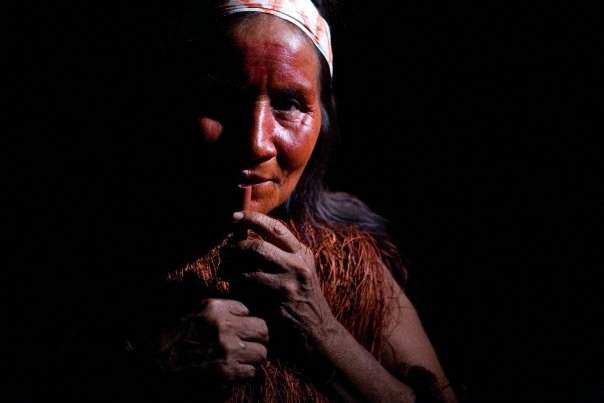
(Photo of “traditional shaman dress” by Gracy Obuchowicz, who writes: “Spirit Songs A Musical Taxonomy of the Amazon” is a documentary that my friends and I are making about healing songs—called icaros–and the shamans of the Peruvian Amazon who sing them. Until recently, these shamans have served for generations as the doctors, pharmacists, psychologists, and priests for the over three million indigenous people that live alongside the Amazon river in Peru.” Watch a teaser for the film here.  See many more of Gracy’s wonderful photos here.)

A Newborn Country

South Sudan is voting this week on whether or not to secede from the north. William Finnegan provides context:

Most of the country’s oilfields are in the south, with the only export pipeline running north. An oil-revenue-sharing formula has yet to be worked out. One oil-rich region is in the borderlands, its national assignment undecided. Much of the future border is, for that matter, still vague. Wherever it is drawn, well-armed nomadic herdsmen will cross it at will. Southern Sudan, if that’s what the new state ends up being called, will start life as one of the world’s poorest countries. It is a vast place, which never had much in the way of roads, schools, or hospitals, and then suffered through decades of war. At the moment, the region is united in its determination to secede, to escape its longtime oppressor. Jimmy Carter, Senator John Kerry, and George Clooney are all there, cheering on the referendum. But there are at least two hundred ethnic groups in southern Sudan and, amid general scarcity, an ominous abundance of arms and independent militias. After its moment in the international spotlight passes, the newborn country is going to need all the help it can get.

More reax here.

“This Is My Place” Ctd

Vanuatu

A reader writes:

Feel however you like about that video of the Vanuatu chief, but you should be aware that it's a nicely put together piece of propaganda. Vanuatu culture is not dying. It's remarkably healthy and is coping quite well thankyouverymuch with the stresses of the modern world. Ironically, Vanuatu is one of the only countries in this part of the Pacific that is stable, peaceful and NOT suffering significantly in the transition from Stone Age to Digital Age.

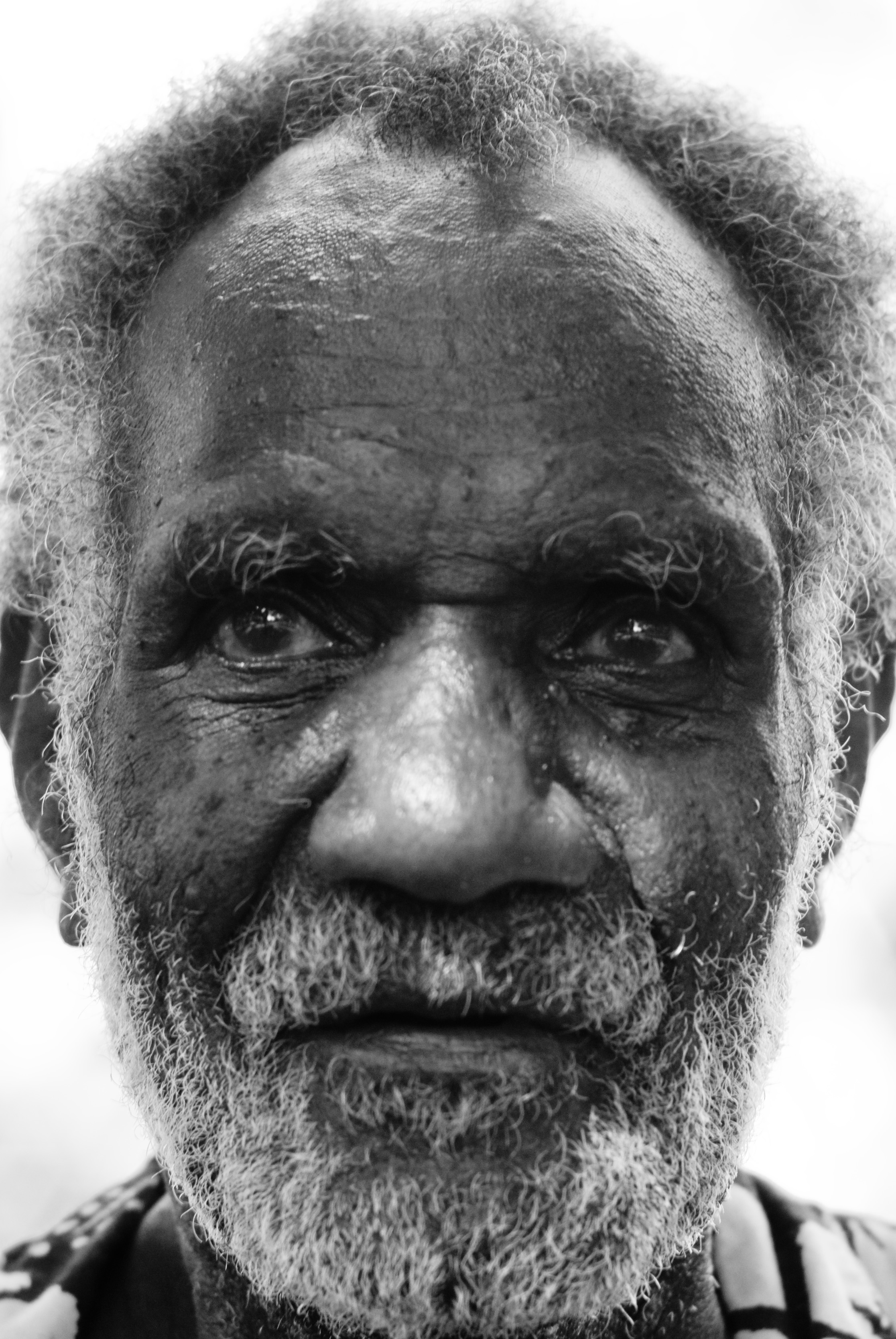
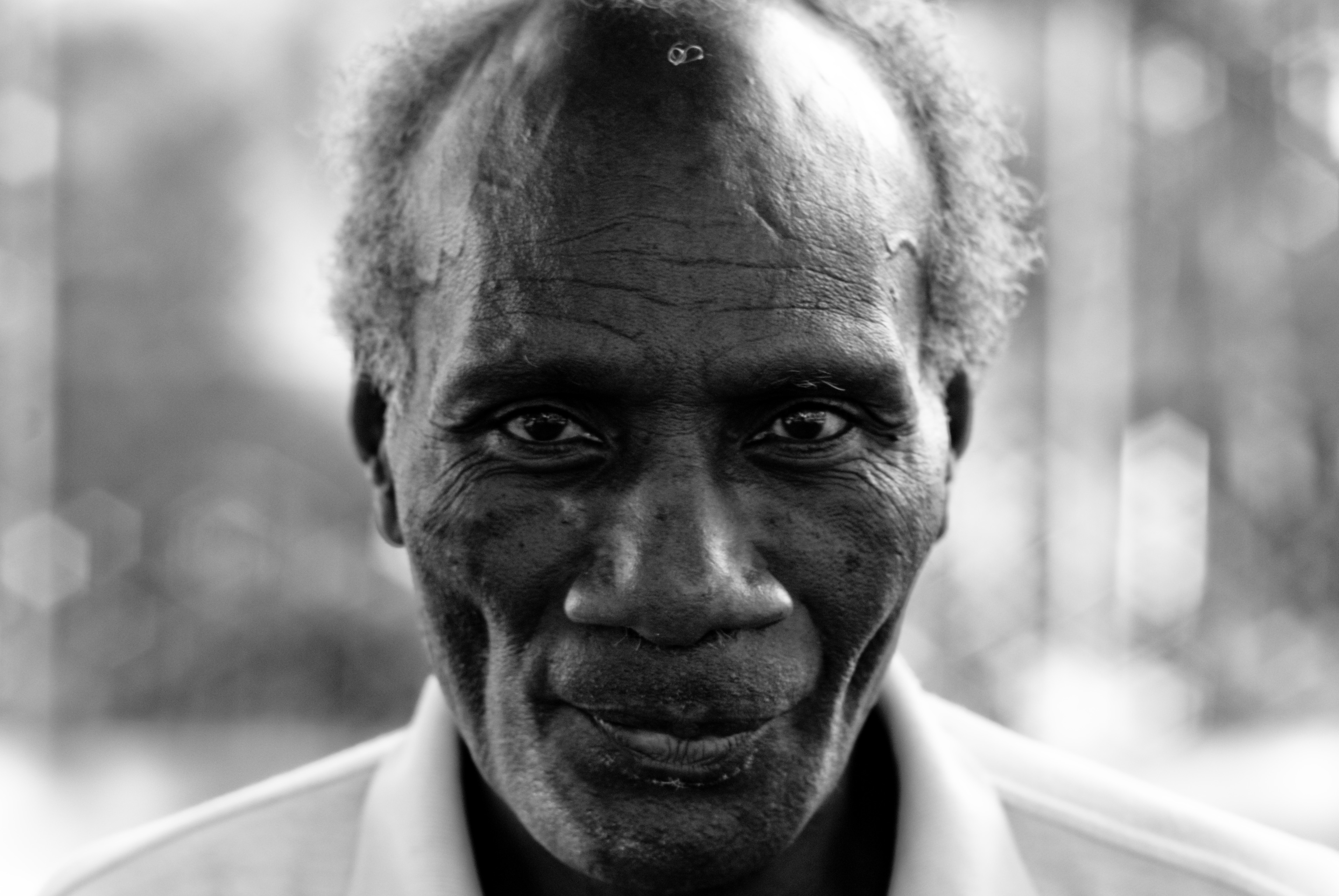
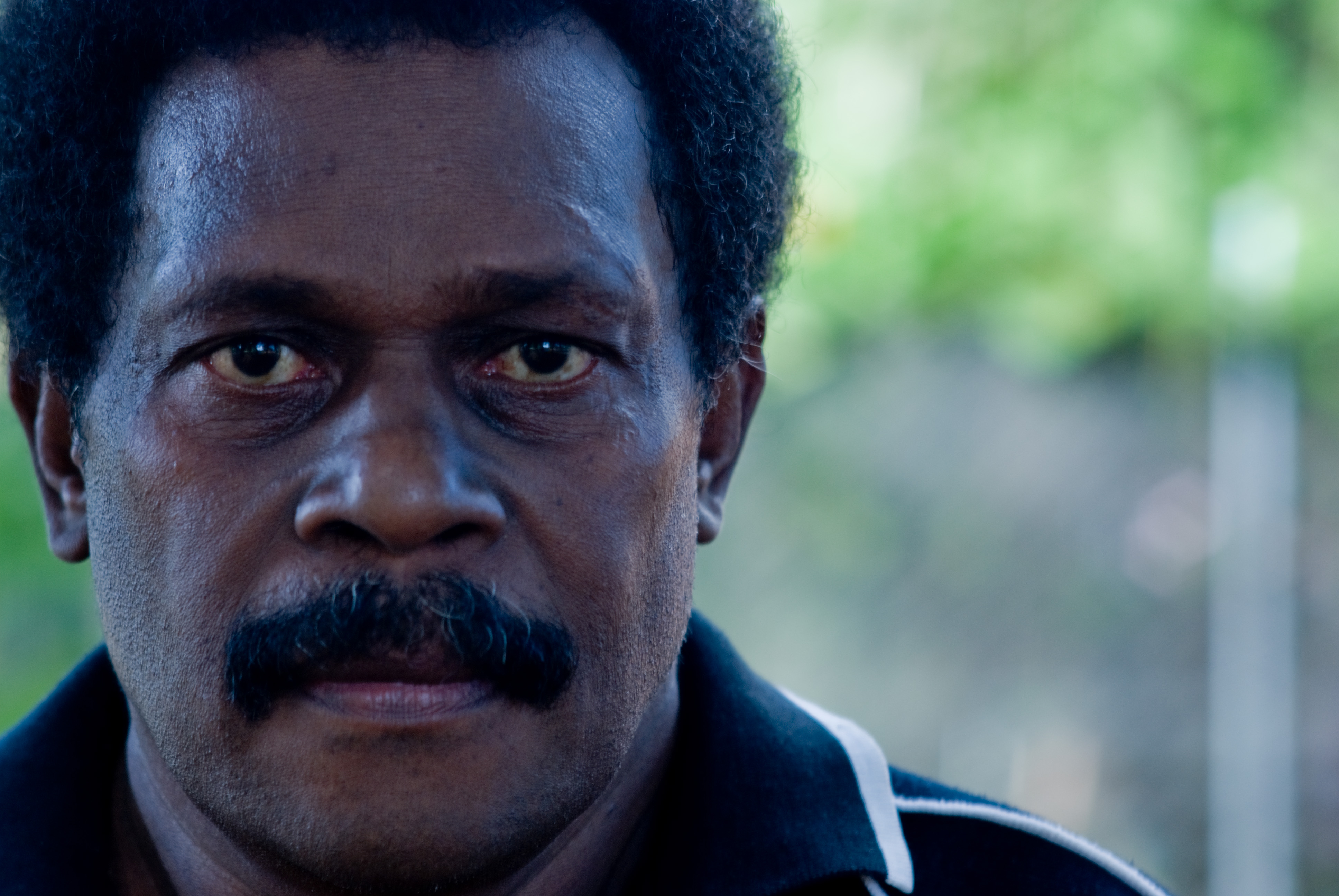
Vanuatu's chiefs are alive and well, too. Albeit diminished somewhat from their once-regal stature, they still wield considerable influence over our day-to-day lives. Here, here, here, and here are portraits of four of the chiefs who preside over my neighbourhood in Port Vila, the capital.

All of them exude canniness, experience and power. They remain a force to be reckoned with, and have intervened in national affairs when needed. In 2002, the Malvatumauri (the national council of chiefs) peacefully negotiated an end to a tense armed standoff between our police and military. Our chiefs and Kastom (traditional culture) continue to guide this nation, and that's not going to change in this generation or the next.

What the video doesn't tell you is what any ni-Vanuatu person would notice at a glance: This story (fable would be more accurate) takes place on Tanna island in what's known as a Kastom Village. These people live quite close to the main road, barely a half hour out of Lenakel, the provincial capital. They live according to 'Kastom' – the traditional way – entirely by choice. They are accepted and respected by their neighbours.

The vast majority of the population of Vanuatu, including Tannese on all sides of the village, have chosen a middle way – keeping many of the best aspects of Kastom and letting others go. This canny commingling of old and new has created a culture that is unique, vibrant and very healthy.

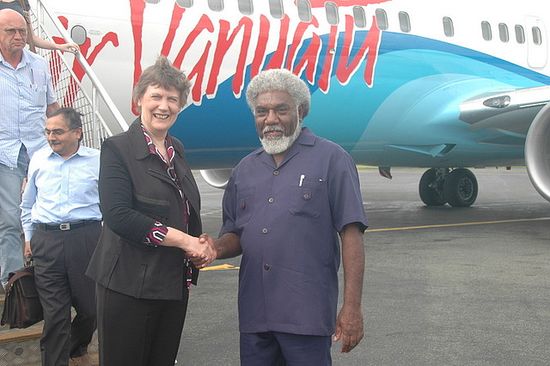
(Photo of United Nations Development Programme chief Helen Clark in Vanuatu)

At War With Reality

E.D. Kain tries to get a handle on Loughner:

[T]hese types of unbalanced, violent loners who spout conspiracy theories and sometimes resort to violence are lumped in with the right because of their anti-government streak. This is a mistake. Loughner was devoted to distancing himself from reality. He wanted to create his own reality, and anything that represented authority – whether concrete or abstract – and that threatened his dreams became suspect. Thus language, religion, government, currency – all the building blocks of society and of reality as most of us accept it – became things that Loughner wanted to destroy, remake, control.