by Patrick Appel
Yglesias opines:
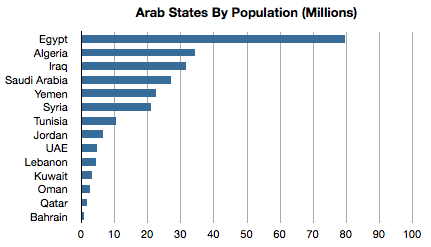
[A] more open Egypt would have a huge cultural impact simply because such a large share of the Arab audience is an Egyptian audience.
by Patrick Appel
Yglesias opines:
[A] more open Egypt would have a huge cultural impact simply because such a large share of the Arab audience is an Egyptian audience.
by Zoe Pollock
Michelle Goldberg explains why “The No Taxpayer Funding for Abortion Act," or H.R. 3, scares her:
[H.R. 3] demonstrates a startling new extremism in the GOP. In the past, even the most resolutely antiabortion Republicans usually made exceptions for rape and for life-threatening medical emergencies. H.R. 3 is the product of a House willing to jettison even those minor protections for women.
Sady Doyle argues the bill redefines rape, by the terms "an act of forcible rape or, if a minor, an act of incest":
Studies of how rapists find and subdue victims reveal that about 70 percent of rapes wouldn't fall under the "forcible" designation.
Which leaves us with those rapes that could be construed as "forcible." Except that this clause doesn't guarantee an exemption for them, either. The term "forcible rape" actually has no set meaning; legal definitions of "force" vary widely. And every survivor who finds herself in need of abortion funding will have to submit her rape for government approval.
Amy Sullivan investigated what it takes to get reimbursed by Medicaid for an abortion, and just how few actually are.
by Patrick Appel
Exum explains why the US military has such a close relationship with the Egyptian army:
Egyptian officers have been coming to the United States for training for three decades now, so most high-ranking Egyptian officers have close friends in the U.S. military with whom they went to the War College or CGSC. (We Americans would also like to think we have played a role in the professionalization of the Egyptian officer corps, but that may be giving us too much credit.)
What a different situation we have in Pakistan, where an entire generation of the Pakistani officer corps was "lost" to the U.S. military because of the Pressler Ammendment and the way in which it halted cooperation and exchanges between our two militaries. In that way, one thing Egypt and Pakistan have in common is the way in which each, in different ways, highlight the very real benefits of mil-mil cooperation, officer exchanges, and security force assistance.
UPDATE: President Obama just spoke [last night] on Egypt. His first words were words of praise for the Egyptian Army. That is no accident.
by Patrick Appel
Ted McCagg's advice:

As someone who started wearing glasses about a year ago, I've wondered why we associate intelligence with glasses. According to Wikipedia there is a genuine correlation:
A number of studies have shown that the incidence of myopia increases with level of education[63][66] and many studies[70] have shown a correlation between myopia and IQ, likely due to the confounding factor of formal education.
I imagine this correlation is based largely on environmental factors. According to my eye doctor, my myopia was probably caused by eye strain from reading blog posts ten hours a day for a couple years. Anyone have better research?
by Conor Friedersdorf
Peter Robinson says California's new governor is performing better than he expected. And I agree! I thought sure I'd roll my eyes for the whole of his "state of the state" speech – we've had a long run of terrible leadership in the Golden State – but the course he's charted actually seems relatively sane, and as Tim Cavanaugh points out, his decision to take on the state's strangely powerful redevelopment agencies is inspired.
Moreover, newspapers in the state seem to be churning out stories of unsustainable state spending on a weekly basis. It seems the Brown Administration is uncovering some of the waste to which Governor Schwarzenegger frequently alluded but seldom identified specifically. Here's one example from the Sacramento Bee:
The state of California paid entrepreneur Marshall Pryor about $9,000 a month to care for one developmentally disabled young man in a south Sacramento care home he ran. Pryor said the home earned its keep. The young man would become violent at unpredictable moments and required around-the-clock supervision. In one instance, the man threw a television out the facility's window. "Wherever he went, we had to be there with him," Pryor said. "One time, he just came up and, whack, hit me in the face."
As it turns out, state taxpayers may have been getting a deal out of Pryor at $108,000 a year. The state can pay wildly varying rates, up to $250,000 a year per person, to fulfill its legal obligation to care for developmentally disabled people, despite laws meant to cap the costs of such programs.
This is the Golden State in microcosm. Do I want needy, developmentally disabled individuals to be the recipient of state funds? I do! But it doesn't take a policy wonk to understand that you can't pay up to $250,000 a year per person. There just isn't enough money. I'll try to dig into this in the next few days. I'd bet a handsome sum I'll discover that there are states that spend less than California on analogous programs, but that provie better care to the disabled people in question. That's true for a lot of what our state government does.
For now, Jerry Brown seems as though he's helping make matters better. At minimum he's garnering accolades from unlikely quarters (though Cavanaugh is less impressed here).

The name of Egyptian President Hosni Mubarak is written on the forehead of a supporter as he takes part in a pro-regime protest in Cairo on February 2, 2011. By Marco Longari/AFP/Getty Images.
by Patrick Appel
Steve Negus is worried:
[T]he post-uprising Egyptian state lacks a security apparatus which can control its territory. Maybe I’m too influenced by Iraq, here. The army and police have not been disbanded, the power has not been shut off nationwide, etc. But there are a few parrallels.
Prisons are being broken open, weapons looted, policemen and police auxiliaries are turning gangster. There are reports of kidnapping so far, but if this persists for any extended period of time, gangs might start developing the networks and techniques needed to run abduction rackets. If the police lose even the passive support of the populace, they will become demoralized, cut off from their sources of information, unable and unwilling to venture beyond their bases to pursue ordinary criminals or militants alike. Al-Qaeda thrives in a power vaccuum.
He adds:
I think that the main threat comes not so much from desperate measures by the regime, but simply by the natural expansion of criminal networks in a power vaccuum. A serious culture of criminality takes time to organize itself, but when it sinks roots, it can be very difficult to reverse.
(Hat tip: Issandr El Amrani)
by Chris Bodenner
The latest Arab dictator on the ropes:
As protests mount in Yemen, President Ali Abdullah Saleh — a U.S.-backed leader who's been in power for 23 years — announced that he will not seek re-election after his term ends in 2013. The president also promised that his son, head of the country's Republican Guard, would not run. Saleh's move, reports The New York Times, is a "stunning concession to protesters." But, says Joshua Keating at Foreign Policy, "like Egypt and Tunisia before it, the offer has not placated the demonstrators on the streets of Sana'a, and a new mass protest has been called for Thursday."
by Conor Friedersdorf
The best part of AOL's leaked strategy memo to its editorial team:
AOL site leaders are expected to have eight ideas for packages that could generate at least $1 million in revenue on hand at all times.
 The Dish