Beards, Speech and Sex

Matthewfoxbeard

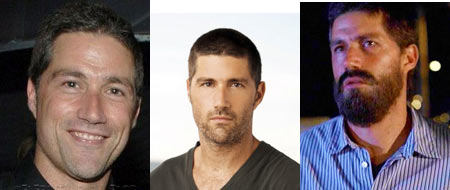
Well, some of you goaded me. Here's a new study on how big beards can make it harder for people to understand you, since they conceal facial movements and gestures. And here's a study showing that women prefer beards to skin – but only trimmed ones:

A study in the 1970s and another one three years ago come to similar conclusions: Women are more attracted to, and more likely to develop a long or short-term relationship with, men with light beards or stubble. They also find men with full beards more aggressive and mature, but also the least attractive. Men with no facial hair were rated the second-least attractive, but also least likely romantic partners.

I'm for Bachelor Number 3 above. But most women opt for Bachelor 2.

The Marxist Becomes A Country Club Republican

Rush Limbaugh's latest:

There's not a person in the world that's got the guts to tell the truth about Obama, from the media to our side, for whatever reason, either the first black president or we think we're gonna get creamed by being critical.  So there isn't any real examination of who Obama is as a guy.  Well, there is for me.  

You know, this notion he's some warm, nice guy we just happen to disagree with.  Wrong.  This is a cold man.  This is not even cool.  This guy is cold.  He's arrogant.  He's uber-calculating.  He's the kind of person most people don't like when they meet him.  Rove described him.  He's the guy at the country club at the cocktail party standing in the corner with the good-looking girl, the drink, and the cigarette, passing judgment on everybody going by, not deigning to talk to 'em.  Good family man, they say.

I think Limbaugh is more accurate in this crude caricature than his usual crypto-Muslim-Kenyan-anti-colonialist-bent-on-harming-America schtick. But these depictions are contradictory, are they not? Just like the contradiction between Obama as a feckless by-stander and Obama as a ruthless socialist. The truth is, I think, that Obama is more like a cultural WASP in the GHW Bush and Eisenhower mold than anything remotely radical. Just less contemptuous of the Republican far right than either previous Republican president.

Gitmo: Open Indefinitely, Ctd

Adam Serwer wrestles with indefinite detention:

For the past two years we've had indefinite detention without periodic review. Now some of the detainees who have lost their habeas cases are going to get a chance to challenge their detention again, and they have the option of being represented by council. The argument for an executive order is that going to Congress might make the current process significantly worse, since Republicans have indicated a desire to send more people to Gitmo and to give the president to indefinitely detain American citizens.

So now that there's no question that some people will be detained indefinitely, the people who lose their habeas cases should have a chance to advocate for their freedom. 

My fundamental concern has always been humane treatment. When Gitmo was a torture camp, it was indefensible. The stigma remains, which is why those remaining prisoners should, if we want to help ourselves in the war on jihadism, be dispersed in maximum security jails. But the torture that truly stained Gitmo is over. Those who crow that the Obama administration has retained the Bush system omit this central fact. They also omit the fact that Congress has tied Obama's hands. They also omit that the very dilemma – prisoners with no formal charges, no serious evidence, and radicalized by torture and unjust imprisonment – was created by Bush in the first place.

I'd release those against whom there is no credible evidence. But I can understand the security and political concerns of releasing men who could join Jihadists in, say, Yemen.

The “Do Something” Brigade

Hitchens wants intervention in Libya. His strongest point:

The wealth that Qaddafi is squandering is the by-product of decades of collusion with foreign contractors. The weapons that he is employing against civilians were not made in Libya; they were sold to him by sophisticated nations. Other kinds of weaponry have been deployed by Qaddafi in the past against civil aviation and to supply a panoply of nihilistic groups as far away as Ireland and the Philippines. This, too, gives us a different kind of stake in the outcome. Even if Qaddafi basked in the unanimous adoration of his people, he would not be entitled to the export of violence. Moreover, his indiscriminate barbarism, and the effect of its subsequent refugee crisis on neighboring countries such as Egypt and Tunisia, ipso facto constitutes an intervention in the internal affairs of others and a threat to peace in the region. 

Then let Egypt and Tunisia deal with it. Yet another direct Western military intervention seems to me, illustrates how the legacy of colonialism and post-colonial cynicism can promote more intervention and more neo-colonialism and even more cynicism (among Arabs and Westerners). If the point is that the West is responsible for much of this violence – and we bear major responsibility for propping up Arab dictators for so long – and that therefore we have a duty to rectify it, it's hard to know where the West would ever draw the line. And after trying to bring order to Iraq and Afghanistan – Hitch thinks the nightmarish world of Libya is where we should now send troops. Hitch inveighs:

Does one have to go over all the arguments again, as if Rwanda and Bosnia and Kurdistan had never happened?

Er, yes. Notice the missing, more recent example – Iraq. The identical argument was made, remember, about Saddam. Our very previous complicity demanded our intervention, we were told and some of us believed, regardless of the consequences. In fact, nowhere in the piece does Hitch weigh the unintended consequences of getting militarily entangled in a non-country, run by terror and tribes, with little hope for a stable government or civil society in the near future. This is a strange case of liberal angst fusing with neoconservative hopes with the result of constant warfare. It perpetuates a cycle we can never stop – a cycle of endless war and occupations. If we cannot stop it here, where can we?

Tom Ricks, somewhat surprisingly, also wants to "do something" about Libya although he isn't ready to impose a no-fly zone. What he labels the "best option":

Give the Libyan rebels the aid they need to win. This may be no more than some secure communications gear and a couple of thousand rocket-propelled grenades to deter Qaddafi's tanks and SUVs. (This may be already happening in some form.) Can we start flying discreet charter flights of stuff into some airports in the east? This needs to be ready to go ASAP — like yesterday.  

Premature Monogamy, Ctd

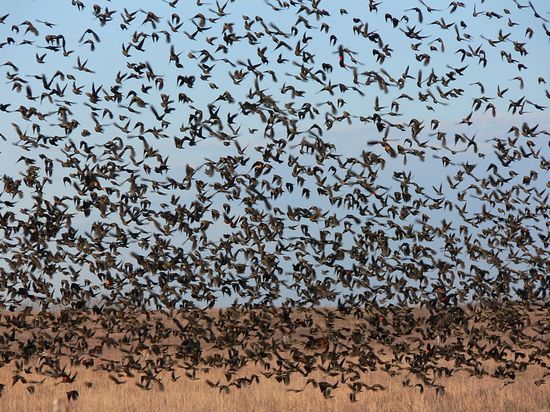
800px-Redwingedblackbirdflock

One very difficult issue here is how we know whether people actually are in monogamous marriages, even when they think they are, and how we measure happiness, and whether we are comparing frisky apples to horny oranges. Dan Savage joins the debate:

A lot of those blissfully happy people in monogamous long-term relationships—and it seems odd to credit monogamy for their happiness instead of the personality traits and interpersonal skills that allowed them to form those long-lasting partner bonds—actually aren't in monogamous relationships. People cheat and they don't always inform their partners and spouses; and just as premarital sex isn't a modern phenomenon, cheating—and getting away with it—isn't exactly a new thang.

Perhaps some studies have found a high correlation between monogamy and happiness. But have those studies compared people in successful, long-term non-monogamous relationships with people in successful, long-term non-monogamous relationships? I suspect not.

I'd wager that most-if-not-all of these studies have compared people in long-term monogamous relationships—or people in what they believe to be monogamous relationships—to people who aspired to be in stable monogamous relationships and failed, e.g. people who have gone from one failed monogamous startup relationship to the next. These studies would have very little tell us very little about how honest, ethical non-monogamy stacks up against traditionally monogamous relationship models.

Maybe we need to check out a serious study used in these arguments and see what it actually contains and how it avoids these obvious and inherent flaws. When we've actually investigated monogamy in the animal kingdom, we've discovered that monogamy is close to non-existent. Almost no mammals mate for life; one of mankind's closest genetic cousins, the bonobos, jerk each other off as a way of saying hi. Even the reputedly monogamous world of birds – remember Nora Ephron's words "Want monogamy? Marry a swan!"? – what we thought we knew, we found out to be false:

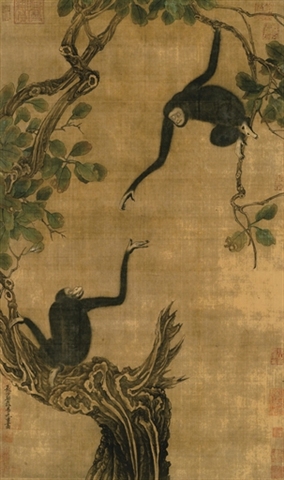
Even swans aren't monogamous. But the myth of monogamy didn't disappear overnight. The tell-tale hiss of its deflation began several decades ago. One now-famous study, for example, sought to assess vasectomy as a possible means of population control among red-winged blackbirds. To their surprise, the researchers Yi-Yuanji-Two-gibbons-in-an-oak-tree discovered that female blackbirds, mated to vasectomized males, were nonetheless laying eggs that hatched! Evidently, there was some hanky-panky going on in the blackbird world.
And not just blackbirds. By the 1980's, studies employing blood typing as well as analyses of proteins were leading researchers to question whether social monogamy and sexual monogamy were necessarily synonymous. Then came DNA fingerprinting in the 1990's, and a veritable avalanche of new findings. Time and again, it was revealed that 10, 20, even sometimes 40 percent of nestlings were not fathered by the social father. The apparent mother, on the other hand, usually is what she seems to be, reinforcing the adage "Mommy's babies, Daddy's maybes."

Reports of extra-pair copulations — henceforth, E.P.C.'s — in animals previously thought to be monogamous have come hot and heavy during the last decade. Increasingly, biology journals have featured articles with titles such as "Behavioral, Demographic, and Environmental Correlates of Extra-Pair Fertilizations in Eastern Bluebirds," "Extra-Pair Copulations in the Mating System of the White Ibis," "Extra-Pair Paternity in the Shag, as Determined by DNA Fingerprinting," "Genetic Evidence for Multiple Parentage in Eastern Kingbirds," "Extra-Pair Paternity in the Black-Capped Chickadee," "Density-Dependent Extra-Pair Copulations in the Swallow," and "Patterns of Extra-Pair Fertilizations in Bobolinks." We've even seen these oxymoronic reports: "Promiscuity in Monogamous Colonial Birds" and "Extra-Pair Paternity in Monogamous Tree Swallows."

The situation has reached a point whereby a failure to find E.P.C.'s in ostensibly monogamous species — that is, cases in which monogamous species really turn out to be monogamous — is itself reportable, leading to the occasional appearance of such reassuring accounts as "DNA Fingerprinting Reveals a Low Incidence of Extra-Pair Fertilizations in the Lesser Kestrel" or "Genetic Evidence for Monogamy in the Cooperatively Breeding Red-Cockaded Woodpecker."

Nor have mammals been exempt. Gibbons, for example, were long thought to be lifetime monogamists. No longer. Ditto for essentially every species that has been investigated with any thoroughness.

One wonders what a similarly rigorous study would find in the human species. But such a study would take a police state to undertake. Until then, we may have to treat much of the factual discussion as provisional. What appears to be the case, to anyone with open eyes, is that humankind is mildly monogamous and more than mildly hypocritical about it all. Which seems a sane adaptation to reality. If we start from that premise, then we can allow for a variety of ways to handle it.

(Photos: a flock of red-winged blackbirds via Wiki; Painting of gibbons by Yi Yuanji (ca 1000-ca 1064).

Question For The Day

A reader asks:

Would you have given such a nonchalant response if somebody went undercover and caught Roger Ailes or other Fox News executives denouncing liberals the way NPR execs did?  Why doesn't this obvious case of institutional bias at NPR inflame you like those you cite at Fox?

Because there is a difference between bias and propaganda. I don't doubt for a milisecond – and never have – that NPR and the NYT have often profound biases to the liberal side of the equation. I've long argued that they should admit it and move on. But I don't get the sense from watching PBS or listening to NPR that they take it as their guiding mission to push for a particular political party or rig the news to inflame a political party's base. I think they still try to aim for fairness and the truth. I truly don't believe, with a few exceptions that this is the case with FNC. I think it's a political operation using the guise of "journalism" to advance a cause and a party; I think NPR is a news organization with a political bias.

Newt’s Biggest Flaw

Frum zeros in on it:

It's not the infidelity. It's the arrogance, hypocrisy, and – most horrifying to women voters – the cruelty. Anyone can dump one sick wife. Gingrich dumped two.

Josh Marshall nods

There are so many reasons why Gingrich is the lead balloon of presidential politics, but Frum really has this right that the infidelity thing is just something he cannot survive. Not because voters won't tolerate infidelity — in many circumstances they will — but because the pattern with Gingrich shows a level of hypocrisy, cruelty and emotional immaturity that most people won't accept in a president.

Do Republicans Need A Healthcare Plan?

Ezra Klein thinks that, on healthcare policy, the GOP "is going to have to be able to agree on something, because their presidential nominee is going to have to have a plan of his or her own." Bernstein differs:

Platforms, especially in the form of detailed plans, are most needed for supporters, not opponents (who aren't interested) or swing voters (who are mostly low-information voters, and therefore also not interested). That is, swing voters, to the extent they want anything, want rhetoric. Partisans want details; they actually want and expect something to happen on certain issues, and therefore they really care about what the politicians they support plan to do. So one way you can tell whether a party really cares about something is by seeing whether their nominees are "forced" to developed serious policy proposals.

… The real question on this one is whether there's any pressure within the GOP coalition to develop a real health care plan, and it sure seems to me that there isn't.