Benghazi’s Limbo

109713345

Jon Lee Anderson is in Libya:

Benghazi is barely functioning. Its shops and business are mostly shuttered, and there are few people on the streets. Cars speed everywhere, however, and there are occasional bursts of gunfire, as looted weapons are fired into the sky, in apparent celebration at the sudden freedom to do so. (Ordinary Libyans are not normally allowed to possess weapons, much less shoot them.) It is a city in a suspended state: entire families in cars drive in and out of the main security garrison where Qaddafi had a villa, gawking at a place they were prevented from ever entering before.

(Photo: A resident of the north-central Libyan city of Benghazi stands atop a burning heap of books authored by Libyan leader Moamer Kadhafi at a local park of the city on March 02, 2011. Kadhafi warned the West against intervening to support the rebellion against him, saying that would unleash a 'very bloody war' in which 'thousands of Libyans would die.' By Roberto Schmidt/AFP/Getty Images)

Ryan Lizza Defends Mark Leibovich

Will Ryan now publish every email he has sent requesting an interview with someone on the Hill? If not, why not? And if another journalist somehow got access to his emails and published them, would he be fine with that? Or is it just because he's buddies with Leibovich? Just asking. I'm not saying that there is nothing wrong with the journalist-source relationship right now. I'm saying there are ethical and unethical ways to point this out.

Huckagaffe, Ctd

Joe Klein tells it like it is:

Huckabee was never an entirely plausible candidate for President–could we actually ever elect a man who has his doubts about evolution? whose comments about Israel seemed to indicate a literal interpretation of the Bible and the Rapture myth?–but he always struck me as a good guy, more concerned about working-class America than most of his rivals. These comments, however, and his subsequent lie that he really meant Indonesia not Kenya, really show a demented, perverse sensibility, and they demonstrate some of the ugliness at the heart of Obama hatred.

I'm talking about the Mau Mau comment, especially.

When I was growing up, Mau Mau was shorthand for: Extremely Scary Black People. The brutality of the Mau Mau rebellion was legendary (and, who knows, perhaps even accurate). It became a term of art in the sixties: to mau-mau was to intimidate white people. (As a young reporter in Boston, I covered a would-be black militant group that called itself, with brilliant irony, De Mau Mau.) To associate Barack Obama with the Mau Mau rebellion is to feed all the worst, paranoid fears of Glenn Beck's America–and, as any sane person knows, completely ridiculous.

You Will Forget This Blog Post

Casey Schwartz reviews Joshua Foer’s  Moonwalking With Einstein: The Art and Science of Remembering Everything. Foer competed in the U.S. memory competition in order to practice the way we once remembered:

“If you were a medieval scholar reading a book, you knew that there was a reasonable likelihood you’d never see that particular text again, and so a high premium was placed on remembering what you read,” Foer writes. “You couldn’t just pull a book off the shelf to consult it for a quote or an idea. ”

The invention of the Gutenberg press meant that books were no longer such a rarity that you had to imprint their contents onto your memory whenever you ran across them. Once they became retrievable, books changed the way people read. Now, information is even more easily tracked; all events easily documented; all opinions available. Knowing this, do we know things differently? Do we engage more casually with our lives, on the theory that any experience can be reduplicated later?

Dissents Of The Day I

Tons of reader reaction to this post on teacher accountability. One writes:

I think you're overstating the ability to identify whether a teacher is incompetent.  A ROTTENAPPLEJoeKlamar:Getty teacher in order to get tenure in the first place has established competence for two or three years by not being laid off, excessed, or fired.  So they already have an established baseline of competence.  Now we're supposed to fire them at the first sign of evidence that they might no longer be competent?  That's not how it works in any field, anywhere.

Also, a bit of an English fail on your part.  Yglesias says, "It would give tenured teachers who are rated unsatisfactory by their principals a maximum of one school year to improve. If they did not, they could be fired within 100 days."  You proceed to interpret maximum as minimum and within as after.  Those are the opposite of what those words actually mean.

Another writes:

I'm not sure your theoretical situation would play out like that in the real world.  Most teacher reviews come at the end of the school year, in May or June – not February.  And you imply that the threat of termination wouldn't have much of an effect on a poor performer to raise his or her output level.

Also, the quote Yglesias highlights states that teachers would have one "school year" to improve.  That is not necessarily a full year, as you propose, but could merely be the time from September to May.  So you really paint a worse than worst-case scenario.

Another:

While I normally enjoy your take on things, your comments on this are horribly off base and blinkered. First of all, this teacher in your scenario would NOT be "enjoying their summer break." They would be expected and required to attend professional development courses to address their weaknesses in the classroom. As someone who has delivered this sort of instruction, it could mean two to three weeks of full 8-hour sessions.

Is that enough? Of course not. This same teacher would be expected to continue professional development throughout the course of the school year. And by the way, refusing to follow such instruction from an administrator IS a firing offense – union or no union.

The Plummer Professor Of Christian Morals, RIP

A reader writes:

Don't know if you have much familiarity with Reverend Gomes, but considering all that you write about, I thought that the passing of this interesting gentleman would be of interest.

Yes, of course I knew Gomes when he was closeted and when he burst through that stifling prison. There weren't that many gay conservative Christians at Harvard back in the 1980s – so we clasped the sherry glasses and kept each other close. And, of course, as his beloved Republican party became the bastion of proud gay-fearing ignorance it has become, he shifted his allegiance, but not his values.
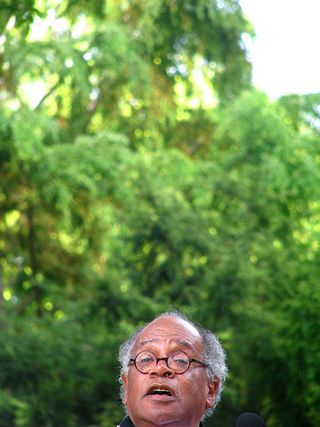
I listened to his sermons (he was born to preach!) and read his books (which are as profound as they are effortless to read). But you had to be with Peter to get him. It was an endless series of anecdotes and jokes and more sherry and references to the Queen Mother and more sherry. I thought I had left Oxford behind only to find it thriving in Peter's cheerful Anglophile chatter. When you saw him coming, you knew that you too had to perform, joust, joke, pun, if you wanted even to hope to keep up with him. There were times when I contemplated going to his weekly socials at Sparks House and realized I wasn't quite up to the repartee that day.

He was always in some version of drag – clerical, academic, leather – and at the same time so deeply learned and, yes, holy in such an idiosyncratic and entertaining fashion that I'm amazed God didn't call him earlier – if only for the conversation. This is a quote I will never forget:

"I am a Christian who happens as well to be gay … Those realities, which are unreconcilable to some, are reconciled in me by a loving God."

Has it ever been more succinctly put? And this is a truth especially close to my heart:

"[My mother] always told me that I must invent my own reality. Reality will not conform to you. You must invent your own and then conform to it. So I did. I am an authentic and an original. … I will not allow myself to be known simply as an African American, no more than I would allow myself to be known as gay or conservative. They are all bits and pieces of a work in progress. I am a child of God."

Some background here. Fallows says Gomes "possessed a combination of wit and kindness not often found in the same person." Henry Louis Gates, Jr. shares his thoughts. I only really kept in close touch in my Harvard days, but the knowledge that he is no longer here stings no less. He made the world less lonely. And he was in himself a world.

(Photo by C. Fernsebner. More here.)

Awww. Not.

Above a polar bear cub at a zoo plays in snow for the first time. Cute, isn't he? Whose heart isn't warmed by such a thing? Graeme Wood's, who wrote this about cute little Knut a while back. And Knut's keeper who called the little bundle of furry fun "a "publicity-addicted psycho." Warning: try not to think of Bristol Palin when you read this:

Knut is a combination of abused child-soldier and abused child-star — treated as a useful spectacle, with too little regard for his long-term psychological well-being. In Knut we see soul-withering effects of early fame, and of exploitation of the weak by the powerful.

These effects are as evident in him as in Michael Jackson or the cast of Diff'rent Strokes. Now that his youthful charms are fading with his white coat, he still demands constant attention from humans. They stare at him, or he screams in misery. Anyone could have guessed that the lack of same-species companionship and endless train of adoring tourists would eventually damage him, but the zoo kept him on display because apparently cuteness trumps morality. Eventually, cuteness fades, and Knut will turn on his keepers as surely as Michael turned on Joe Jackson. There is a solution to all this, and its name (at least in Knut's case) is euthanasia.

Death panels, where is your sting? And no, of course, we do not want such a thing for Bristol, even at the end of her days. Losing that entertainment option would be like missing a season of The Real Housewives of Wasilla.

Are They Serious About Entitlements After All?

Ross Douthat relays the strongest critique of the Tea Party:

Sure, liberals allowed, Tea Partiers said that they cared about runaway government spending, but polls showed that most of them actually felt more strongly about tax cuts than real fiscal discipline, and believed that the deficit could be pared back without touching Medicare or Social Security or defense.

But the movement has proved these detractors wrong, he argues, noting that "a couple months into the new G.O.P. era, and the party’s Congressional leadership has formally committed itself to providing a blueprint for entitlement reform, the immense political risks notwithstanding." His evidence for this? A Weekly Standard piece that says that a future budget plan by the GOP will include serious entitlement cuts. But in that very piece, we also learn

Still, there remains considerable disagreement among elected Republicans about the wisdom of taking on entitlement reform. Many Republicans, including some with impeccable Tea Party credentials, are uneasy with the idea of making a case on entitlements immediately before a presidential election. They worry that the White House will demagogue any proposed changes to scare seniors, the most active and important voting bloc. It is unclear what, exactly, Ryan will include in his budget proposal.

That plan is scheduled apparently for early April. So lets wait and see, shall we? But if the GOP really does propose grown-up plans to cut entitlement spending, the Dish will be the first to cheer them on. Obama's dismal, total failure to tackle this head-on in his SOTU has given the GOP an opening. If they take it, and regain the mantle of true fiscal conservatism – not petty and damaging cuts to the relatively trivial matter of debt caused by domestic discretionary spending and pork – good for them.