The Allen Institute for Brain Science has just completed its map of the human brain. Jonah Lehrer wrote about the project a couple years back:
[W]hile conventional brain maps describe distinct anatomical areas, like the frontal lobes and the hippocampus—many of which were first outlined in the 19th century—the Allen Brain Atlas seeks to describe the cortex at the level of specific genes and individual neurons. Slices of tissue containing billions of brain cells will be analyzed to see which snippets of DNA are turned on in each cell.
Lehrer interviews Allan Jones, CEO of the Allen Institute:
I think the first fields of study to see high yield from the Allen Human Brain Atlas will be drug discovery and human genetics. Drug discovery because researchers will now have a way to filter promising candidates and better understand the activity of existing compounds as they are able to match up expression of the drug target with the areas of the brain in which it is turned on. Human genetics because it adds additional information (where is the gene turned on?) to the ever-growing gene lists that are coming out of larger population studies, which is an essential step toward understanding the role these genes play in the biology of the disease.
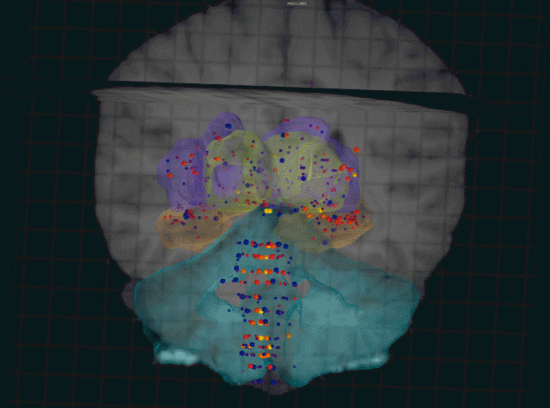
(Image: a 3-D snapshot of all the locations where Prozac alters gene expression in the brain. Researchers can click on each dot and see which genes are expressed in those specific areas, in addition to the underlying biochemistry.)
 The Dish