Kenneth L. Woodward remembers:
During Lent and Advent, we attended Mass each morning before school, marching class by class to our assigned pews. On cold days we heaped our coats and metal lunch boxes on the hissing radiators, and before the mass was over the odor of warming bananas, fruit tarts and bologna, egg salad and peanut butter sandwiches permeated the church. Whenever the parent of a classmate died, we all attended the funeral. The casket was always open and one by one we all passed by, glancing sideways at the cushioned body. At funerals, the priest wore black vestments symbolizing death. On martyrs’ feast days he dressed in red, the color of spilt blood. White and gold expressing joy were reserved for special “feast” days like Easter. Otherwise, the priest appeared in green, the color of that quotidian virtue, hope. In class, we memorized mantra-like the questions and confident answers printed in our small blue Baltimore Catechisms. But it was from images and sounds and colors that we developed our specifically Catholic sensibility.
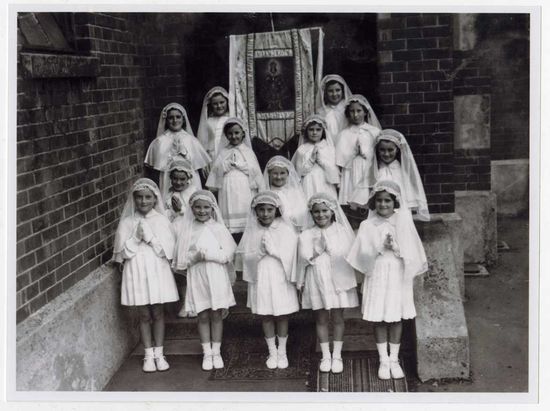
(Photo by Flickr user Christchurch City Libraries of the church's Flower Girls who "carried baskets of fresh petal flowers every first Sunday night of the month to scatter in front of the Sacramental Monstrance carried by the Bishop in Procession.")
 The Dish