Mark Vernon makes a case for the royals:
I remember being persuaded that a monarchy has the upper hand when, after 9/11, it became almost impossible to criticize Bush without being taken as criticizing America too, because the political leader and the head of state were embodied in the same person. Similarly, a list of values will run into trouble when they conflict – as liberty and equality clearly do. A symbolic figure seems better able to hold together inevitable contradictions because they're symbolic not explicit.
Amen. And Walter Bagehot is smiling somewhere.
A huge part of me is anti-monarchical. One reason I fell in love with America was its resistance to these kinds of inherited hierarchies. But like the allure of abolishing organized religion, you don't know what you've lost till it's gone. America shows, for example, that if you do not have the allure of royalty, you tend to create stranger, more politicized versions of it: from the Adamses and Roosevelts to the Kennedys and the Bushes. In the search of unifying cultural symbols, given a politicized head of state, you get idolatry of the flag or the Constitution. Nations need neutral cultural threads to give them meaning and coherence over generations.
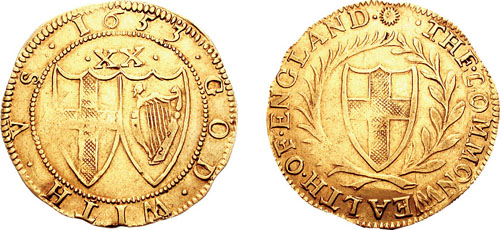
And of course, Americans often forget that Britain had an experience of the republican model long ago. King Charles I was executed long before Louis XVIII, and Britain was a commonwealth for eleven years in the seventeenth century, much of which under the "protectorate" of Oliver Cromwell. The rationale for the monarchy was graphically illustrated by the abuse of power by the genocidal Cromwell, proving Joni Mitchell right.
But I think the appeal of the monarchy is more mysterious than its practical advantages. England was governed by kings for a very long time; and its Anglo-Saxon monarchy was far more sophisticated and had far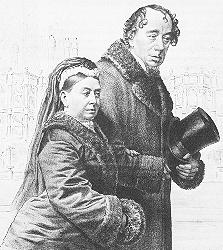 more reach over the land than many rival monarchies abroad. This is in the DNA of the island nation, and something impossible to change without rupturing the country's identity altogether. It may be much harder for the monarchy to retain the mystery that helps it survive in the modern media age – especially when you hear taped telephone conversations wherein prince Charles expresses a wish to be Camilla's tampon – but you can get past that if you want to. In the eighteenth century, far more scurrilous rumors and stories abounded. And, ironically, that sometimes helps the royals. There's something about their human failings that bonds them to the rest of us.
And when Britain is in crisis, or divided against itself, the monarchy does act as a unifier. Today, as in 1981, the country is economically beset by a deep conflict over resources. But tomorrow, that will not be in the forefront of many minds. Ditto in wartime, a mediocre King and a brilliantly emotionally intelligent queen profoundly helped Churchill rally the country. Their very human frailty made them stronger as symbols.
This is a national lodestar that goes through human generations and exhibits human trials. My rational modern mind cannot really defend it. But my emotional intelligence grasps the reason for its longevity. And hopes it survives for ever.
(Photo: A "Unite" coin from 1653, depicting the union of England, Scotland and Ireland, with no mention of the monarchy, under the Commonwealth. Drawing: the most beguilingly monarchist Prime Minister, Benjamin Disraeli, and Queen Victoria whom he named Empress of India.)
 The Dish