Keynes Vs Hayek: Round Two

The economic greats trade blows, again:

Karl Smith applauds the video but adds a caveat:

As must probably be the case here a lot of the tension in the video seems to resolve around issues for which there has largely been synthesis. I think of myself as a New Keynesian yet I agree with the Hayek character at least as much as the Keynes one.

Reporting It Out

Breaking news: Dave Weigel called Mat-Su Regional Hospital and a clerk confirmed that Trig was born there. Weigel asks:

[I]s anything preventing Andrew, or one of the Daily Dish's assistants, from making that call? During the 2008 campaign, he definitely demanded answers from the McCain campaign on what it would reveal about Palin, and when, but the current tone of his Trig-blogging is horribly meta — "just asking questions," without asking questions of the people who can answer all of this stuff.

The Dish did call Mat-Su Hospital in 2008 and were told that Health Insurance Portability and Accountability Act (HIPAA) privacy rules prevent them from talking about individual patients. But we confirmed, like Wiegel, that the list of newborns is voluntary. 

In 2008, in fact, Patrick made the point Weigel makes in his post. I noted it from the get-go. But why, one wonders, would the governor of the state decide not to include her new-born son in the registry of births in her local hospital? Privacy? She's the governor. The reason why my Trig coverage got meta is that once someone decides to protect every piece of independent evidence that would confirm the maternity of Trig, there is no other option. But I'm glad low-information reporter, Dave, has begun reporting on this and hope he does some more, especially if he comes up with something actually new.

We also interviewed ten OB/GYNs to check whether the story Palin tells, of her water breaking in Texas and flying back to Alaska, was plausible. None would say it was impossible, but all of them agreed that Palin should have gone to the hospital in Texas and that a woman getting on a plane after her water breaks is extremely dangerous. Neither Dave nor Salon really want to touch the wild ride, for good reasons. Because any sane person would immediately ask questions.

By the way, what "state documents" is Weigel referring to that prove that Sarah Palin gave birth to Trig? I'm eager to publish them. Even the state of Alaska had trouble verifying the birth certificate a month after Palin had gone briskly back to work two days after she gave birth. The premature delivery of a child with DS no more interrupted her schedule than a mild cold might, to which David Gregory would undoubtedly say, "that's cool!" A reader notes

More than a month after the announced April birth, the state's Benefits division emailed Gov Palin reminding her "we have not received the dependent verification documents for your new child" and "please submit a copy of the child's Birth Certificate to us within 60 days of the date of birth." Her staff was sufficiently concerned to forward this as an urgent email to her husband's personal account. Her husband's email reply does not confirm that he has sent the certificate; he merely responds, "I called, thanks."

For some reason, verification of his birth even for insurance purposes required special handling.

The Austerity Experiment

Tyler Cowen considers whether the British budget cuts have been a failure:

The case for the cuts is not that they will spur growth, but rather forestall a future disaster.  That’s hard to test.  A second part of the case is that not many political windows for the cuts will be available; that’s hard to test too.  On that basis, it’s fine to call the case for the cuts underestablished, but that’s distinct from claiming that poor GDP performance shows the cuts to be a mistake.

Massie notes how differently polticians and economists talk about this issue. For my part, I think the candor of the Tories and their determination to get this done quickly reflects well on them. They didn't expect an instant miracle; they hoped for long-term security. And they do not have a reserve currency to enable them in denial.

Dissents Of The Day

A reader writes:

You're right, Andrew; saying that people who reject God's love live miserable lives is definitely going to piss off your atheist readers. I generally don't mind your religious posts, but it takes a special level of arrogance to say that people who don't believe in God occupy a living hell. If you want to say that my beliefs will have consequences after I'm dead, that's a theoretically debatable question. But to assert things about my internal mental state (along with an entire class of people) is just stupid.

This description of hell is applied to all of us, Christians and non-Christians alike. It is as much my hell as yours. Another writes:

I have PTSD. As chronic afflictions go, I've heard of many worse-seeming things. Yet I bet it gives a nice flavor of hell as must be imagined by many intellectual religious people.

Not the hackneyed and biblical licking of flames over a flesh that is made forever sensitive to the agony of burning by an unconditionally loving deity, but instead waves of overwhelming regret, disgust, revulsion, and horror targeted at my self and mapped onto every memory that is even remotely unpleasant. This is not the banal make-your-own-hell of mindless internet indulgence or money obsession. It is actual hellish hell, including weeping, wailing, pounding on the wall in despair, and sobbing in genuine fear, loathing, and self-hatred. It isn't all the time, but flashbacks certainly are unpleasant.

And just to think of the love of the god who, after purposefully putting me into the life that led to this situation, assigns to me this condition full time and forever on account of my being insufficiently appreciative. This is the love I am to be punished for rejecting? Your god can go to hell.

Another:

Few popular Christian writers have spent as much time engaging honestly with atheism, so I will take your comments about hell being the rejection of god as the good faith description of your spiritual reality that I know it is for you.

Throat-clearing out of the way, though, it is certainly not empirically true that there is anything remotely hellish about my life, and I have rejected your faith (having first been raised in it). Hell is a North Korean concentration camp, or a killing field in Northern Mexico, or perhaps my father's slow descent into paranoid dementia. It is not the life of a happy, middle-aged defense worker with a great wife and two earth-shatteringly beautiful little girls who happen to be frolicking in the bath before me as I thumb this note out to you.

This is where, for me, the claims of the faithful for empiricism run aground. It is empirically not hell, Andrew. Not for me or millions of people like me.

Another:

C'mon dude, I'm stuck working on Easter Sunday too, but please try a little harder to maintain some semblance of coherence in your public expressions of faith.  One month it's impossible for you to not believe in God, the next it's all about "choice."  And the tension between these positions isn't helped by your chalking up the vast quantity of human misery that actually makes life hell to "withdrawing from God's unaccountable, unconditional love" is just silly.  People don't choose to be born poor, or hungry, or sick, or mentally ill, or into an abusive family, or to no family at all.  None of that has anything to do with "withdrawing" from God's love.  It's simply the nature of existence.  (A nature which God, were he to exist, could change with the merest flicker of his omnipotent finger.  The power of "choice" doesn't do away with theodicy any more than it accounts for children dying of cancer.)

Let me put it a different way: If I could believe in God, and a wonderful world of everlasting paradise in the afterlife, I would.  I'd get to see my sister again (dead last year at 26), and my grandfather, and all the other people I know and love who will one day die.  My brother would be there too, freed from his paranoid schizophrenia.  I would never be parted from my wife, or my children.  It would be awesome.  Who wouldn't want that?

But I can't believe.  So I don't.  And "choice" has nothing to do with it.

Another:

I suspect that most Christians' belief in salvation does not go beyond a vague idea of not actually dying and instead moving on to a perfect eternal existence, whatever that may turn out to be, so, as you say, we can "…remain ourselves forever."  A more focused consideration, however, immediately runs into the dissonance between "perfect eternal" and "ourselves forever."  If God did turn out to be the ultimate cognitive behavioral therapist and freed us from our personal demons, would that not equate to a everlasting lobotomy?  I, for one, wouldn't expect to recognize myself, and if I did I wouldn't know what to do with myself … forever. 

On the other hand, being the who who I know forever is, on due consideration, a reasonable description of hell.  My life is not hell currently, but living it in what amounts to an eternal loop would qualify, with or without the demons.  The only alternative is some state of eternal, unmodulated bliss and, hey, that would be down-right Buddhist.

Another:

You write, "Because in Christianity, unlike Buddhism, we remain ourselves for ever." And as a Buddhist, I would say that is your fundamental mistake, the basic misperception of reality that, in fact, constitutes the fallen state. Remain ourselves for ever? In what meaningful way are you the same "you" that you were when you were 20? When you were 10? When you were born? Aren't you, in fact, simply imputing a "self" onto a continual stream of ever-changing consciousness and experience?
God Save The Monarchy

Commonwealth_Unite_1653_692157

Mark Vernon makes a case for the royals:

I remember being persuaded that a monarchy has the upper hand when, after 9/11, it became almost impossible to criticize Bush without being taken as criticizing America too, because the political leader and the head of state were embodied in the same person. Similarly, a list of values will run into trouble when they conflict – as liberty and equality clearly do. A symbolic figure seems better able to hold together inevitable contradictions because they're symbolic not explicit.

Amen. And Walter Bagehot is smiling somewhere.

A huge part of me is anti-monarchical. One reason I fell in love with America was its resistance to these kinds of inherited hierarchies. But like the allure of abolishing organized religion, you don't know what you've lost till it's gone. America shows, for example, that if you do not have the allure of royalty, you tend to create stranger, more politicized versions of it: from the Adamses and Roosevelts to the Kennedys and the Bushes. In the search of unifying cultural symbols, given a politicized head of state, you get idolatry of the flag or the Constitution. Nations need neutral cultural threads to give them meaning and coherence over generations.

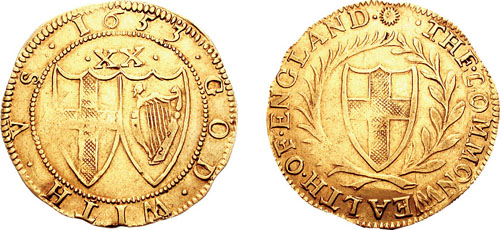
And of course, Americans often forget that Britain had an experience of the republican model long ago. King Charles I was executed long before Louis XVIII, and Britain was a commonwealth for  eleven years in the seventeenth century, much of which under the "protectorate" of Oliver Cromwell. The rationale for the monarchy was graphically illustrated by the abuse of power by the genocidal Cromwell, proving Joni Mitchell right.

But I think the appeal of the monarchy is more mysterious than its practical advantages. England was governed by kings for a very long time; and its Anglo-Saxon monarchy was far more sophisticated and had farOld_disraeli more reach over the land than many rival monarchies abroad. This is in the DNA of the island nation, and something impossible to change without rupturing the country's identity altogether. It may be much harder for the monarchy to retain the mystery that helps it survive in the modern media age – especially when you hear taped telephone conversations wherein prince Charles expresses a wish to be Camilla's tampon – but you can get past that if you want to. In the eighteenth century, far more scurrilous rumors and stories abounded. And, ironically, that sometimes helps the royals. There's something about their human failings that bonds them to the rest of us.

And when Britain is in crisis, or divided against itself, the monarchy does act as a unifier. Today, as in 1981, the country is economically beset by a deep conflict over resources. But tomorrow, that will not be in the forefront of many minds. Ditto in wartime, a mediocre King and a brilliantly emotionally intelligent queen profoundly helped Churchill rally the country. Their very human frailty made them stronger as symbols.

This is a national lodestar that goes through human generations and exhibits human trials. My rational modern mind cannot really defend it. But my emotional intelligence grasps the reason for its longevity. And hopes it survives for ever.

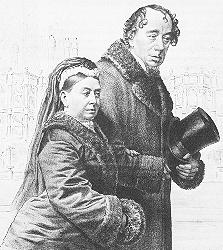
(Photo: A "Unite" coin from 1653, depicting the union of England, Scotland and Ireland, with no mention of the monarchy, under the Commonwealth. Drawing: the most beguilingly monarchist Prime Minister, Benjamin Disraeli, and Queen Victoria whom he named Empress of India.)

Marrying For Love And Money

Sharon Astyk reminds straight people why gay marriage matters:

The institution of heterosexual marriage hasn't been doing so hot – in part because as a society we're so unwilling to talk about the legal and economic relationship that comes with marriage. The invisibility of the household economy has been overwhelmingly destructive in a whole host of ways that impact all of us. Gay marriage makes us face that marriage is about love – and money and property and family ties – and that being honest about that is to our benefit, all of our benefit.

The Palestinians Unite?

Hamas and Fatah have apparently agreed to a unity government. Joe Klein explains the significance:

This profoundly changes the global Middle East peace game. Can Barack Obama now come out in favor of a comprehensive Middle East peace with Palestinians sworn to Israel’s destruction? I don’t think so. Does Prime Minister Netanyahu have to yield to such international pressure, in advance of the probable UN vote to declare Palestine a state in December? I don’t think so–especially with the uncertainties caused by Arab spring on every one of Israel’s borders. I suspect that nothing less than a formal Hamas declaration of Israel’s right to exist would bring the Israelis to the peace table anytime soon.

I doubt if even that would budge Netanyahu. Goldblog has a judicious take:

It's not good that Netanyahu has breathing space.

Breathing space, for him, means paralysis in the peace process (so-called). Israel must find, now — not later, but now — a formula that will allow it to withdraw its settlers from beyond the security fence, and to create conditions for the emergence of, at the very least, a more autonomous Palestinian entity, one that would become independent as soon as Israel can figure out a way to neutralize the Iranian threat…

It is not Hamas that is changing. It is the Palestinian Authority, which is sidelining Prime Minister Salam Fayyad, the man most responsible for bringing the Authority the international credibility it needs to declare independence. This is not to say that Hamas is all-powerful; it is watching with trepidation as its second-most important ally, Bashar al-Assad, appears in danger of losing his throne, which would not be a bad thing for anyone except the Assad family.

To be honest, I'm not entirely sure what to make of this before I've read more about it.

What Was Once Conservative …

A couple days ago, Ezra Klein called Obama a moderate Republican because the president adopted formerly Republican policies on the environment and healthcare. Kevin Drum differs:

The individual mandate and cap-and-trade may have originally been "Republican" ideas in some technical sense, but they were adopted under duress. They never truly represented things that Republicans supported.

I think this is unfair. As a young Thatcherite, I remember researching cap and trade in the 1980s and found it derided by the left and championed by the pro-market right. Yes, the right has moved inexorably to the fringe,  but you shouldn't judge the conservatism of the 1990s by the standards of today's degenerate rump. Dave Roberts follows up:

Republicans have mastered post-truth politics. They've realized that their rhetoric doesn't have to bear any connection to their policy agenda. They can go through different slogans, different rationales, different fights, depending on the political landscape of the moment. They need not feel bound by previous slogans, rationales, or fights. They've realized that policy is policy and politics is politics and they can push for the former while waging the latter battle on its own terms. The two have become entirely unmoored.

So it's not that they "moved right" on some policy spectrum when Obama took office. They just adopted a new political strategy, namely total, unremitting, hysterical oppositionalism.

But this has resulted in certain clear moves to the policy right: climate change denialism, hostility and paranoia around immigration, deeper and deeper hostility to gay equality, and a pathological opposition to tax hikes, regardless of fiscal circumstances or economic reality.