Obama: The Liberal Reagan

Michael Scherer shrewdly notes how the Obama campaign has launched itself from the base of Obama's personal favorability rather than that of approval of Obama's policies. It makes sense given that 80 percent or more think Obama is a likable person, and 52 percent have a favorable view of him, while 48 percent approve of his actual policies. Money quote:

Obama will be running on his character. The most interesting quote of the video comes from the southern white guy. "I don't agree with Obama on everything. But I respect him and I trust him."

That's exactly what Reagan did in 1984. Remember all those liberal commentators who pointed to the unpopularity of Reagan's policies in his first time and couldn't understand why he was leaving them behind in the dust? And just as in 1984, Obama can point to an economic recovery on his watch. For good measure Obama has approval ratings 7 points above Reagan's at this point in a presidential first term.

My only concern is that Obama should not downplay his actual policy achievements. He needs to re-emphasize his role in stabilizing a world economy in free-fall, preventing the collapse of the US car industry, saving the banks and getting a surplus for it, and presiding over the seismic events in the Middle East with coolness (the one glaring exception being the rescue of Benghazi).

Is Love A Choice? Ctd

Leland de la Durantaye argued that it's not. David Link seconds my distinction between friendship and love, but notes how many on the right fervently want to describe gay relationships as chosen friendships rather than an unchosen orientation leading to romance:

Those who argue that homosexuality is a choice view us, and view our relationships, as  friendships either perverted or at best gone wrong.  We have often been called, even sometimes sympathetically, “friends” (Uncle Albert and his “friend” will be coming to Weddingaisle dinner), but that was a nice way of avoiding the real subject.  It kept the language of same-sex relationships in a closet of its own, a frame that helped everyone cope.
You don’t hear that kind of language from our supporters any more.  Only our opponents are clinging to that outmoded notion of choice.  They think the whole debate over same-sex relationships is about our choice of friends.  They still can’t, or won’t, imagine that the flood of emotions and connections that they recognize as love can occur between two people of the same sex … They want us to have friends.  They just refuse to believe that the powerful and mysterious forces they remember and/or experience with love can happen, for some people, with members of their own sex, and are every bit as gratifying and amazing — are, in fact, the same thing they know so well.

This reminds me of a social occasion when Aaron and I bumped into former Senator George Allen. I introduced Aaron (not without extreme pleasure) as my husband. Allen asked where we had gotten married. When I said Massachusetts, he said: "So you all are trying to export marriage from Massachusetts to here." Nope, I said, because we cannot (this was before DC's marriage law came into effect). I then asked Allen why he would object to a committed, legally protected relationship in the first place. He answered, memorably, "I just want you to be friends."

Can you imagine anyone saying that a straight married couple?

Huck’s Shady Side

Siddhartha Mahanta tries to get access to state records on Mike Huckabee's time as governor. It appears he had them destroyed:

Huckabee's aversion to public disclosure extends beyond his gubernatorial papers. He and his handlers have also taken steps to block access to videotapes of his sermons, spanning his 12 years as a Southern Baptist minister before he entered politics. During the 2008 campaign, Mother Jones reported that Huckabee's campaign had refused to make the sermons public—and that, according to an official at one of the churches he'd led, much of the archival material relating to Huckabee's tenure had been destroyed.

Eating Google

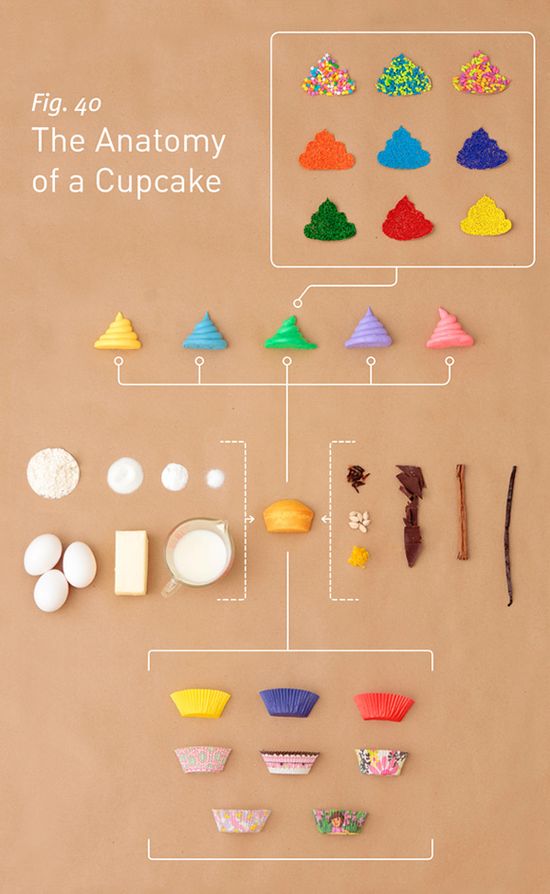
The-Anatomy-of-a-Cupcake

Amanda Hesser measures Google's influence:

The entity with the greatest influence on what Americans cook is not Costco or Trader Joe’s. It’s not the Food Network or The New York Times. It’s Google. Every month about a billion of its searches are for recipes. The dishes that its search engine turns up, particularly those on the first page of results, have a huge impact on what Americans cook. Which is why, with a recent change in its recipe search, Google has, in effect, taken sides in the food war. Unfortunately, it's taken the wrong one.

Nicholas Carr seconds Hesser's complaints:

If you're publishing recipes online and you want them to rank highly in Google's recipe results, it's no longer enough simply to publish really good dishes and get lots of people to link to them. Now, you have to be adept at (or hire someone who's adept at) SEO in order to code your pages in ways suited to Google's increasingly complex algorithm. … Amateurs and small-timers, like Grandma and Meathead, have little chance to compete with the big corporate sites, which can afford to spend big bucks on SEO. Once antagonists, Google and the SEO industry have developed a tightly symbiotic relationship that seems to be mutually beneficial. The folks who lose out are the little guys.
(Image: The Anatomy of a Cupcake by Allen Hemberger and Sarah Wilson.)

Quote For The Day II

"Don’t get me wrong. I think Jones’s actions were ill-judged and unhelpful to what the U.S. is trying to do in the Islamic world. Nevertheless, if we start allowing Muslim mobs to dictate the limits of American free speech, this country will have sunk a very long way down," - Andrew Stuttaford at NRO, responding to Butters' threat to the First Amendment over the Terry Jones case.

(For new readers from the Beast, "Butters" is the Dish shorthand for Senator Lindsey Graham. If you watch South Park, you may notice the resemblance. For a glossary of other Dish-specific terms that may mystify newcomers, click here.)

Making It Up As We Go Along

Gregory Djerejian goes in search of a grand strategy for the Middle East: 

Fundamentally, how do we square our interventionist stance in Libya with our relative non-interventionism in the Bahrains and Yemens (putting aside the obligatory retort from Adminstration defenders that much work is occurring behind the scenes trying to forge a rapprochement between the Bahraini opposition and Sunni leadership, I believe a less than convincing talking point)? And is it time perhaps to retire at least somewhat the easy resort to the perennial Iranian bogey-man in favor of a more creative, recalibrated posture? And too, what contingency planning is afoot, if any, were Eastern Saudi to erupt, given the grave economic implications to the West?

Thanks

The reader response to the new site has been huge, with all sorts of suggestions for improving the layout. We will do all we can to get some small adjustments done as soon as possible. I just want to say thanks for your input. Before a new site goes live, it's very hard to see things that will emerge from actually using the interface. But we've learned a lot this morning – thanks, in large part to you.

Catholics And Gays

Doctor Science at Obsidian Wings takes a closer look at the recent study by Robert Jones and  Danie Cox. The study found that, nationally, American Catholics are surprisingly accepting of gays. That's not in question. But when you break down the study in two states, Michigan and California, you find that the approval rates are not far off the approval rates of non-Catholics in those states. Catholics respond to the local culture around them as well as to their universal Catholic values:

In other words, all the discussion about what these results show about American Catholics is meaningless. The most you can say is that Catholics don't seem different from the non-Catholics they live among — they are, on these issues, part of their culture. That is only interesting if your null hypothesis is that religion is necessarily significant — which isn't a null hypothesis.

The Beast Switch: Your Take

A reader writes:

I've launched more than a few web sites in my career, and though you had a hiccup on the redirect this morning, it seemed short-lived and recoverable. I've seen much worse.

I have to tell you, though, I hate the new layout.  The email/permalink/social links on the left hand side of the stories are distracting and take up far too much room.  Is this a Daily Beast requirement? If not, put them back below the stories and save the bulk of your horizontal space for the headline and story. Just a thought.

That seems to be the biggest complaint among readers, and something we're already working on. This will get better soon. Another writes:

Too much white space. I feel like I'm staring down an antiseptic hospital hallway. Too cold and stark. Needs more color.

Another reader is more positive:

I just logged on to your new digs. I entered feeling a little intimidated, but the first thing that greeted me was a beard. I was comforted at once – it's still the Dish. Sigh.

It's all so new and shiny, I'm almost afraid to touch it. New appliances and everything. And yet it's still says "Andrew". Congratulations on your new home.

Another:

The new digs looks great. I may actually prefer the Beast page layout to the old one. It seems cleaner somehow. I do have a minor complaint, however. The hyperlinks now open in the same tab, rather than a new one. Is this intentional? It's rather irritating. Having to back out to return to The Dish is an unnecessary step, and made all the more obnoxious when working with a slow wi-fi connection.

That is a popular request, and we will fix it soon. It's the kind of thing you don't see when just viewing the page design. But we see it now and will respond. Another:

Permalinks at theatlantic.com aren’t redirecting to thedailybeast.com. Also, internal links from the Dish to the Dish still point to theatlantic.com and hence dead-end.

After a short period, that issue should be resolved at this point, thanks to the great tech team at The Atlantic. Another:

I just tried a search and it returned all the content from TDB.  I would like the ability to search only The Dish, as there’s usually a specific post I’m looking for when I do so. There’s also no way to order the search results; by date at least would be nice.

Another:

It'll take a bit for me to get used to the new look, but I'm sure I will. However, can't we go back to the old font?  "New York" or "Times" or whatever you're using so far just isn't you.  Looks "old school" mid-'90s in a bad way.

Another:

The vertical space below the end of each post is wasted. The end of an article does not need such a generous allotment. 

On the other hand, space above a headline does favor readability and draws the eye to the headline. I suggest that you shift vertical space from the bottom to the top of your <li> elements. Doing so will also give your headlines a bit more space prior than following, which will be another improvement. Right now they are vertically equidistant between the bottom of the last post and the top of the content to which they refer.

Another:

One note of thanks: No more email popups every time I mouse over the "send me" stuff. Good riddance!

Another:

I noticed that you've merged the "Daily Read" and "Blog Love" sections on the new site. I use your blog as a portal to a few other blogs, all of which used to be under "Daily Read". Now it takes me forever to scroll down and find them. Also, are you really telling us you love Michelle Malkin's blog?

No, but she has a major voice on the far right, and I think it's worth checking in on from time to time. Another:

Well, my five-year stretch of checking your website out multiple times a day has come to an end, as my employer blocks my ability to view your new web address at thedailybeast because my the webmaster believes your website fits the category of "society and lifestyle."  Apparently, "society and lifestyle" web pages are bad for me to view during work hours on my work computer.

The personal pain will be great.  I will try to catch up when I get home, but I can't lie – I will be suffering from severe withdrawal. Maybe I can sneak in a few page views on my blackberry …

Another:

No goodbye post at/to The Atlantic, really?  What the eff is that about?

I wrote one on Friday – read it here.