Month: April 2011
Will Bob Gates Resign?
Some speculation.
Jobs Report Reax
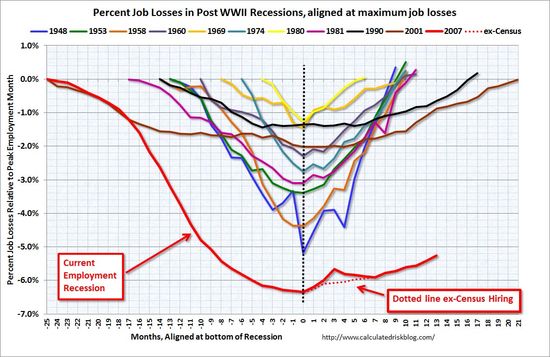
It has not been a quiet few months in the world economy. And yet the recovery is grinding along, absorbing bad news with relative calm and uncertainty with relative ease. That’s perhaps the best potential news in this report, and in the market’s performance in recent months: The economy is less fragile than it once was, and job growth might persevere despite bad decisions and bad luck. We’d better hope so, because we can count on plenty of both over the next few months.
The average hourly wage of all employees remained $22.87, unchanged from February and up only 1.7 percent over the last year. The wage trends are a reason to be sober about future consumer spending and highly skeptical of claims that the economy is on the verge of an inflationary spiral.
I notice that Republicans are avoiding the traps of February and March, and not taking credit for the good numbers. Eric Cantor is aggressively generic: "Even with this good news, far too many people remain out of work and we need to continue our efforts in Washington to foster pro-growth policies that will help businesses small and large to innovate and expand."
[W]hile American employers have picked up hiring, they are disproportionately hiring workers who have spent less time looking for a job. That leaves more of the long-term unemployed in the jobless pool — right now nearly half of those unemployed have been unemployed for at least six months — with each of those individual workers racking up even more weeks. The net effect is to pull up the overall average length of unemployment.
Chart from Calculated Risk, who comments:
Overall this was another small step in the right direction.
Quote For The Day
"We are trying to talk to the British, the French and the Americans to stop the killing of people. We are trying to find a mutual solution," – former Libyan prime minister Abdul Ati al-Obeidi.
Gandhi Too, Ctd
Many readers have noted that the WSJ reviewer of Joseph Lelyveld's new biography was Andrew Roberts, a renowned reactionary historian, who, in this day and age, is intent on demonizing those 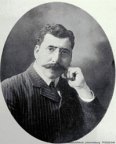 who once opposed British imperialism (move over, Dinesh). For Roberts, citing Gandhi's homosexuality is part of a smear campaign. Obviously, I don't share that perspective, and I do want to address the notion that Gandhi was bisexual, not gay.
He did have a wife, and he got a boner when sleeping naked among young women. But my point is that homosexuality is a sexual and emotional orientation to members of the same gender. It's the emotion that situates the sex, and the emotion that is, to my mind, the deeper reality. Gay men have had sex with women for millennia (me too!) but that doesn't make them straight or bi. The NYT has a fascinating piece on the subject and India's potential banning of the book. Money quote:
Gandhi expresses great fondness and yearning for Mr. Kallenbach in the letters, telling him that his was the only portrait on Gandhi’s mantelpiece, opposite the bed, and that cotton wool and Vaseline were “a constant reminder” of him … Gandhi destroyed Mr. Kallenbach’s letters to him early on, according to the book.
In the book Mr. Lelyveld writes, “One respected Gandhi scholar characterized the relationship as ‘clearly homoerotic’ rather than homosexual, intending through that choice of words to describe a strong mutual attraction, nothing more.” But Mr. Lelyveld then acknowledges: “The conclusions passed on by word of mouth in South Africa’s small Indian community were sometimes less nuanced. It was no secret then, or later, that Gandhi, leaving his wife behind, had gone to live with a man.”
My italics. Why would Gandhi destroy letters from someone he clearly loved?
Isn't the obvious likely explanation that they would have revealed the real nature of the bond? And the distinction one scholar makes between "homoerotic" and "homosexual" relies again on the absurd and homophobic notion that if one doesn't have actual sex with another man, one is not gay. All of this is saturated with homophobia of various degrees, and India is a deeply homophobic society. The India Times adds more detail:
On June 21, 1909, Gandhi's first letter says, "I address my first letter from the train to you as I expect most from you and as you are uppermost in my thoughts. When heart speaks to heart, speech is superfluous. Yet I cannot help saying this much: I do not understand your extraordinary love. I hope I deserve it all. Our mutual attachment is the strongest possible testimony of our having lived before in bodies rather than the present ones."
On September 17, 1909, Gandhi wrote to Kallenbach calling him 'Lower House', how happy he was to get "another charming letter" from him. But the most controversial is the letter he wrote a week later. "Your portrait (the only one) stands on my mantelpiece in the bedroom. The mantelpiece is opposite to the bed. The eternal toothpick is there. The corns, cottonwool and Vaseline are a constant reminder." Then Gandhi – Upper House to Kallenbach – talks of how he had never "departed" from the "contract" the two had.
What was this contract between the two? There were two agreements. The first one with seven points was a simple one and talked of how the two would divide work in the farm near Lawley. The second agreement talked of Kallenbach going to meet his family in Europe and not spending money beyond what was "befitting the position of a simple-living poor farmer''. It also says 'Lower House' would not look "lustfully upon any woman". The agreement signed by both ends with following line: "The consideration for all the above tasks imposed by Lower House on himself is more love, and, yet more love between the two houses” such love as, they hope, the world has not seen."
This may conceivably be an intense heterosexual friendship – but one that speaks of immense love, vaseline, upper and lower houses, and an insistence that the friend never resort to heterosexual sex. If you want to believe that, no one is stopping you. But one day, I suspect, the way in which biographers strain to ignore or downplay obvious evidence of homosexual orientation will decline. Only then will gay citizens be able to see themselves in history – from King James VI to Bayard Rustin and Abraham Lincoln – and all citizens be respected enough to know the unvarnished and uncensored truth.
(Photo: Hermann Kallenbach, Gandhi's intimate "soulmate.")
How Will It End?

Juan Cole thinks International Criminal Court charges will hasten Qaddafi's departure:
NATO’s aerial bombing missions were what stopped the advance into Kosovo of Serbian troops. But it was the world community’s relegation of Milosevic to pariah status that helped the Serbian elite turn against him. The International Criminal Court has been charged by the UN with looking into whether Qaddafi can be charged with crimes against humanity (and if not he, who could?) The ICC seems likely to return an indictment before too long. Such indictments have powerful real-world effects, as seen with Milosevic. Although this development might make it more difficult to find a place of exile for the Qaddafis, it would almost certainly hasten the fracturing of the Tripoli elite and an end to the conflict.
And this, it seems is now the real goal, what David Brooks calls "squeeze and see." To my mind, this is infinitely preferable to getting bogged down in arming the rebels, or finding ourselves alongside Algeria and Egypt as outside powers trying to turn the events in Libya to our advantage. The latest reports from Tripoli seem to suggest a quickening of the regime's slide:
One resident of the rebellious neighborhood of Tajoura and another with ties to the nearby area of Suk al-juma said that pro-Qaddafi militia members could no longer safely enter the side streets in small numbers for fear of attack by local residents, although heavy contingents of militia still dominated the main arteries.
Defections, however, somewhat work against Qaddafi's departure, it seems to me. It isolates him further, which seems to bring out the dead-ender in him. I was struck however by Qaddafi's spokesman's statement:
“We will remain here until the end.”
Have the Qaddafiites reconciled themselves to the idea that there will be an end? Here's hoping.
(Photo: A Libyan rebel rests before leaving Ajdabiya to the front line near the oil town of Brega, as the West backed off from arming the rag-tag fighters and pushed for a political solution instead, on April 1, 2011. By Mahmud Hams/AFP/Getty Images)
Could An Obese Goalie Change Hockey? Ctd
A puckhead writes:
I'm really sorry about emailing twice in a day, but as a hockey goalie I couldn't let this one slide. No, an obese goalie cannot change hockey. The most important reason for this is the consideration of equipment regulations.
All organized leagues follow NHL size guidelines for pads, gloves, chest/arm protectors, pants, etc., and I can tell you that a human being who stands 6'+ tall and is 4'+ wide would never be able to physically fit into regulation equipment. And even if he/she could cram themselves into the gear, I'm sure there would be an immense amount of exposed skin where the poor bastard wouldn't even want to lay there on the ice getting peppered.
As much as I enjoy it, getting hit by a puck is rarely painless, especially when you take a good hard shot to the body. Take an NHL (or AHL, D-I college, or Canadian Major Junior) shot in an unpadded spot, at 85+ MPH, and brother, you're in for a very bad couple of days.
Keep up the great work, but it might be best to leave the hockey talk to us puckheads!
Another writes:
The "fat goalie fallacy" is something familiar to most fans of hockey. It's the kind of stupid question that gets asked by those completely ignorant of the sport. Why is it so dumb? Because playing in goal is Hard Work.
A fat slob of a goalie may block more of the net, but they would still need to have the athletic reflexes to catch 100-mile-an-hour slapshots, the strength to drop down into stance (the butterfly) and bounce back up again immediately, the skating ability to go side to side repeatedly, and the endurance to play for a full 60 minutes without any letdown in concentration.
That said, goaltenders are in fact getting larger, and heavier, at a faster rate than players at other positions. The Nashville Predators have a goalie tandem that averages 6'5" and 225lbs – but make no mistake they are elite athletes.
Another:
A lot of the action is at ice level – not the best angle for your obese goalie. If he's big enough to block the goal he won't be able to see his shoes or even bend enough to control that space. Also, goalies are especially vulnerable if they can't follow the action behind them. Here's what would happen if you played the fat guy.
Another sends the above Youtube:
There was an episode of "Sports Science" that looked into it by putting a sumo wrestler, and then a guy in a sumo suit alongside him, in goal. Both were easily beaten. (On top of that, the guy taking the shots is Anaheim Ducks enforcer George Parros, who isn't exactly know for his goal scoring prowess.)
Arianna’s April Fools
Had me for a couple of minutes.
Yglesias Award Nominee
“Reducing and eliminating needless spending and programs are appropriate, but a wholesale reduction in spending, without considering economic, cultural, and social impacts is simply irresponsible. We must also be mindful that many of the proposed spending reductions would disproportionately affect the neediest among us, including housing and heating assistance,” Brown said. “Likewise, some of the proposed cuts would be economically counterproductive, negatively impacting our ability to innovate and invest in research and development,” – Senator Scott Brown of Massachusetts.
The answer is obvious: trim, not slash, current discretionary spending, and set out a long term plan to cut entitlements and defense. That avoids sucking demand out of the economy as the recovery gathers steam, and could restore business confidence in the future much more effectively than grandstanding over NPR.
Brothers
An Airman returns from Afghanistan and finds his bro asleep on the couch:
(Hat tip: BF.)
 The Dish