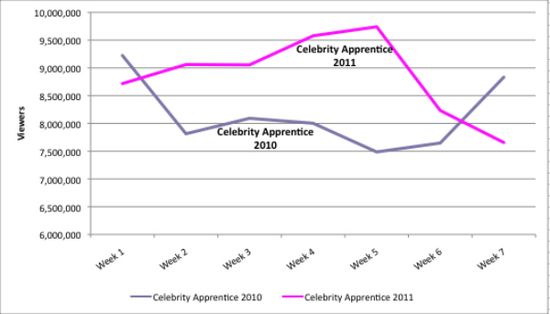
Josh Green has the goods. The reason? Trump's core audience leans very Democratic. Josh thinks this may prove Trump is dumber than we thought. Or it could mean he is more serious than we thought about running for president. I lean toward the latter.
Josh Green has the goods. The reason? Trump's core audience leans very Democratic. Josh thinks this may prove Trump is dumber than we thought. Or it could mean he is more serious than we thought about running for president. I lean toward the latter.
Birther queen Orly Taitz- surprise! – dismisses the long-form birth certificate:
Taitz thinks that the birth certificate should peg Obama’s race as “Negro” and not “African.” “In those years … when they wrote race, they were writing ‘Negro’ not ‘African’,” Taitz says. “In those days nobody wrote African as a race, it just wasn’t one of the options. It sounds like it would be written today, in the age of political correctness, and not in 1961 when they wrote white or Asian or ‘Negro’.
A birther legislator grasps at other straws.
This letter, from Obama's lawyer requesting the long-form birth certificate and the Hawaiian Director of Health's response, backs up Mark Thompson's basic understanding of Hawaiian law. It also confirms my view that asking a relevent legal authority to grant a waiver is not the same as acting outside or above the law.
Greg Sargent shows a remarkable lack of magnanimity, with one exception:
John Boehner, by contrast, did suggest that it’s time to move on. His spokesman said today that this has “long been a settled issue.”
Michael Balter summarizes a new paper that found "IQ tests are measuring much more than just raw intelligence–they also measure how badly subjects want to succeed both on the test and later in life":
[T]he effect of financial rewards on IQ scores increased dramatically the higher the reward: Thus rewards higher than $10 produced g values of more than 1.6 (roughly equivalent to more than 20 IQ points), whereas rewards of less than $1 were only one-tenth as effective.
Another important finding:
By constructing a series of computer models of the data, the team found that higher motivation accounted for a significant amount of the differences in IQ scores and also in how well IQ predicted later success in life. For example, differences in motivation levels accounted for up to 84% of the differences between the boys in how many years of school they had completed or whether they had been able to find a job.
After reading the paper, Tyler Cowen concludes that "a) conscientiousness is more important than we think (when we think we are measuring the importance of IQ), and b) there are some smart people, smarter than we often think they are, and they pick and choose their spots."
For the right, this discredits a completely emotion- and culture-free measure of intelligence; for the left, it reveals how individual motivation, i.e. effort, is actually a core part of an individual's success. It's not random. And taking that individual's wealth away at higher rates than others is, in some respects, punitive of effort and motivation.
(Right now, of course, I support higher taxes for the successful. But not because of social justice – because we all need to sacrifice to get this debt under control.)
After reviewing the full text, Mark Thompson is clearly right and I was reading the wrong section of the law. Apologies. But I think Mark over-reaches a little when he says that Obama has gone above the law in doing this.
He got a rare waiver, which the law allows. A waiver from the relevant rule is not acting above the law; it is lawfully asking to be exempt from the general rule for special reasons:
To protect the integrity of vital statistics records, to ensure their proper use, and to ensure the efficient and proper administration of the vital statistics system, it shall be unlawful for any person to permit inspection of, or to disclose information contained in vital statistics records, or to copy or issue a copy of all or part of any such record, except as authorized by this part or by rules adopted by the department of health.
He could have asked for that at any time. And should have, in my view, however ugly, dumb and bigoted those requesting total transparency may be. You don’t have to be president. And these are the consequences. I’d rather live in a society which expects such transparency when it comes to documents pertinent to public controversy, than one in which deference and secrecy are the rule.

Stephen Budiansky says it depends almost entirely on the chances of success:
It is a close question whether — in the short run, at least — our intervention in Libya is likely to do more good than harm. But I don't think it's close at all that it is extremely unlikely to succeed with the force we are willing and able to commit. That is a completely valid moral and practical consideration that deserved far more consideration than it got.
A just war is not merely a war fought in a good cause against a terrible tyrant; there are an infinity of good causes and no shortage of terrible tyrants. A just war is one that can justify the destruction it sows, and the enduring responsibility it entails.
(Photo: A Libyan rebel inspects a tank for Moamer Kadhafi's forces that was destroyed by a NATO bombing and left at a garage in the severely destroyed Tripoli street of the besieged city of Misrata on April 26, 2011. Misrata remains besieged by Kadhafi's troops to the east, south and west, with its only access to the outside world by sea. By Christophe Simon/AFP/Getty Images)
Like these Dish readers, Jim Manzi defends elements of business jargon:
Jargon develops inside organizations, in part, to help coordinate activities efficiently. It should lead the author of the criticisms to question her premises when at least some of these terms are widely used not only in unsuccessful, but also highly successful, corporations.
Another reader chimes in:
While I too applaud the goal of the website Unsuck It, I think it misses the central problem of corporate language used in consulting, finance and the law. The issue is not that people use jargon to describe specific things that might be better stated another way; the problem is how often people use corporate catch phrases to say nothing at all.
The consulting word I hate most is "deliverable." Unsuck It defines the word as "a piece of a project," but it is broadly used in my business to mean anything that anyone might produce and deliver to a client or even another consultant. Sure, a piece of a project is a deliverable, but so is the entire completed project. An early draft of a project is not an acceptable deliverable for a client, but it might well be a deliverable for the project manager. Deliverable might refer to the content of a presentation, or to its physical manifestation. An email is a deliverable. So is a speech. A Power Point presentation is obviously a deliverable, and a single slide or graphic within the presentation is a deliverable, and I have (sadly) seen many a Power Point slide expound broadly on the topic of deliverables. Whenever a colleague uses "deliverable" in my presence, I am seized with a strong desire to bring the meeting to a shrieking halt and demand an actual, specific description of the thing he expects to be delivered.
Imagine if we used these sorts of meaningless, reflexive nouns to describe all the objects in our lives. This apple in my lunch? It's actually just an eatable, just like everything else I consume today. I'm writing this sendable to you on a typeable. When I'm done, I'll lean back in my sitable and use my thinkable to imagine a world that doesn't turn me into a suicideable.
Consultants use words like deliverable because it saves them the trouble of actually explaining what they do, because the meat of our work is so often complicated, imprecise, and poorly conceived. This problem, though, is precisely why consultants (and lawyers and other people who traffic in ideas instead of concrete physical products) should avoid vague, meaningless words. If your goal on a project is complicated and imprecise, your first step should be to think hard about those goals, identify and name them. When you rely on "action items" and "deliverables" to get you to the end, you will most likely produce something nearly as meaningless and useless as the words you've used to describe its creation.
Chick attack!
Mark Thompson says that this post and this post are a total misreading of Hawaiian law:
Quite literally, in order to release this document, the President had to ask to be treated as being above the law, even if it is a relatively trivial law in the grand scheme of things. Quite understandably, the State of Hawaii decided that this was a wise idea. That so many are prepared to insist that the President had an obligation to ask that he be treated as above the law from a very early date is far more troubling.
 The Dish