The Educational Caste System

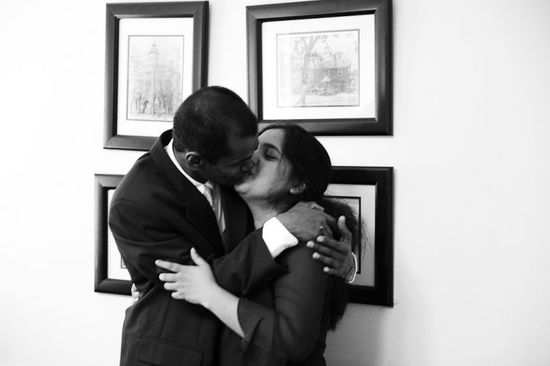
A new study in the Journal of Human Capital learned that even though the "level of formal education has no correlation with a movie star’s success, either in terms of box office earnings or the likelihood of winning an Oscar," movie stars still marry within their educational cohort:

What it says is that men and women have very strong preferences for non-financial partner traits correlated with education. And educational sorting would remain even if the tendency of men and women to work with colleagues of a similar educational background were to disappear or if the role of educational institutions as a meeting place for future husbands and wives were to disappear.

The Case Against Graffiti, Ctd

Graffiti-20110425-233321

Jeff Mills grapples with the police's argument that a grafitti show at L.A.'s Museum of Contemporary Art is bringing "criminals" to the area:

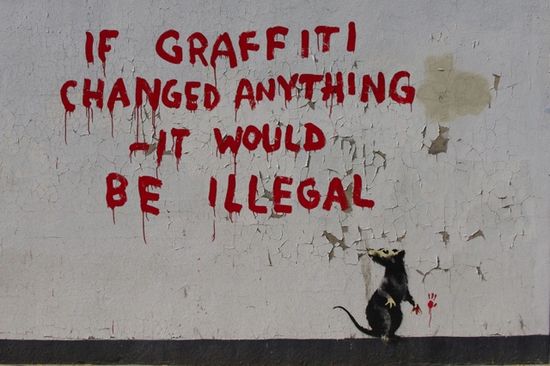
[I]f every artist had the wit, skills, and humility of a Banksy, having art forced on you in a public venue probably wouldn't be as much of an issue. The problem is the unskilled imitators who gum up the landscape with half-baked doodling. It will remain a gray area, though illegal is illegal.

(Image: possible new work by Banksy)

The West’s Water Problem

Charles Fishman bemoans the fact that a foursome in Las Vegas playing 18 holes will use as much water as a typical US family uses in a month. But the city is turning itself around:

It's illegal now to have a front lawn in any new home in Las Vegas. The water authority will pay people who already have lawns to take them out–$40,000 an acre– and replace them with native desert landscaping. They pay golf courses to do the same thing. … [T]he Las Vegas metro area now collects, cleans, and recycles to Lake Mead 94 percent of all water that hits a drain anywhere in the city. Essentially, the only water that isn't directly recycled back to the source is the water used outdoors.

No city in the U.S. matches that.

Ben Jervey follows California's water problem, and some of its more novel solutions:

A couple years ago the Orange County Water District opened the world’s largest such wastewater recycling plant. In fact, if you’ve visited Disneyland recently and sipped from a water fountain, you’ve already drunk this “toilet-to-tap” water.

It’s A Dog’s World

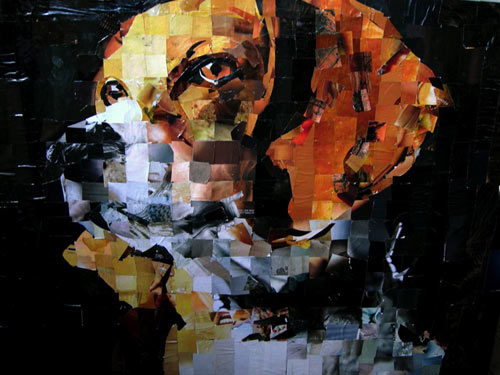
BEAGLE

Jeff Jarvis applies a CBC Ideas program on how dogs think to the internet today:

[D]ogs have a different sense of “now.” Unlike our eyes, which take in what is visible and apparent at this moment, their noses can sense the past — who and what was here and what’s decaying underneath — and the future of a place — what’s coming, just upwind.

… It strikes me that the net — particularly the mobile net — is building a dog’s map of the world. Through Foursquare, Facebook, Google, Twitter, Maps, Layar, Goggles, and on and on, we can look at a place and see who and what was here before, what happened here, what people think of this place. Every place will tell a story it could not before, without a nose to find the data about it and a data base to store it and a mind to process it.

(Image by Samuel Price, who makes dog portraits out of recycled magazines.)

The Weekly Wrap

Today on the Dish, Andrew praised demonstrations in Syria while connecting it to a larger picture of a new Middle East and P.J. Crowley questioned Obama's Non-Doctrine. The royals got married, Andrew admired Prince William's uniform, and the Guardian gave Republicans an opt-out option. Doctor Science compared The Game of Thrones to the British royals, and other people tied the knot today too. Howard Gleckman critiqued our uncreative tax increases, Jack Germond nailed Ryan's plan, and we compared Krugman's left to Obama's. Trump dropped some f-bombs for the Tea Party and had a taste for blood, but he was still getting prime seating at the White House Correspondents Dinner. We kept tabs on the persistent Birthers, mapped the price of oil,

We put out the call for Dish interns, America's Funniest Home Videos still dominated in America, and a woman faced off with cheetahs. We studied the science of tornados and the resilience of the South, the value of brands, and hypothesized why the pill hasn't improved. We compared redistributing GPA scores to redistributing wealth, and Reason wanted Walmart in DC. People protected their backyards from solar panels, the Sisters of Perpetual Indulgence replied to Andrew's complaints, and Megan remembered the injustices lurking behind much of our nostalgia. TNC was grateful for the Civil War, Graeme Robertson revealed the true nature of dictators, and we parsed Sam Harris' philosophy of morality.

South Park neologisms here, quotes for the day here, here and here, dissents of the day here, FOTD here, VFYW here, and MHB here.

Optimist from Brian Thomson on Vimeo.

Thursday on the Dish, Andrew came to the defense of the monarchy in all its human frailty, the people wanted wedding coverage, and the bloggers admitted we all have our guilty pleasures. Cowen sized up the success of austerity, Andrew tried to nail down the mainstream media's role in gatekeeping stories, and responded to Weigel's call to the Alaskan hospital, verifying Trig's birth. Andrew and readers revisited Sam Harris' comments on torture, and Andrew didn't approve of gay culture mocking faith. Andrew approved of Ezra's tweaks to the living will stipulation, debated policies that were once considered conservative, and defended the "legitimacy" of Obama's policies. Jonathan Bernstein didn't think the birth certificate would matter for 2012, Rand Paul yucked it up, and the Tea Party swooned over Trump. We followed the Independent vote, but still gulped over the prospect of Trump.

We weighed our options in Syria, civil servants broke ranks with the army, and a father stood up for his gay daughter in Damascus. The ambassador was no longer invited to the royal wedding, but it may just be the cause celebre of the week. Palestinian factions united, Mexico chose TV over fridges, and Shani O. Hilton critiqued the catcall. We admired the Graffiti of War, Europe slipped on its environmentalism, and Trump dissed China, while still producing his line of clothing there.

Andrew wondered about the religious exception to San Fran's proposed ban on circumcision, and Ann Friedman wanted better birth control. Gay marriage can change how how honest we are about straight marriages, Overthinking It examined Death Star economics, and Keynes battled Hayek. Tuscaloosa twister here, nature clip of the day here, crazy avatar spy story here, and monkeytail beards here. Creepy ad watch here, cool ad watch here, dissents of the day here, Malkin award here, FOTD here, VFYW here, and MHB here.

Vfyw
Dartmouth, England, 6 pm.

Wednesday on the Dish, Obama released his long-form birth certificate, and Andrew wondered why he waited so long and of course, applied the logic to Palin. Trump got smug, Pareene questioned Trump's son's affirmative action, and his ratings slid. Andrew seconded Will Wilkinson on dropping silly restrictions, and birthers would be birthers.

Larison and Juan Cole duked it out over rebels in Libya, Assad's army splintered, and cutting the head off the snake may not be the best idea. Obama hadn't improved Muslim perception of the US, and the morality of war hinges on its success. A reader defended Andrew's rant against the Hunky Jesus contest, and readers piled on the "doctors" at Gitmo. Some Mormons exploited welfare, we explored cash transfers and paying for healthcare, and cops don't like being recorded. Krugman tracked Obama's spending, we went another round on the hell question, and vaccine denials stretched across both aisles. Governments aren't good at measuring progress by software, Alex Tabarrok filtered the gas tax, and money motivates humans, in life and in IQ tests. Johann Hari urged America to get over the royals, we oogled peens on the big screens, and Malcolm Gladwell consumes old media.

Quotes for the day here, here and here, tweet of the day here, dissents of the day here and here, FOTD here, MHB here, and VFYW here.

Face
By Mandel Ngan/AFP/Getty Images.

Tuesday on the Dish, Andrew rejected Sam Harris' defense of torture in the name of humanity, expressed disgust for the "doctors" at Gitmo, and defended his cognitive biases against Palin, and asked his critics to own up to theirs. Andrew pushed back against bullies in the gay rights movement, and glimpsed the onset of the Chinese century due to our inability to accept the urgency of the debt crisis. Trump lowered the standards for the GOP pool, Ron Paul brought integrity to the debate, and contra Wick Allison, Andrew still preferred Obama to the horror of a McCain presidency. Haley Barbour concluded his invisible primary, Syria's army fired on its people, and China animal rights activists persevered.

Niall Ferguson explained China's interest in the copper market, Conor Friedersdorf was unnerved by bidding for dates, and Andrew lobbied for a federal lottery to fund "heritage" programs. Paul Campos questioned law school employment numbers, Abhijit Banerjee and Esther Duflo turned our assumptions about hunger on their head, and we contemplated living with violence. Readers defended corporate speak, schooled us on the gas tax, and debated Mormonism with Andrew. We skimmed through Tina Brown's royal wedding primer, Brits protested for marriage equality, and a widower had to sell his home. We heralded beard wars, wedding wars, and hampster judges. Andrew dismissed the Hunky Jesus contest, Americans despised Congress, and Canadian populists attacked.

Malkin award here, Yglesias award here, quote for the day here, FOTD here, MHB here, VFYW here, and VFYW contest winner #47 here.

Kate
 

Monday on the Dish, Andrew defended his right to ask empirical questions on Trig and wasn't buying Weigel's argument that conspiracy theories have been flogged to death. Andrew weighed the damage done in Gitmo and bemoaned Israel's rightwing victory in shutting Obama down on the peace process, and David Shulman sifted through the remains of Goldstone's partial retraction. Syria descended into chaos, Rio fought back against favela violence, and the war in Libya wasn't winning Obama any Republican cred.

Andrew rallied against pressuring lawyers of any kind, even DOMA defenders, and Texas acted crazier than Iran about transgendered marriages. Gas taxes can't achieve what we want them to, but Ryan Avent still defended them. Andrew gushed over Tom Coburn's fiscal realism and dismissed Haley Barbour as not being presidential material, and readers picked apart the mass insanity on the Democratic side. The GOP bucked Karl Rove, and E.D. Kain approved of Gary Johnson for his unwillingness to drop bombs. We unsucked the office, and analyzed whether healthcare patients can act like consumers. Aaron Carroll and Austin Frakt put emergency care in context, readers debated vaccines, and Mormonism can't cure poverty.

Our grapefruits evolved from atomic gardening, bananas have their own carbon footprint, and Heather Mac Donald dissed grafitti. Angry Birds shifted advertisers from TV to mobile devices, Michael Eisen outed Amazon's automatic pricing scheme, and Alexis feared the iPhone's tracking system. Women worried more openly, a "wrong" marriage is partially hindsight, and Elizabeth Abbott argued polygamy is wrong. James Gleick chronicled the biology of the meme, and Andrew swore off the Kate & Will wedding pizza.

Tweet of the day here, horrible analogies here, cool ad watch here, FOTD here, VFYW here, and MHB here.

–Z.P.
Hell As Moral Compass, Ctd

A reader writes:

When I was a senior in (Catholic) high school, I took part in a theology class that debated the very tenets of the Catholic faith, using the writings of C.S. Lewis and St. Augustine, as well as religious-themed films like The Last Temptation of Christ and Dogma. Our teacher, a rather progressive priest, told us that we could not rest on the "argument from authority" to base our theological answers in the seminar-like class; rather, we had to follow Thomas Aquinas and Lewis to come to a rational explanation for our faith.

Within the first couple of weeks of class, we came to a rather interesting depiction of God. Adhering to the idea of God being ganz andere – that is, wholly unlike us – we tried to find a rational explanation of what God is. The only description on which most of the class could agree was, "God is Love." I was the lone holdout to this description, because if God is completely unlike us, then "love," a human concept, cannot apply to Him any more than happy or hungry or sexy. In the years since, however, I've come to reevaluate this concept.

I don't believe in God (at least not a personal one), but I do believe in a sort-of Heaven/Hell duality: Heaven is Love. Conceptualized like this, there is no reason we can't have Heaven, or Hell, on Earth. The most glorious of moments, the moments when we feel the most love, are our Heaven; the moments where we feel none of that love, then, would be Hell.

Though I have a healthy respect for it (and occasionally wish I too had it), I no longer share your faith that there is something after this life. But a lot of that is actually helpful to me in that it doesn't leave me waiting for some kind of redemption that may or may not come. Rather, it makes the immediacy of this life of the utmost importance. I strive for love. I love feeling love. And I can only imagine that someone who has never felt that kind of love, someone who has been deprived for his or her entire life of that beautiful feeling – THAT would be Hell. To me, it's a lot more horrifying to imagine living without the love of others than to imagine living without God's love.

If it turns out that I'm wrong and there is a God, I am relatively certain that He would prefer that we lived our lives by giving and receiving as much love as possible, rather than eschewing Earthly love in pursuit of some obscure divine.

Selective Nostalgia

While reminiscing about childhood, Jim Manzi savors a rare "moment of communion" with Paul Krugman. McArdle can't join in:

Maybe it's because I grew up later than either Manzi or Krugman; maybe it's because I grew up in Manhattan; or maybe it's because I'm a woman.  Whatever the reason, what I notice about their idyll is how dependent it was on women being home.  Home production looks very similar no matter who is doing it; one family may be having meatloaf, and another filet mignon, but the family meals still have the same basic rhythm of Mom in the kitchen for hours until the family comes to dinner. 

Families only need one car because Mom, who doesn't herself work, is available to drive Dad to work every morning before she heads to the grocery store.  And the kids can play unsupervised because, of course, in this neighborhood–in all neighborhoods–there is a network of constantly watching eyes.  Meanwhile, the poor people and minorities are somewhere comfortably distant, allowing young Paul and Jim to experience a world without want. I can tell you where all the inequality and fear and crime was; it was in the neighborhood where I grew up, and the neighborhoods elsewhere in the city that were much poorer and more dangerous.

After The Storm

J.F. at Democracy In America visits the South. On this week's tornadoes:

The stoic civic-mindedness of the Japanese in the wake of last month's tsunami and nuclear disaster garnered much praise. The response of Alabamans—and indeed of southerners generally—deserves no less.

It is admittedly anecdotal, but having listened to Alabama radio throughout the day I have heard many more offers of aid than requests for it. Not being a Christian myself I hesitate to use the word "Christian" as a synonym for compassion and generosity, but it would be dishonest of me not to note that many of the donors and coordinators of aid seem to be churches, and not to note too how moving it was to hear the counsel and consolation offered on Christian radio programmes throughout the day.

Trump’s Bloodlust

Raymond Santana, an exonerated Trump_Death_Penalty rape suspect, wants an apology from Donald Trump. Santana was 14 years old at the time of his arrest:

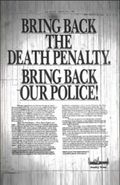
Trump paid $85,000 for full-page ads in four city newspapers in 1989 calling for the death penalty for Santana and four other teens whose videotaped confessions outraged the city — confessions they insisted had been forced by police.

Balko pounces:

If Trump had his way, all of the Central Park Five would have been dead by 2002. That’s the year Matias Reyes, already in prison for rape and murder, confessed to the crime, and insisted he acted alone. DNA tests had already confirmed that only one person raped victim Trisha Meili. Further testing showed Reyes was that person. Manhattan District Attorney Robert Morganthou later vacated the convictions of the other five suspects, all of whom had already served their sentences for the attack.