Taxing Themselves, Ctd

A reader writes:

I find it hard to believe that you posted, without comment, Gregg Easterbrook's article accusing Obama of hypocrisy when he advocates for higher taxes on the wealthy while at the same time taking advantage of the existing tax code for himself. Would you ask certain Republicans to voluntarily stop accepting Medicare and Social Security, and to donate a percentage of their paycheck to the Pentagon budget, in order to "prove their sincerity"? Tax has to be a collective agreement, not an individual choice, otherwise the system cannot work, which is exactly Obama's point.

I did call the piece "somewhat glib". Another writes:

Heaven forbid that well-intentioned rich people actually started doing this, it would serve no other purpose than to let everyone else off the hook.  "Well, Obama, Gates, and Buffet are for taxes and spending, so they contribute more. I think the government is wasting money, so I'm not going to contribute."

Another:

If Easterbrook's idea had any merit, as opposed to serving simply as a petty snipe, then we could make the entire tax system voluntary.  Let everyone select their preferred level of taxation.  Wouldn’t it be nice if we could specify allocations in terms of percentages as to how we want our tax money spent?  We could state our spending preferences for defense, for health care, education, infrastructure, scientific research, and general welfare.

There is nothing inconsistent or hypocritical about a person being willing to submit to a regime, such as higher taxes, that requires more self-discipline than they might ordinarily impose upon themselves.  This is why people submit to diet programs, exercise classes, personal trainers, or addiction rehabilitation programs.  This is especially true if they believe it has long-term positive consequences for themselves or for society.  Very few people would impose military discipline on themselves when left to their own devices, yet they gladly join the services understanding how the sacrifices involved have a beneficial long term effect both personally and at a societal level.

Another:

All wealth is relative, as goods and services (especially luxury items and housing) are priced largely according to what people can afford to, or are willing to, pay.  So if I were a $500k/yr earner and volunteered to contribute another $25k (say an increase of 10 percentage points for earnings over $250k) in taxes while none of my $500k peers did the same, then I will have harmed my (and my family’s) own standing against my peers.  I would no longer effectively be a $500k earner.  To do this would be foolish, and to argue for it is absurd, as it would require an unrealistic degree of selflessness.

On the other hand, if my $500k peers were obligated to also pay an additional $25k, and those making more or less than $500k were also paying higher taxes in proportion, then my relative standing has been preserved.  I remain as wealthy as my immediate peers, albeit somewhat less wealthy compared to lower earners.  That is a much more reasonable sacrifice, and one that many sincere and thoughtful wealthy people are willing to make.

“Culturally, He Isn’t”

A blogger occasionally 24Cover-popup majority of Americans don't qualify either. Obviously, I don't consider this a negative. Obama is also bi-racial, instantly putting him in a relatively (if decreasingly) rare cultural position. And I think it's overly defensive to insist that Obama is in no way different than most Americans. He is. His formative years were spent shuttling between Indonesia and Hawaii, missing his Kenyan father. You cannot read "Dreams From My Father" without intuiting a very distinctive man in the history of the American presidency. I think it's a big advantage especially in foreign policy. And I think it's a transformative moment in the evolution of America – a multicultural, multiracial experiment in democracy that has a president that reflects its future.
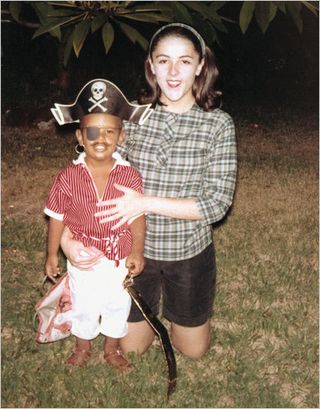
And then you read a beautifully crafted piece like Janny Scott's profile of Obama's mother, Ann Dunham, and you see again how Obama is a human kaleidoscope. Look at him from a variety of angles, and it's almost as much a Rorschach test for you as for Obama himself. Here's one take on the president's extraordinary composure while being subjected to some of the more enraging racial (and often racist) scrutiny one can imagine. I know at some point, in a similar situation, I would have snapped. He never has. How has he done this? Well, this helps:

After lunch, the group took a walk, with [nine-year-old] Barry running ahead. A flock of Indonesian children began lobbing rocks in his direction. They ducked behind a wall and shouted racial epithets. He seemed unfazed, dancing around as though playing dodge ball “with unseen players,” [American ex-pat Elizabeth] Bryant said. Ann did not react. Assuming she must not have understood the words, Bryant offered to intervene. “No, he’s O.K.,” Ann said. “He’s used to it.”

And Roger Ailes thought he could race-bait him by running round-the-clock videos of a snippet from Jeremiah Wright! Then this:

“We were floored that she’d bring a half-black child to Indonesia, knowing the disrespect they have for blacks,” Bryant said. At the same time, she admired Ann for teaching her boy to be fearless. A child in Indonesia needed to be raised that way — for self-preservation, Bryant decided. Ann also seemed to be teaching Barry respect. He had all the politeness that Indonesian children displayed toward their parents. He seemed to be learning Indonesian ways.

“I think this is one reason he’s so halus,” Bryant said of the pres­ident, using the Indonesian adjective that means “polite, refined, or courteous,” referring to qualities some see as distinctively Javanese. “He has the manners of Asians and the ways of Americans — being halus, being patient, calm, a good listener. If you’re not a good listener in Indonesia, you’d better leave.”

I understand him a little better. This context matters in assessing this president. Especially when you see it as an asset rather than a marker of otherness.

(Photo: from the NYT courtesy of Ann Dunham's friends and family.)
The GOP’s Growing Birther Problem, Ctd

A reader writes:

You were writing of how insidious the birther problem is for the Republicans, crawling and taking root across their membership like kudzu, in their attempts to deny legitimacy to Barack Obama. And all it's done for me (and I'd venture a good percentage of all Independents) is to deny legitimacy to the Republican party.

They played with this. They indulged it. They poured resources into the tawdry pols who would smile upon it, or insinuate it when they weren't downright trumpeting it from their podiums and microphones. They chose to do this and then realized that they might have a little problem with this parasitic thing that they seeded.

And it's their problem. To vote for them would make it mine. No thank you.

There is no policy idea or politician they can shine up that would appeal to me at this point, because they have taken their party right into the dirt with this birther business. Those who didn't participate also didn't make efforts to put a stop to it. Those would divest themselves of responsibility now are the worst culprits of all. If you dabble with racism – then you are a racist.

And last time I checked? You don't win elections without Independents. This Independent is done with them. You might as well ask me to vote for the Klan.

I have to say that this kind of thing has alienated me profoundly from the GOP even though on some questions, I am exactly the sort of fiscal conservative they might appeal to. It's been clearer to me than ever before in the reaction to president Obama just how hostile the Republican base is to modernity and the diverse America I find one of this country's greatest strengths and joys. It's not the policy positions so much as the tone – toward Latinos, toward gays, toward anything that might be called "the other." Nothing taught me this as much as the easy embrace of torture, and indifference to it, as long as the president was a Republican and the victims had dark skin and funny names.

The GOP as a cultural entity has made me nauseous.

Uni-Tasking

Kevin Drum can't multitask:

I can't listen to music and write at the same time. It's too distracting. I don't comment on TV news much because I don't watch TV news. Partly that's because TV news rots your brain, but mostly it's because I can't write while the TV is on in the background. Too distracting. And when I write long form pieces for the magazine, I work on them almost exclusively on weekends. I just can't task switch effectively between blogging and article writing during the day.

The latter I get. On my column-writing day (today!), I find I have to take a mental break from blogging in order to formulate a more considered and structured form of writing. But it's also true that absorbing the blogosphere all week and being forced constantly to make judgments and take positions has sharpened my preparation for column-writing. My research is often already done.

But the only television I can't block out (and we live in a loft so there's no escape unless I lock myself in the bathroom) is Judge Judy. That voice penetrates my consciousness so profoundly, it crowds everything else out. I'm not sure what that says about Judy Sheindlin or me.

What Does Health Insurance Cover?

Plancoverage

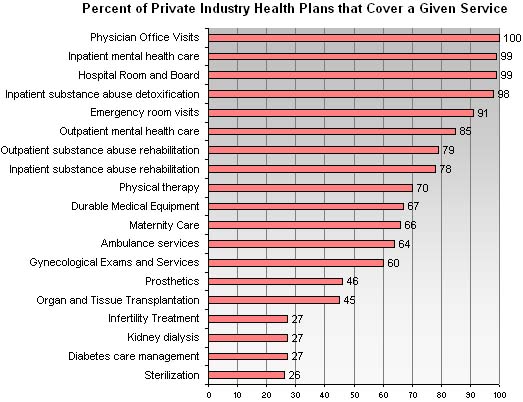
Catherine Rampell passes along the above chart:

As you can see, having private insurance doesn’t guarantee that the life-saving service you need — like kidney dialysis, or an organ transplant — will be covered at all by your plan. And even some services that would be considered relatively basic by many patients, like regular gynecological exams, are excluded.

It’s important to keep this in mind in discussions about giving more Americans access to “health insurance.”

Look At Me When I’m Talking To You, Ctd

A reader writes:

Not only is constant phone-checking rude to the person you're with, it's also a pretty dangerous crutch to those of us who already have a bit of trouble interacting with others. I'm shy – not painfully so, but overly sensitive to awkward pauses and hate being in a big group. My solution? I just check my phone! There's nothing wrong with standing on your own outside a knot of happy, hyper people if you're clearly busy talking to someone else.

The problem, of course, is that when I depend too much on the phone as social shield, I don't learn anything.

I don't force myself to interact with people who freak me out. I don't think of something interesting to say to the person sitting across from me. I just draw the metaphorical curtains and ignore them.

I met one of my best friends when she sat next to me in a course a few years ago. She's one of those perky people I usually can't stand, and she just wouldn't stop smiling at me. Finally, I simply said, "I'm sorry, I can't think of anything to say to you." She burst into laughter, and that was that. If I'd possessed a cell phone at the time, I'd never have felt awkward enough to say anything.

So that's it for the phone as crutch. A couple of months ago I made a rule: no texting or email-checking if the sole purpose is to avoid other people. I'd rather cringe my way through a conversation than not have one at all.

“Ending” Medicare

Politifact calls the above ad a lie:

Both Republicans and Democrats would no doubt agree that Ryan’s plan for Medicare is a dramatic change of course. But we don’t agree with the ad’s contention that the proposal ends Medicare. Additionally, images in the ad imply that current seniors will have to go back to work to pay for changes to the program. That’s not true either. It’s actually those 54 and younger who will need extra money. With its scenes of seniors going back to work, it seems intended to frighten those who are currently enrolled in Medicare. Finally, the Republicans' vote was symbolic and didn’t actually change the program. When you add up all those distortions, we find the ad highly misleading.

Josh Marshall dissents:

Politifact's argument is that since there will still be a program and that it will be labeled "Medicare" that, heck, it can't have ended since it's still there. That may sound too credulous. But it's about that bad. If my memory serves — and perhaps someone can find the link for me — Politifact was similarly bamboozled by President Bush's efforts to partially phase out Social Security.

I agree with Josh's view that it is fair to say that Ryan would abolish Medicare as we have known it. He would. Converting a universal entitlement to a subsidy for a relative, means-tested few is the end of Medicare. And a vote is not "symbolic" if it is an actual vote on a proposed budget. It was not some kind of vague resolution. But Politifact is right about the scare tactics on current seniors or the over 54s. Alas.