Au Natural

Christie Wilcox debates whether wild or domesticated animals are "happier" by examining the amount of stress in their lives:

When we picture the wild world, we see lush forests full of brightly-colored, singing birds, with monkeys swinging from branch to branch. We imagine vast prairies with herds of antelope and zebra grazing peacefully while a pack of lions naps lazily in the shade. Even when we do imagine the more gruesome aspects of the wild, we see them as OK or better than what we do because it’s "natural." This bias for what is "natural" is pervasive, affecting our judgement on everything from sexual orientation and medical care to farming practices and clothing fibers. But there is nothing inherently better about something being natural, and the idea that something that occurs in nature without us is somehow better than something we have altered or taken part in is a dangerous fallacy.

OMG, They Eat [Insect or Pet] Here!

3728022776_f3578d2169_b

Shotgun Shack lays out the blogging rules for first-time volunteers in foreign countries:

Your blog is where show all your friends that you are bad ass and you ride around the capital city sometimes in tuk tuks or matatus or chapas or tap taps or on the backs of motorcycles or in the beds of pick up trucks. It’s where you display your fake prowess at carrying water (or something else) on your head like the locals and the pictures of yourself standing next to war junk. Blogging for the folks back home allows you to vent about the cultural difference while at the same time being magnanimously accepting of them.

Casey Michel, a Peace Corps volunteer who just started a two-year stint in Kazakhstan, maintains an entertaining blog about his new cultural digs. Here he shares his thoughts "On A Near-Naked Guy Whipping Me With Plants":

Through living in the bubbles of Portland and Rice, my body had become a carefully-crafted china doll. It was not built for such extreme. I was not ready for such punishment. I wanted nothing more than to slip out the way I’d come, back to the safety and promise of room temperature.

At that point, one of the TurKazakhs stood up, turned, and babbled something to me. I saw him reach over and grab a fistful of parsley-like greens, previously afloat in a small tub to my right. I looked to Muybin to translate. “You lie down,” he said, still grinning through the heat. My eyebrows drooped, and Muybin pointed to the empty bench next to me. There lay a soaked towel, flat on the step. Something in the back of my memory cobbled the words “banya” and “whip,” but any method of hesitation I carried had liquefied long ago. I maneuvered to the towel and lay down on my stomach. A few seconds later, there was a 6’2” Kazakh, a man I’d just met a few seconds earlier, standing in little more than his skivvies and smacking my back up and down with soaked greens. Were my lungs not on fire, I would have laughed.

Thirty seconds later the man instructed me to roll over. The steam continued to seep. I could barely open my eyes. He proceeded to slap my chest with the leaves, but I could only take a few seconds of this ritual green-cleansing before I had to call it a night. Struggling to sit up, I waved him off, trying to convey my thanks as I wobbled down the steps and through the door. The air greeted me like a chilled robe, and I sucked it in as quickly as I could.

(Photo of Peace Corp training by Flickr user Adam Coster)

Autos Through The Ages

Daniel Albert follows car trends:

It takes about a generation for cars to change. Tin Lizzies that served first generation drivers were too old fashioned for the young buyers of Chevrolets in the 1920s. A couple of generations ago New York City’s taxi was the Checker, for the past generation it has been the American sedan, and in another decade it will be a bespoke minivan. This kind of change happens to car brands as well. Cadillac descended from the pinnacle of luxury marques into the depths of the welfare queen’s ghetto. But brands can ascend as well. So it has been for Toyota—you paid what for a Land Cruiser?—and so too the Koreans, the Hyundai Kia Automotive group, are now ascendant.

Growing Up Objectivist, Ctd

W9Zb7

In a 2007 essay, Amy Benfer expounded on The Fountainhead's appeal to adolescent girls:

There’s no doubt that Rand intended these characters to be her stand-ins, dramatizing the glory of the capitalist individual against the villainy of the collectivist state. But as a young teenager, I saw the battle as illustrating a very different drama: the tyranny imposed on the smart, misunderstood girl by the rest of the know-nothings she is forced to contend with in high school.

Ironically, Rand would have recognized at least some of those know-nothings as sharing the values she held dear – I despised the Republican reverence for money, for example, while Rand and I shared a mutual disdain for religion. But the sense of being isolated, the sole genius among a herd of sheep, is a familiar feeling to many children and adolescents, especially gifted ones.

Or as the Redditor who posted the above photo put it, "At least one of these girls will grow up to be awesome."

Parody We Wish To Believe

The AP was duped by a fake press release announcing that GE would donate its $3.2 billion tax refund to the U.S. government. Craig Silverman spoke with the press release's author, Justin Wedes:

“I don’t attribute [AP’s mistake] to the speed of the news cycle,” Wedes said. “We have very intelligent reporters out there. I attribute it to the fact that this is what people wanted to hear.”

The Legality Of Pregnant Suicides

A pregnant woman ate rat poison to try to kill herself. She survived but lost the baby. Jill Filipovic sifts through the legal issues raised:

Prosecuting a pregnant woman for attempted suicide is an extreme interpretation of the law, and puts pregnant women in a special class — men and women who aren’t pregnant are never prosecuted for trying to kill themselves … Some states also require doctors to report if a pregnant woman is taking drugs — a law which sounds reasonable on its face, until you think through the logical outcome: Women who are addicted to drugs just won’t seek medical care, which means they won’t get treatment for their addictions and won’t get basic pre-natal care.

Filipovic may be right on the legal question here. But I find the moral logic of that first sentence bizarre. Of course pregnant women are in a different class – their own health and survival implicates another human life. They're in a special class when it comes to smoking and drinking as well. Or think of the HIV-positive mother who, because she doesn't believe that HIV and AIDS are connected, refuses to take anti-retrovirals while pregnant to ensure her child is HIV-negative. She too is in a "special class" for reasons that are empirically obvious.

The danger that potential prosecution may make things even harder for the child and the mother is a real one. And suicidal depression can distort anyone's judgment. But treating the matter as if the unborn child has no moral relevance at all seems to me to be an over-reach against common sense.

The Weekly Wrap

Today on the Dish, Andrew wrestled with deficits and healthcare in relation to his Catholicism and emphasized how cruel torture tactics beyond waterboarding are. World leaders demanded Qaddafi go, but didn't explain how and Larison called his bluff. Andrew supported recognizing a Palestinian state, and the American Red Cross defended its study of how kids view torture. Anchorage gave up on Trig's birth certificate, but Andrew wasn't going anywhere.

We welcomed a White House version of a tax receipt and collected the last of our tax bracket docs, and Peter Suderman rained on the Do Nothing for the deficit parade. Howard Gleckman called both sides on fiscal bullshit, we considered cashing in entitlements, and the debt was paid off in full (in 1835). Nate Silver parsed whether Dems will lose the Senate, polls had Trump pulling ahead, and Santorum aped gay poet Langston Hughes, in all his glory. Julian Sanchez rolled his eyes at TSA patdowns for children, and David Simon begged politicians to admit the drug war is a lost cause.

Readers joined us on our gender bender, had tough love for HuffPo writers, and refused to ride the dangerous Fung Wah buses. The Internet made sociology easier, twin studies favor advantaged homes, and dropouts were still saddled with student debt. Ayn Rand contradicted Jesus Christ, but would still sell mad movie tickets, and Greenwald excised his demons by blogging. Andrew approved of biases in love, wasn't keeping up with the Queen, and only wanted to learn what was true.

Metaphor of the day here, deep thought of the day here, quotes for the day here, here, VFYW here, MHB here, and FOTD here.

Thursday on the Dish, rifts in the GOP leadership deepened, Andrew called them on their panic, and wasn't buying their dishonest memories of Bush as budget master. Andrew defended Obama's plan, Ezra sized up the cuts, and prisons robbed us blind. Henry Blodgett dared to question Palin's pregnancy, Andrew hoped we were reaching critical mass, and we remembered Palin's crush on Ivana. We measured how many could ride on Obama's tiny coattails, Mark Blumenthal rooted for the underdogs in Iowa, and Romney wasn't throwing in the cards yet.

Dani Rodrik defended dining with dictators, kids these days didn't know better about torture, a reader criticized the study's methods, and we eavesdropped on North Korea's cellphone conversations. We got an update on Libya's genocide threat, NATO was still debating whether to arm rebels, and Ackerman checked in on our exit from Iraq. PM Carpenter bashed the Beltway's rules, and Andrew drummed up pity for the unpaid HuffPo bloggers.

The Civil War lived on, Andrew ripped apart the culture war's stigmas against gay kids, and abortion remained personal. Readers kept tabs on our tax brackets, a startup could fund college kids to drop out, and cheap bus travel wooed customers. Books made a beeline for perfumes, Andrew didn't hop on the Foodie bandwagon, but we can blame that on jellied eels. Southpark weighed in on The Giving Tree, readers identified with the empty trees, Andrew judged American Idol, and the three elements of Dishness converged.

Deep thought of the day here, VFYW here, headline of the day here, quote for the day here, poseur alert here, MHB here, and FOTD here.

Vfyw
Roseburg, Oregon, 9 am

Wednesday on the Dish, we previewed Obama's speech, Andrew live-blogged it, and we gathered the web's full reax here. Andrew sized up the Do-Nothing Plan and read in between the lines on Obama's, Ezra Klein wanted to hold future Congresses to any budget plans, and Jonathan Chait wanted Obama to wait. Andrew eyed Ryan's healthcare plan next to Obama's, Paul Ryan's voting record was a pretty glaring fault in his deficit stance, and Allahpundit wasn't sure what Boehner was thinking. Trump undid his own image, a reader called Ann Coulter on her birther whitewashing, Massie spotted another weakness in the Romney attack ads, and we parsed Romneycare's effect on his image. Mark Seddon lauded the UN's intervention in the Ivory Coast crisis, Qaddafi had a thing for hot nurses, and America still hadn't healed its 9-11 trauma.

Andrew remembered Sidney Harman, and readers continued to psychoanalyze The Giving Tree. We oogled other nation's dress codes, Mike Ervin relished his adult sippy cup, and Vanity Fair continued to drool over the Kennedys. Indoor-grown pot hurts the environment, snacks influence how judges rule, and Tina Fey trumped Palin's pregnancy. Bryan Caplan promoted Serenity Parenting, and readers shared hyperlexia stories, stories of parenting or not, connected Ayn Rand to video games, and high-fived their pro-pot doctors.

Creepy ad watch here, time suck of the day here, quotes for the day here and here, map of the day here, VFYW here, MHB here, and FOTD here.
Face
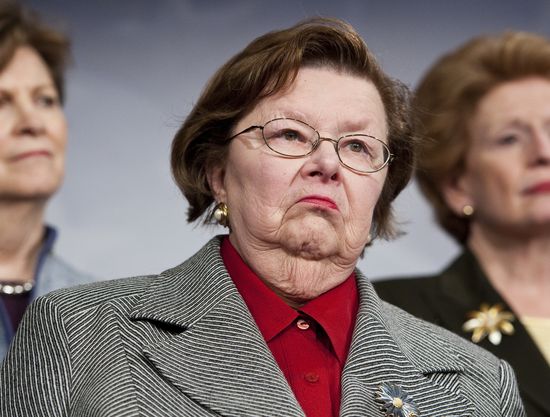
By Bill Clark/Roll Call

Tuesday on the Dish, Andrew tried to reconcile the Sophie's choices of healthcare rationing, and suggested harnessing the power of the consumer. The political tides turned, Trump tied with Huck, giving Ed Morrissey flashbacks to Perot, but Andrew thought a Trump-Bachmann just might be crazy enough to change the GOP. Andrew weighed in on whether Palin is done for, and rehashed the Trig birther question with a new academic paper. Andrew remembered England's war memorials, and pinpointed the incoherence of fusing Rand's ideology with Christianism. 

Pete Davis acknowledged the risks of Obama tackling the budget, Andrew parsed Obama's approval of Simpson-Bowles, and Stephen Colbert roasted Jon Kyl. Berlusconi ramped up the crazy, and Scott Morgan reprimanded legislators who joke about medical marijuana. Kevin Sablan unraveled the facts behind Facebook Likes, David Runciman tracked down the world's tax havens, and America is better equipped to deal with high gas prices. Freddie DeBoer defended James Joyce, pot allergies exist, and the Sassy Gay Friend talked sense into The Giving Tree. Priscilla Gilman celebrated the small things, Andrew relished being the fun uncle, and thanked readers for their warm welcome to the country.

Attack ad of the day here, reax here, creepy ad watch here, cool ad watch here, Yglesias award here, FOTD here, MHB here, VFYW here, and VFYW contest winner #45 here.

SF to Paris in Two Minutes from Beep Show on Vimeo.

Monday on the Dish, Andrew wrestled with healthcare costs and humans being forced to play God. Andrew grappled with a NOM organizer finally seeing the conservative nature in gay rights, we rounded up the reax to the narrowly averted shutdown, and Andrew finally got approved for a Greencard. National Enquirer blew up Todd Palin's spot again, and Sarah put her foot in her mouth on birth certificates. Rick Hertzberg explained why Fox dumped Glenn Beck, Chait sized up us sizing up the candidates based on looks, and Trump relegated Birtherism to the backwoods of conservatism. David Kenner kept his eyes glued to the YouTube, Henry Farrell analyzed bigotry in France's veil ban, and we tracked a possible Libyan ceasefire and its quick demise.

Andrew appreciated the polyglot bluntness of Anglo-Saxon English, cooed over other people's babies, and couldn't get behind an Objectivist worldview, while readers chimed in. Flowing Data informed us how long we'd get in retirement, GPS technology could spark cab wars, and America remained exceptionally tan. Nina Simone had the final word on Mississippi, Habitat For Humanity lead with a partnership model, and tsunami debris headed for the west coast. Suicides kill more than automobiles, Peter Smith shared the neuroscience of overeating, and readers calculated our tax brackets.

Hathos alert here, chart of the day here, correction of the day here, FOTD here, VFYW here, nixed regular airplane views here, but a window-seat-worthy MHB to make you feel better here.

–Z.P.
Giving Back

A reader complements this post:

I may have been the brat in The Giving Tree once upon a time. But now that my father suffers from late-stage Alzheimer's, our roles are reversed. I visit him in his care home, feed him, get him up to walk while holding his hand tightly in case he takes a bad step. I tell him loudly, "I love you, Dad," even though he never says it back anymore. I hang on every word he says because he says so few. Every time he says, "My daughter!" my heart sings because so often I get nothing but a blank stare from him.

The thing is, I'm so grateful to do for him whatever he needs because he did so very, very much for me. Near the end of his life, I'm the one giving back and I'm glad to do it.

Capitalism At Work

Rotten_Tomatoes_Atlas_Shrugged

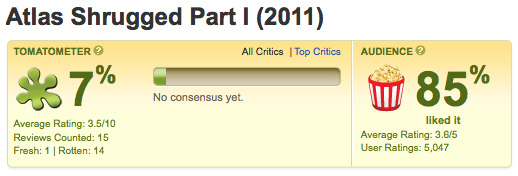
Roger Ebert – surprise! – skewers the new Atlas Shrugged movie. Dave Weigel thinks critic reviews don't matter all that much:

It doesn't need to be good. Atlas Shrugged has sold somewhere between 7 million and 8 million copies in the United States. In 2009, the first year of the Tea Party, it sold around 500,000 copies. Themes from the novel, like the question "Who is John Galt?" and the concept of "looters" who subsist on the work of others, were sketched onto Tea Party signs. Members of Congress compared President Obama's policies to the policies of the novel's villains, a flabby crew of lobbyists and lazy businessmen. 

(Screenshot via Weigel)