Cute Roulette – like Chatroulette, minus the schlongs.
Month: April 2011
Just $15 Billion In Spending Cuts?
Kevin Drum calms down:
[G]iven the amount of smoke and mirrors in last week’s budget agreement, the level of actual spending reductions it contains is probably no more than about $20 billion. Maybe not even that much. This is just not Armageddon, and pretending otherwise doesn’t do much except wreck our credibility with the public on fiscal issues.
Allahpundit doesn’t understand what Boehner was thinking:
All of this makes perfect sense from the Democrats’ perspective. It’s win/win. If Boehner can convince his caucus to suck it up and vote yes on the package anyway, great — Obama and Reid get to claim credit with independents for being newly minted deficit hawks or whatever while conceding a scant $15 billion in real cuts. If Boehner can’t convince his caucus to suck it up and the vote fails in an eleventh-hour revolt, great — Obama and Reid get to blame the GOP for shutting down the government by rejecting a deal that was, after all, approved by John Boehner himself.
Post-Prandial Mercy
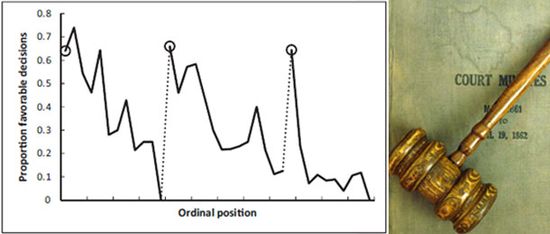
Ed Yong explains how food breaks affect judges' opinions on granting parole:
There’s an old trope that says justice is “what the judge ate for breakfast”. It was coined by Jerome Frank, himself a judge, and it’s a powerful symbol of the legal realism movement. This school of thought holds that the law, being a human concoction, is subject to the same foibles, biases and imperfections that affect everything humans do. … The graph above is almost the visual embodiment of Frank’s catchphrase.
… It shows that the odds that prisoners will be successfully paroled start off fairly high at around 65% and quickly plummet to nothing over a few hours (although, see footnote). After the judges have returned from their breaks, the odds abruptly climb back up to 65%, before resuming their downward slide. A prisoner’s fate could hinge upon the point in the day when their case is heard.
Quote For The Day
"Trump is right in the president’s face, sometimes over the line rhetorically, but he’s giving people the impression, ‘I’m tough. I’m not afraid of Barack Obama. I will put him in his place,’ and that has broad appeal,” – Mark Halperin.
What on earth does "putting him in his place" mean? Picking cotton? And how does a blowhard comb-over reality star put the president of the United States "in his place." The man has a TV show featuring Star Parker Jones.
The View From Your Window

Roseburg, Oregon, 9 am
Cannabis Carbon = 3 Million Cars
What does it cost to grow marijuana indoors?
The analysis performed in this study finds that indoor Cannabis production results in energy expenditures of $5 billion each year, with electricity use equivalent to that of 2 million average U.S. homes. This corresponds to 1% of national electricity consumption or 2% of that in households. The yearly greenhouse-gas pollution (carbon dioxide, CO) from the electricity plus associated transportation fuels equals that of 3 million cars. Energy costs constitute a quarter of wholesale value.
(Hat tip: Josh Green)
The Do-Nothing Path
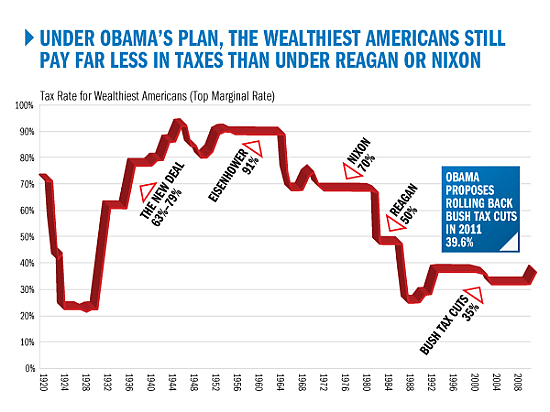
Annie Lowrey offers Congress a "meek, cowardly" solution to balancing the budget:
[D]oing nothing allows all kinds of fiscal changes that politicians generally abhor to take effect automatically. First, doing nothing means the Bush tax cuts would expire, as scheduled, at the end of next year. That would cause a moderately progressive tax hike, and one that hits most families, including the middle class. … Second, the Patient Protection and Affordable Care Act, Obama's health care law, would proceed without getting repealed or defunded. The CBO believes that the plan would bend health care's cost curve downward, wrestling the rate of health care inflation back toward the general rate of inflation. Third, doing nothing would mean that Medicare starts paying doctors low, low rates. Congress would not pass anymore of the regular "doc fixes" that keep reimbursements high. Nothing else happens. Almost magically, everything evens out.
Leonhardt has essentially the same piece today. The problem is that the GOP has been very good at defining the planned sunsetting of the Bush tax cuts as deliberate, pre-meditated raising of taxes. In a nation of amnesiacs, that is more effective than you might think. And, as people actually experience them, that's how the sunsetting will feel.
The real force of the deficit-cutting inertia argument is that it gives Obama, and all those who see the necessity of a return to Clinton-era rates, more leverage in the debate. If talks fail, the president gets the tax hikes we desperately need.
In many ways, the fiscal question is now whether you care more about cutting the deficit than holding the Bush tax rates as sacrosanct.
I'm a Tory and want to balance the budget first, and do it more with spending cuts than tax rises. But you only have to look at the math to see that forgoing any tax increases above the Bush rate makes deficit- and debt-reduction politically impossible. And a 60-40 split between spending cuts and tax hikes seems to me a sweet spot for a moderate Dem or a sane GOPer (of whom there are now very very few) to land on.
Bowles-Simpson, moreover, (I keep wanting to shorten that to BS, but, for obvious reasons won't) offers the most pain-free way to get there – by slashing tax deductions and shelters to make the rate increases far less damaging economically and far less palpable politically.
There is a way forward. And by sticking to the most purist form of anti-tax conservatism, I suspect the GOP is taking itself out of the final deal.
(Chart from the Washington Monthly, via Politics)
Obama’s Fiscal Pitch
I’ll be live-blogging the speech at 1.30 pm EST. But we’ve been given a preview:
“The president will make clear that while we all share the goal of reducing our deficit and putting our nation back on a fiscally responsible path, his vision is one where we can live within our means without putting burdens on the middle class and seniors or impeding our ability to invest in our future.”
Hamelot
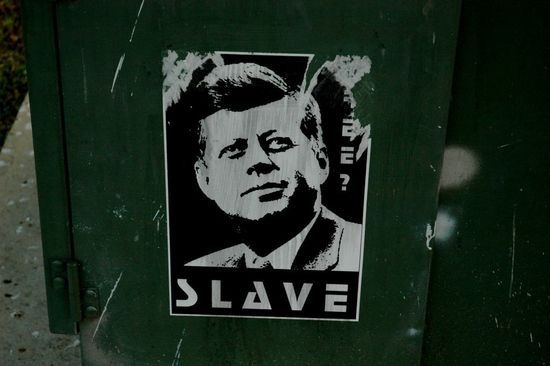
Eliza Gray exposes Vanity Fair's obsession with the Kennedys:
According to my count, roughly one-third of the issues of Vanity Fair since 2003 have contained at least one article about a Kennedy, written by a Kennedy, or mentioning a Kennedy at least seven times. …
Since Michelle Obama became first lady, Jackie has merited more attention—20 mentions to Michelle’s 19. Since August 2008, when John McCain picked Sarah Palin as his running mate, searching for “Kennedy” in VF in Nexis yields twice as many results as searching for “Palin.” The “politics” section of VanityFair.com has a header for “The Kennedys”—an entire digital section devoted to political figures who are, save a few, no longer alive. Surely readers looking for political coverage would rather find, oh, say, a tab marked, “Presidential election 2012”?
These stories seem to me to fall into the VF category of old-style aristocratic voyeurism. There's always some kind of tedious piece about some partying toff from the past, complete with sepia photos and the details of various estates and shindigs. The Kennedys push that button (I assume the pieces are primarily aimed at Ladies Who Lunch and those who aspire to be them) and add sex, adultery, young death and power to the mix. It's almost as if they were always trying to reach the g-spot of those who really would love to have a more rigid American class system. Like, er, Graydon Carter.
(Photo by Flickr user hackett)
Quote For The Day
“As much as I welcome the money — who wouldn’t? — I have to say that really is not what I think of as their primary contribution. The money is great. Their presence is even greater," – Evan Wolfson, executive director of Freedom to Marry, on the impending nuptials of Facebook founder, Chris Hughes, and his fiance, Sean Eldridge, political director of Freedom to Marry.
Yep, we get power-couples too.
 The Dish