
Mt. Everest
Lots of great feedback from readers. One writes:
I think it would be lovely to see the photos regularly because they tap into something you already, wisely, do with your blog. The Dish is primarily political, but every day you insist on “mental health breaks” – be it a schnoodle playing the piano or a funny clip from South Park, or maybe some interesting art work or a Just For Men beard. We trudge through the agony of politics – from Libya to government shutdowns to Sarah Palin – so we need all the nice breaks we can get.
The VFYAW is another mental break because there’s something about the aerial view that give a sense of soaring above it all. It’s looking down on a planet that’s actually much more beautiful and impressive than it often feels down here on the ground. I hope you do make it a regular feature – daily, weekly, whatever works. It’s just nice to … fly away.
Another writes:
I disagree with adding this as a weekly feature.
While I sympathize with reader sentiments about the “larger perspective,” the airplane views will progressively become less interesting and stand out as a puzzling non sequitur in the Dish’s usual hobbyhorses. Beauty – and beautiful pictures – are everywhere if you want to find them. What makes the usual VFYW feature so arresting is that we are considering one person’s perspective and giving it due consideration, whether it’s “incredible” or not.
So there may be a simple view of trees that someone doesn’t give a damn about. But you know what? The varied environments that your readers share are their own and one assumes are very intimate and important to them. And the blog is and has always been about varied perspectives, whether or not they “do” something for your readers.
Another also disagrees:
A daily airplane window view would just be clutter … ooh, more clouds … ahh, another interchangeable coast … ohh, more vague brown urban sprawl. What’s enjoyable about the VFYW is seeing actual identifiable stuff: yes, beautiful trees; houses; landmarks; fountains where somebody proposed to his wife; canals; warehouses; school campuses. The hammock in the snow made me weep. The aerial shot of some part of the lifeless desert in Utah wasn’t even worth pausing for during my scrolling.
Another:
I like the airplane shots for sure. I’m not sure you need a special feature for it, though. Whenever you get one that strikes you, just toss it into the VFYW slot as you would any other – once a week, or more, or less; let the frequency dictate that.
Of course, for the dogmatic among us, you should probably continue to change the headline to “The View From Your Airplane Window”. The words “view from *your* window” holds a special (and literal) place in many of our hearts.
Another:
Why don’t you just make the VFYW be *any* window? Hey, I’d like to see a submarine view once a year, and airplane window shots every other day. Your readership can sustain it.
Another:
Just please don’t start asking us to recognize flat stretches of nondescript farmland from the air, or 4-pixel wide farming machinery, while adding Google Earth panoramas and charming anecdotes about skydiving over just this stretch of land while volunteering to help indigenous farmers get drinking water.
Speaking of the window view contest:
I thought you should know that because of your weekly contest, I find myself examining all window shots for geographic clues. This includes friend’s Facebook photos, but most disconcertingly, porn. It’s astounding how much porn turns out to be posed on balconies, windowsills, or in front of windows. And now, more often than not, I find myself looking past shapely posteriors and well-formed bosoms to examine a unique cornice-piece, filigree, or church spire.
Thanks, I think.
I’ll use my super “it’s my blog and I’ll do what I want” powers and decide not to include this as a regular feature. Wars should be wary of mission creep and the core point of the views from your window is a simple reflection of what readers see every day out of their own windows. Occasional forays into wider pastures are fine. But keeping the feature focused and simple is the key thing. The point is the beauty and diversity of the banal – and a mirror for Dish readers to see one another.
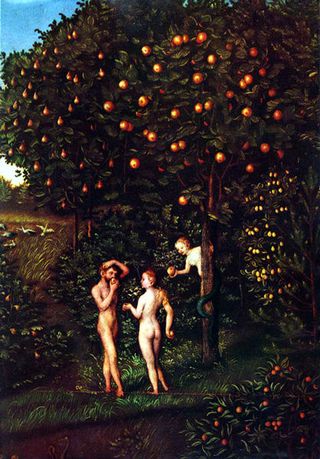 decades; we are able to give wounded soldiers new limbs and tell cancer patients that hope is real and not be lying. We can map the human genome and devise revolutionary new treatments for previously fatal conditions; and we can extend life beyond any previous human generation’s imagination. Remember all those old black and white movies where you saw scenes in which the father of a sick child simply says “we don’t have the money for the operation.” And little Johnny dies. How far away that passive stoicism now seems. Within a few decades, what was once taken as fate is now rejected as a moral obscenity. Because, given what we have achieved in those decades, it is a moral obscenity. We are all physical beings and we are never as equal as when we face sickness and mortality. Because we have so feasted on the tree of knowledge, it becomes morally intolerable to prevent its fruit from being given to all. At the same time, as a matter of economics and mathematics, we also know at the back of our minds that we simply cannot give it to all – because these breakthroughs involve huge investment, highly trained experts, and inherently expensive technology. And as the options for health grow, we are forced to make choices that were previously out of our grasp, and those choices make us, in some way, gods. We collectively decide who can live for how long and who can die – because for the first time in human history we really have that choice. In fact, we have no escape from that choice. Healthcare is no longer triage, where sickness and death is the norm; it is an open-ended, blurry range of positive choices, where wellness is the expectation. At some point, then, we have to ration. You see this in socialized systems as well as hybrid ones. In Britain, the National Health Service confronts medical opportunities unknown when it was set up sixty years ago. And so, as the years went by, you saw more waiting lists and more de facto rationing – or a spending splurge under Blair and Brown that was simply unsustainable, and ended in piles of debt. Nonetheless, Cameron is refusing to cut from the NHS – which makes the cuts elsewhere all the more draconian. Why? Because he is a decent chap who has seen family illness upfront, and cannot really deny his fellow human beings the ability to rescue their infant from early death or cure a loved mother or keep someone with HIV or Parkinson’s as healthy as possible. In the US, you see the same process – but where no single entity gets to dictate the outcome. The result? Each agent passes the buck to everyone else – from insurance companies to doctors and hospitals to patients and back to government and then back again. And so instead of rationing by government, we have soaring healthcare costs as the least worst option. We can try to find efficiencies to make these god-like choices less onerous, but it often feels like running down an up escalator. We’re lucky if we merely stay in the same place. In fact, we have long since been going backward – hence the alarming projections of healthcare spending essentially crowding out every other economic or government activity in a few years’ time. We can try to increase efficiencies – and the ACA has not been fully credited with the many good ideas and experiments buried inside it. Or we can do what Ryan proposes, which is essentially severing the whole idea of an entitlement to good health, and turn it into a simple lump sum for seniors, after which they have to pay for themselves or have less health or longevity. Ezra Klein is right to remind us of the distinction here.
 The Dish