Climate Wars

John Horgan criticizes climate fear-mongering. He cites the 1992 paper by anthropologists Carol and Melvin Ember, "Resource Unpredictability, Mistrust and War":

The strongest correlate of warfare was a history of unpredictable natural disasters—such as floods, droughts and insect infestations—that had disrupted food supplies. The Embers were careful to note that it was not the disasters themselves that precipitated war, but the memory of past disasters and hence the fear of future ones. … In other words, wars stemmed from factors that were not ecological so much as psychological.

Of course, societies in a region with a history of war also fear war itself; hence they arm themselves and even launch preemptive attacks against other groups, making their fear self-fulfilling. The irony—or tragedy—is that war often inflicts on us deprivation far worse than that which we feared.

Given the Embers' finding of a link between war and fear, I worry about the extreme proposals and warnings of [Bill] McKibben and other greens. Rather than inspiring people to grow organic beets, install solar panels on their roofs and ride bicycles to work, green alarmists might end up provoking voters to stockpile guns and ammo, and support even higher defense budgets.
What To Do With Gitmo

6a00d8341c630a53ef014e86faad96970d-600wi

I know that the Republicans and weak-kneed Dems want to keep it operational for ever. But at some point, when sanity and self-interest eventually prevail (this is America and that takes a long long time) this obvious self-inflicted black eye for the US will have to be shut down. And here's a brilliant improvisational idea from Tunisia for what to do with it – turn it into an improvised art gallery:

The police station in the Tunis suburb of La Goulette stands deserted at its posh location near the seaside boardwalk, its walls blackened by smoke and fire and windows smashed.

For many Tunisians, this place was a symbol of Ben Ali's repressive regime and the old guard — a place where bad things happened. That's why it was torched during Tunisia's popular uprising against Ben Ali, guide Wassim Ghozlani told Babylon & Beyond.

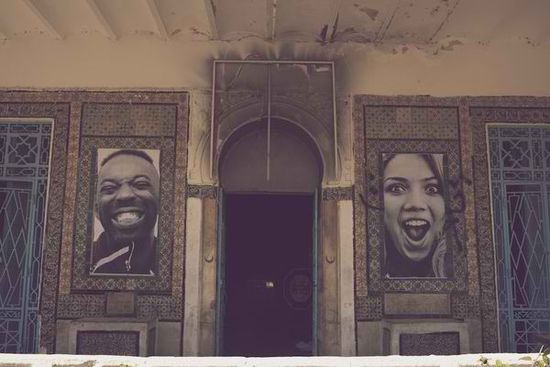
The exhibition is put on by a collective of Tunisian artists and photographers called Artocracy in Tunisia who are aiming to bring the voices of the people back to the streets of the country, breathe new life into places like the police station in La Goulette and shed old images of government repression through a photography project called "Inside Out."

According to [guide Wassim] Ghozlani, one of the aims of the project is to change people's perception of street imagery in Tunisia and to disseminate the opinions of ordinary citizens. And, of course, to show their faces. For many years, the majority of portraits many Tunisians saw in the streets were those of ex-President Ben Ali and his predecessor Habib Bourguiba.

So the idea was born to put up portraits of 100 Tunisians from across the sociopolitical spectrum and ask each one of them what they want for the future of their country. According to a press release by Artocracy in Tunisia, portraits will be put on display in four Tunisian cities in public areas and in places that either played an important part in the uprising or are considered symbols of the repression. Not surprisingly, the heavily guarded Ministry of Interior in Tunis is a top spot for the photographers to hang their portraits.

City Syndromes

Frank Jacobs diagnoses them:

Holy Land visitors of a deeply religious disposition risk being overwhelmed by the experiences of their trip. This type of culture shock is called Jerusalem Syndrome, after the city in which it often manifests itself. The syndrome involves obsessive, delusional and/or psychotic behaviour, not rarely leading to messianic hallucinations. The condition is mercifully ecumenical, afflicting Christians, Jews and Muslims alike. It is triggered by the proximity to religious landmarks, and hence the heightened perception of divine presence.

…Rome Syndrome is less universal than its Jerusalem variant, pertaining almost exclusively to Catholic pilgrims. Those overwhelmed by the cultural treasures of Firenze are said to suffer from Stendhal Syndrome, after the French writer who first reported the palpitations, confusion and dizziness associated with visiting the city beautified by the Medicis.

To my knowledge, this syndrome has never been diagnosed for New York.

Because, one suspects, those with the deepest love of New York City already live there.

(Video: New York State of Mind from james bernal on Vimeo)

Global Warming Gets Dialed To 11.1, Ctd

Image001

A reader writes:

I’m a weather forecaster, and I believe in global warming.  However, the images that were displayed (or at least the conclusions drawn from them) are misleading.

This winter was extremely exceptional as far as having cold airmasses coming down from the Arctic into the lower latitudes.  We had historic cold in British Columbia and Pacific Northwest in November, into Britain in December, into the northeast US in January and back into the Pacific Northwest in February.

But what most people don’t realize is that the cold air in the Arctic has to be replaced from somewhere. The weather patterns that allow major Arctic outbreaks to occur also result in massive surges of warm air to move north into the polar regions.  So the fact that the Arctic was incredibly warm wasn’t a surprise; it’s to be expected in circumstances like this.

This wasn’t global warming.  This was weather.

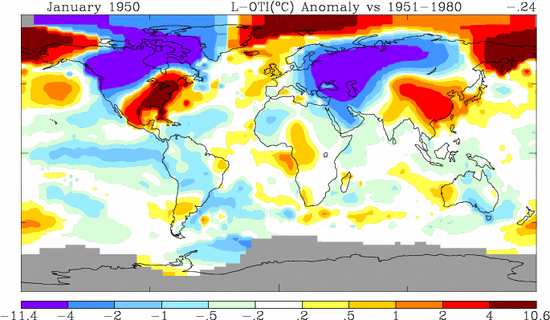
Here’s a chart for another month – January 195 – that featured a massive surge of cold air into the lower latitudes.  Admittedly the cold anomalies in 1950 were much more severe than in 2010-2011, but notice the maximum temperature anomaly in the arctic:  +10.6

The Unreadable Masterpiece, Ctd

A reader reminds me, apropos this post, of the great quote from Philip Larkin on "difficult art." It's in his wonderful collection of music criticism, "All What Jazz." In it he writes that the great bane of modern jazz and other forms of modern art is that they "take what was once among our pleasures, and place it among our duties."

Rarely has the occasional wisdom of curmudgeonly prejudice been better expressed. Which goes for much of Larkin, of course, that crotchety, reactionary dreamer.

Meep Meep Watch

Why do we always forget? Well, more to the point: why do I always forget? Here comes the road runner:

President Obama will lay out a long-term deficit reduction plan later this week that will take “a scalpel, not a machete,” to programs like Medicare and education services and try once again to extract more taxes from the wealthiest Americans, his senior adviser said Sunday.

Appearing on several Sunday morning television talk shows, David Plouffe, Mr. Obama’s senior adviser and former campaign manager, laid out few of the contours of the deficit-cutting plan but sought to distinguish it from a Republican congressional plan announced recently by Paul D. Ryan Jr. of Wisconsin, the chairman of the House budget committee. He said the Republican plan “would give the average millionaire $200,000 in tax cuts” but double the health care costs of senior citizens “$6,000 a year down the road” and trim “energy investment at a time of record gas prices.”

And so Obama starts off this critical part of his first term by appearing to be above the fray and yet committed to compromise. Via Biden, he calls the GOP's bluff, draws a line in spending cuts for 2011, and exposes the draconian spending reductions that the GOP's no tax increase pledge requires. He comes back with a bid to tax millionaires, offers spending cuts that would be far more sophisticated and targeted away from investment than the GOP, and pledges to put his own proposals forward as early as this week.

Of course, for a blogger like me, you face a choice. Simply trust the guy and spin for him, or voice skepticism, outrage and disappointment and get played along with the GOP. But, of course, I don't mind gettng played. Because I want this president to succeed – and such success requires root-and-branch spending and tax reform.

He seems to be getting there – in that highly unsatisfying but politically shrewd way of his. So now we will have the Ryan plan and the Obama plan. Guess which one independent voters will like more?

Meep meep!

Our Innate Prejudice

4223373030_df7722f9f7_b

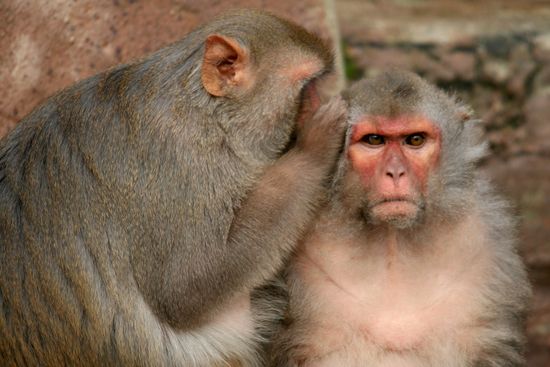
Daisy Grewal reports on a study of rhesus monkeys, who form social bonds within groups:

[T]he researchers paired the photos of insider and outsider monkeys with either good things, such as fruits, or bad things, such as spiders. When an insider face was paired with fruit, or an outsider face was paired with a spider, the monkeys quickly lost interest. But when an insider face was paired with a spider, the monkeys looked longer at the photographs. Presumably, the monkeys found it confusing when something good was paired with something bad. This suggests that monkeys not only distinguish between insiders and outsiders, they associate insiders with good things and outsiders with bad things. Overall, the results support an evolutionary basis for prejudice.

Some researchers believe prejudice is unique to humans, since it seems to depend on complex thought processes. For example, past studies have found that people are likely to display prejudice after being reminded of their mortality, or after receiving a blow to their self-esteem. Since only humans are capable of contemplating their deaths or their self-image, these studies reinforce the view that only humans are capable of prejudice. But the behavior of the rhesus monkeys implies that our basic tendency to see the world in terms of “us” and “them” has ancient origins.

(Photo by Flickr user jinterwas)

Who Controls JSOC? Ctd

A reader writes:

I worked at a JSOC detention facility for four months last year in detainee operations. I don't write to argue in their favor or defend what happens there, but having the facts straight is important. 

The detainees are only stripped naked during their in-processing when they go through a comprehensive medical examination, and are then given jumpsuits.  Their interrogations are conducted in full compliance with Army Field Manual [pdf] 2-22.3.  Detainee sleep is strictly regulated to ensure that they have at least a certain minimum.  I believe the FM requires 4 continuous hours of sleep every 24 hours. 

As for humiliation or other interrogation techniques, I'll only say that "Pride & Ego Down" is an unclassified technique contained in FM 2-22.3 (see page 8-13), and all interrogation plans must be signed off on by a senior interrogator. The Red Cross *has* had access to the sites in Afghanistan, and representatives from both CENTCOM and SECDEF keep a close eye on special operations throughout both Iraq and Afghanistan. 

There's a lot more I wish I could say in that regard, but much of the information is classified, naturally.

Quote For The Day II

"The Dalai Lama, when asked what surprised him most about humanity, answered, 'Man. Because he sacrifices his health in order to make money. Then he sacrifices money to recuperate his health. And then he is so anxious about the future that he does not enjoy the present; the result being that he does not live in the the present or the future; he lives as if he is never going to die, and then dies having never really lived,'" – Reciprocity Failure.