Today on the Dish, Andrew commended the People's Budget, but concentrated on how we'd handle healthcare rationing going forward. We bandied around ideas for a gas tax that wouldn't hurt the working poor, and Aaron Carroll hoped for a solution, for the country's sake. The government shutdown ball was in Boehner's court, and Andrew dismissed the GOP for putting all their eggs in a trivial basket. Frum envisioned the implications for Romney if the government shuts down, and a NASA employee couldn't even volunteer if the shutdown goes through. A reader feared Trump even more than Palin, the birthers went after Obama's knee, and a vote for Palin is a vote for Esther.
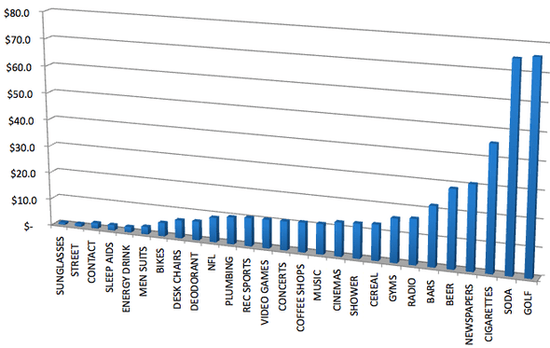
Stalemate watch continued in Libya, with rebels painting their trucks a different color than Qaddafi's, and the world's interest dropped off. Abuse continued in Afghanistan, and we examined Israel's Iron Dome missile defense system. Robert Samuelson explained how we should tax corporations without losing jobs, and Derek Thompson tracked the average male's spending habits. Global warming necessitated a new color threat, parents expressed customer satisfaction after having their kids, and the Oregon legislature got Rick Rolled. Jesse Bering examined the wild world of sex with the elderly, a reader schooled us on tax brackets, and South Park replaced the bible as the new in-joke. Giancarlo DiTrapano cruised Craigslist, Akwaeke Z. Emezi exited the polyamory closet, Andrew gave up on Ulysses, and Drew Grant was saved by "Six Feet Under."
View from your tiny airplane here, normal airplane here, Yglesias award here, Moore award here, more pooping with the Dish apps here, FOTD here, and VFYW here.
Thursday on the Dish, a government shutdown clouded the horizon, troops could be cut off from their pay, and both parties wanted to play the victim. Blumenthal thought a shutdown could wake Americans up to the budget story, Andrew agreed the Ryan plan is heavy on tax cuts for the rich, but relished having a real conversation about balancing the budget. Douthat yearned for an Obamacare alternative in Ryan's plan, John Cole couldn't grasp that ending tax breaks wouldn't do it, and Nick Clegg cried regularly to music. Obama tried to be candid about gas prices, and we pondered why deficits get more press than the looming climate crisis. Wasserman Schultz disapproved of her own death trap comment, and Maggie Koerth-Bakerexplained two sides to polygamy in the Muslim world.
We caught up with a rebel rebound, Exum imagined a post-Qaddafi Libya, and Andrew grew dismayed by our continuing humanitarian imperialism. Trump pulled ahead on the virtue of his insane far right rhetoric, we still sucked up to the Saudis despite the Bahrain crackdown, and China prepared for a freedom chill. Rob Tisani argued for gay marriage on the grounds of children come first, Mississippi turned back the clocks on interracial marriage, readers debated suicide depictions on screen, and Christopher Pramuk sought faith after a miscarriage. College replaced religion for our sense of community, our calories climbed, and France feared agricultural extortion. Bristol made pregnancy cool and lucrative, Tarantino made us consider grace in violence, and YouTube sought a piece of the TV programming pie. NPR whooped PBS in coolness, we couldn't resist more airplane window views, and readers advised readers on how to poop with the Dish. Quote for the day here, VFYW here, MHB here, and FOTD here and here.
Wednesday on the Dish, Andrew gave more thought to Ryan's budget and the sacrifices we'll all have to make. He heard out readers from the hard left and beyond, but still couldn't stand the gut reaction of some Democrats without a plan of their own. Catherine Rampell reminded us of other budget proposals on the table, Andrew parsed the CBO score, Tyler Cowen criticized the Democrats for criticizing Ryan's plan, and we all wondered what happened to cutting defense. Andrew backed Will Wilkinson's belief that conservatism has to evolve, tried to understand the KSM trial options, and the GOP steered itself towards a fully anti-Islam platform. Jason Pack unpacked the bands of Libyan rebels, and the frontlines kept moving back and forth.
Glenn Beck ended his reign of terror, Bernstein wasn't holding his breath for Bachmann, and Palinism reached Canada. Bristol raked in the celebrity bucks and made the Situation look good, Andrew got psyched for the pot candidate, and we read the tea leaves on a government shutdown. Mark Johnson tracked the economic center of gravity head east, Joseph E. Stiglitz tied the fate of the rich to the fate of the poor, and whiteness in America grew malleable. Ta-Nehisi tried to tap into the voices from the Civil War, Bruce Schneier exposed e-book scams, and Donald Shoup dismissed free parking. Freddie DeBoer worried about Twitter, an astrophysicist worried about earth's future, and a reader worried about pooping without a Dish app.
Map of the day here, view from your airplane window here, chart of the day here, correction of the day here, apology of the day here, quotes for the day here, here, Moore award here, MHB here, VFYW here, and FOTD here.
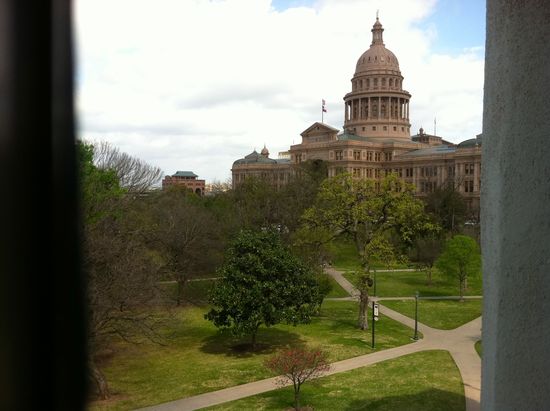
Austin, Texas, 11.36 am
Tuesday on the Dish, Andrew commended Ryan for rebranding the GOP with a real dedication to fiscal reform. The hard left freaked out, Douthat thought it an important gamble, Andrew kept an eye on Ryan's blindspots, Gleckman anticipated Obama's response, and the war costs added up even in the face of proposed benefit cuts for the poor and elderly. Andrew despaired at the coverage of KSM's trial, and the politics of fear Obama's decision indicates. Noah Millman reminded the US we sometimes have to be a fickle friend, Yemen beat the US (just barely) in gun ownership, and the Nationa Review came around to civil liberties. Andrew skewered Karzai for keeping US welfare alive in Afghanistan, the situation at the Ivory Coast came to a head, and Andrew Exum explored whether Muslims fully grasp freedom of religious speech.
Contra Beinart, Andrew eagerly awaited the circus of 2012, third party candidates and all. Joyner tangled with the Republican candidates, Trump milked the birther vote, and not voting is like not doing anything about pollution. Andrew weighed love and friendship as a choice, and demanded that we see the casualties that result from the policies we choose. Biking wasn't as yuppy as you think, Nathan Yau jammed out to traffic patterns, and we remembered sad geniuses. Aaron Bady analyzed journalism's booty on the internet, Annalee Newitz examined why rejection hurts like physical pain, and America diversified. Will Wilkinson pondered David Foster Wallace's work ethic, Emily Bazelon bemoaned the wrong way to fight bullying, and a reader re-cartooned Andrew.
More takes on the Beast switch here, cool ad watch here, Malkin award here, quotes for the day here, here and here, MHB here, FOTD here, VFYW here, and VFYW contest winner #44 here.
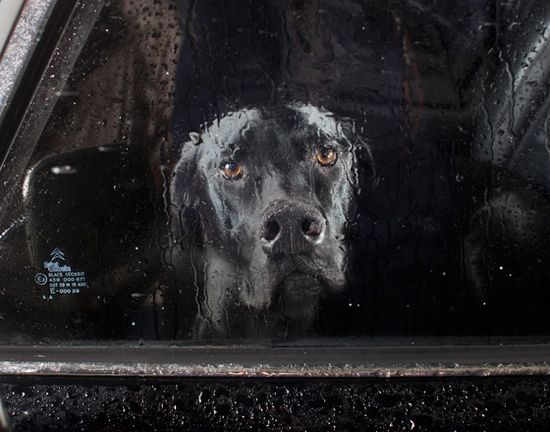
From photographer Martin Usborne's project titled Mute: the silence of dogs left in cars.
Monday on the Dish, we got a warm welcome at the Daily Beast and heard your take on the changes, with a reader's solution to blocked feeds at work here. Andrew feared the blood, pus and tears from popping the Qaddafi zit, and parsed the implications of Richard Goldstone's op-ed on Israel. We followed the stalemate watch in Libya, and Ryan Calder explained why you can't fist pump in Libya. Gideon Rose counseled against pulling out, and Greenwald and Drum went another round on trusting Obama's judgement. Gregory Djerejian sought out a full Middle East strategy, Yemen descended into more chaos, and Andrew categorized KSM's military trial in the same sad category as Gitmo.
Andrew anticipated Paul Ryan's debt reduction plan, and reax from the blogosphere trickled in. We tallied TARP's profits and Andrew patted Obama on the back for handling Bush's programs effectively. Huck destroyed records from his past, Romney still aimed to please, and Obama entered the race selling his personality more than his politics like Reagan. Mark Blumenthal didn't discount Palin, and Conor Friedersdorf catalogued Limbaugh's Libyan misinformation. Walter Russell Mead and Yglesias debated black flight to the south, and Keith Humphreys reminded us of the danger of taking half steps in ending the war on drugs.
Andrew remembered being gay in high school, Catholic acceptance of gays tracked with the rest of society, and some opponents still wanted gays just to be friends. Google determined how we find our recipes online, and McSweeney's couldn't crack the Brian Wilson beard code. Readers rationalized the popularity contest between Mickey and Bugs, Andrew surfed virtual museum collections, and Matthew Wollin buttressed himself against awkwardness. We measured the safety of cycling, the era of 99 cents ended, and Gavin McInnes taught us how to pee in public.
Real life Angry Bird here, short history of sissy bounce here, cool ad watch here, dissent of the day here, quotes for the day here and here, VFYW here, MHB here, and FOTD here.
–Z.P.
 The Dish