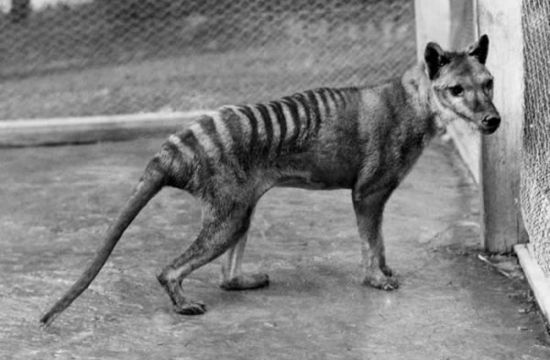
Ed Yong explains the findings of Borja Figueirido and Christine Janis on the now extinct animal, the thylacine, above:
The elbows of dogs and cats are distinct from one another, thanks to their different hunting styles. Dogs wear down their prey over the course of lengthy chases, and their legs are adapted for speed and stamina. To achieve that, they have sacrificed mobility around their elbow joints. Cats are different; they are ambush hunters that rely on stealth and speed to take down their quarry. Their elbow joints are more flexible, allowing them to twist their forearms and wrists, and grapple with their prey. You can see this movement in action when lions swat at the legs of fleeing gazelles, or when house cats bat at a ball of yarn.
By comparing eight thylacine elbows with those of 31 other mammals, Figueirido and Janis found that the thylacines cluster with ambushers rather than pursuers. It might have the skull of a dog, but it has the elbow of a big cat.
 The Dish