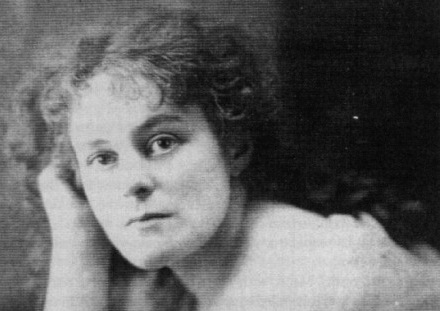
Readers descend en masse on this post. One writes:
A small correction: Maud Gonne was not Yeats' wife. Though he was in love with her, she married Major John McBride, who was executed by the British authorities for his part in the 1916 Rising. (Funnily enough, my parents now live in McBride's old house.)
Another writes:
Yeats spent much of his life madly in love with Gonne, wrote scads of poems to and about her, and proposed to her numerous times throughout their long relationship, but she always turned him down, and eventually married someone else, a man Yeats despised – the Irish nationalist Major John MacBride, whom Yeats would write about so memorably in "Easter 1916":
A drunken, vainglorious lout.
He had done most bitter wrong
To some who are near my heart,
Yet I number him in the song;
Another:
Yeats also proposed to Gonne's daughter, Iseult; she refused him as well.
Another:
Gonne wasn't at all known for her occultism; she was far more engaged in politics than anything else, and Yeats' attempts to involve her in his mysticism pretty much fell flat. Georgie Hyde-Lees, Yeats' actual wife, shared more deeply in his occult beliefs. Her specialty was automatic writing, though the evidence suggests that this was an ability she affected as a way of impressing Yeats and maintaining his interest.
Another:
The occult was an Irish avant-garde fashion in the 1880s and '90s in Dublin for those intellectuals trying to free themselves from what they saw as an oppressive Catholicism.
Another:
Maude Gonne was his self-proclaimed muse and many of his most famous works were written to her. Here's "Aedh Wishes for the Cloths of Heaven":
Had I the heavens' embroidered cloths,
Enwrought with golden and silver light,
The blue and the dim and the dark cloths
Of night and light and the half-light,
I would spread the cloths under your feet:
But I, being poor, have only my dreams;
I have spread my dreams under your feet;
Tread softly because you tread upon my dreams.
Another:
Apparently, Maud Gonne was once asked in an interview why she did not return Yeats's love and responded, "Just think of all the wonderful poetry that the world would have lost."
 The Dish