Today on the Dish, Palin premiered her “bus tour” ad, Andrew parsed her resiliency in the face of the establishment, even as Karl Rove came around and Limbaugh loved how unserious she is. Snobsdale, Arizona welcomed her home, Henry Blodget requested Trig’s birth certificate, Michael Tomasky worried what Palin would do to the political atmosphere, and Alyssa Rosenberg feared the film might ruin Palin’s entertainment brand too.
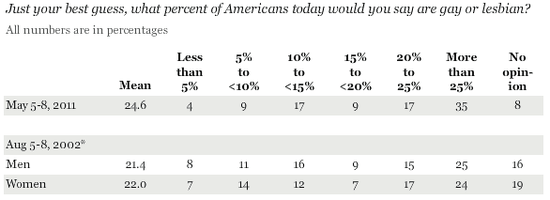
Andrew explored evangelicals’ firm grasp over the US and Israel, Netanyahu hedged his political bets, and we navigated the rocky terrain of the new Zionists. Syria suffered another bloody Friday, we poked the Herman Cain bubble, and people overestimated the number of gays in the U.S. Congress gamed the stock market, the GOP mocked science, and virtual hard labor earned prison guards money. We watched the dystopian drug war wreak havoc, Kate Pickert analyzed Vermont’s single-payer healthcare, and Ronald Brownstein worried about working class whites. Chess and philosophy offer poor benefits, patients are bad at buying insurance, and the US isn’t good at saving for rainy days.
DSK leered at Michelle Obama, Andrew revealed his circumcision story, and an otter raced a kid. People believed the Onion, Oprah differed from Spy Magazine, and the Hangover succeeded as bachelor noir. Jobs don’t require us to stand, Nazis dreamed of talking dogs, and librarians help society navigate the internet.
Chart of the day here, quotes for the day here and here, Yglesias award here, VFYW here, MHB here, and FOTD here.

Sao Paulo, Brazil, 6.57 pm.
Thursday on the Dish, we took a tour of Palin’s new mansion, couldn’t deny her advantage in the polls, and Larry Sabato examined Palin’s opening. Andrew revisited Palin’s belly growth over a five day period, Jonathan Bernstein noted the lack of growth in her base, and Andrew revved up for her bus tour. Newt numbers imploded, Huntsman got attacked for his conservative views, and Steve Kornacki compared Palin to Gary Hart. Andrew bemoaned the state of the War Powers Act today, and Brendan Nyhan predicted a coming Obama scandal, by looking at the trajectory of past presidents’ terms.
Andrew seconded Goldberg on the success of Israeli settlers, Bibi got remixed, and Netanyahu’s gamble increased his popularity in Israel. The pro-Israel lobby abandoned Obama, but a reader reminded us to take that with a grain of salt, and Andrew guessed at Obama and Cameron’s intentions for a Palestinian state in September.
Andrew looked forward to tectonic shifts in the marriage equality landscape, and the war on drugs claimed another victim, a Marine shot in his own home. Greg Ip tracked the spin on the Medicare merry-go-round, Ryan’s plan would increase total health spending for the elderly by upwards of 40%, and Will Wilkinson noted the elderly’s electoral heft. Jonathan Cohn sized up Medicaid’s popularity, and Rebecca Traister signaled the end of the Oprah era. Deportation messed with immigration’s legal proceedings, metaphors influence how we punish crime, and FEMA’s former chief Michael Brown dissed Obama for playing ping pong. Charles Simic mourned the loss of libraries, writers flourished with the em dash, and Katie Roiphe unpacked the term “love child.” Dogs equal cats (in how they drink water), and readers offered baking tips and recipes for Andrew’s wheat intolerance.
Cool ad watch here, Moore award here, Hewitt award here, Christianist watch here, quotes for the day here and here, email of the day here, correction of the day here, chart of the day here, VFYW here, MHB here, and FOTD here.
Floating Chicago – A collection of mirrored skyline timelapses from Craig Shimala on Vimeo.
Wednesday on the Dish, Andrew’s worst suspicions were basically confirmed, with the news of a new Palin movie to premiere in Iowa. Larison predicted a bump for Romney, and we applauded Obama’s “Kenyan Anglophobic Anti-Colonialist” speech at Westminster Hall. Gary Johnson lacked the preacher gene, Palin got cast in iron, and the rest of the field lacked starbursts. We examined Pawlenty’s humble roots, and he came clean about ethanol in Iowa. John Sides parsed NY-26, and PPP’s polling stood up, and we hoped it would help the debt ceiling talks. Paul Ryan recalled Goldwater, and we took a closer look at cost-sharing in Obamacare. We previewed Arab Summer and puzzled over the squiggly borders between Israel and a possible state of Palestine.
GM turned a profit, Scandinavian-Americans bested Scandinavians, and austerity doesn’t work so well when unemployment is high. Crime picked up in the 15 – 30 age bracket while prison populations differed in Canada, and readers proposed other reasons (like videogames) that crime hasn’t risen. We debated cancer screenings, and stumbled over the plight of child brides. Susan Orlean dissed mom jeans, the purpose of things reside in the people using them, and awesome people chilled with other awesome people. Andrew found out he’s allergic to wheat, and readers played doctor.
Dissents of the day here, Yglesias award here, Moore award here, reality check here, chart of the day here, quotes for the day here and here, FOTD here, MHB here, and VFYW here.
Tuesday on the Dish, Andrew fired back at BHL’s defense of DSK and the rich in general, and marveled at the power of the pro-Israel lobby. Andrew crystallized what he meant by the gay left, David Samuels decoded Obama’s sneaky plan for peace, and P.J. Crowley urged Obama to pull troops out of Iraq. Charles Kenny wasn’t convinced faster internet helps international growth, college graduates didn’t regret going, and crime fell despite the recession, maybe due to anti-lead policies, while readers fleshed out other possible reasons. Cities paid for ridiculous slogans, and a huge prison break may be on the horizon, which may be a good thing since harsh sentences aren’t effective.
Weigel made the case for Pawlenty, who refused terminally ill cannabis treatment, but he couldn’t top the frontrunner with no interest in government. Sarah Palin persecuted a neighbor with lemonade stands, and David Brooks avoided Newt because of “pulsing waves of cerebral activity.” Michael Grunwald feared the GOP’s extreme candidates, Romney reminded voters of the boss who fired them and hoped that Palin runs. A prankster cold-called voters for the enemy, the DNC ramped up attacks on the GOP for letting the auto industry die, and Pawlenty’s blue collar roots led nowhere. Huntsman managed to be with the GOP in policy but moderate in argument, and Nate Silver warned Republicans about jettisoning the Ryan budget.
Andrew revealed his take on the Rapture, readers contemplated the new Rapture date, and the apocalypse came to Joplin, Missouri. Gay military men mimicked normal composures in DADT briefings, and marriage equality happened at sea. Circumcisions could make it to the Supreme Court, beards could save the planet, Obama traveled through time, and Red Bull created Austria’s richest man.
Correction of the day here, quotes for the day here and here, Yglesias award here, MHB here, FOTD here, VFYW here, and VFYW contest winner #51 here.
Monday on the Dish, Andrew struggled to find an answer to the Medicare morass, and disagreed with the gay left’s version of history that insists on otherness. We parsed Obama’s AIPAC speech, Goldblog got called a gay Nazi, and AIPAC came out against even-handedness. Andrew dismissed Netanyahu’s hissy fit with this November 11 joint statement that mentions the 1967 lines, China was more courteous than Israel, with more analysis here.
Tim Pawlenty played an exciting candidate on TV, birthers set their sights on Jindal and Rubio, and the Brits had a field day with Sarah Palin’s Alaska. Jonathan Cohn sized up the field like an investment market, Fallows outed Huntsman’s pro-Sarah speech, and Steven Taylor wasn’t seeing a weak roster similar to 1992’s Democratic offerings. We kept tabs on NY-26, and Frum wondered how Romney was going to woo Roger Ailes. We cataloged Minnesota’s marriage escapades, sniffed out DSK on the dress, and questioned Boehner for playing chicken with the debt ceiling. Readers weighed in with anti anti-Rapture defenses, and some perspective on Rick Perry and his trans-vaginal ultrasounds.
We unpacked a Chicago school’s ban on lunch from home, the world food crisis loomed, and China’s food prices spiked. Poor children suffered from the stress, headache medicine is restricted to small doses in England, and dogs can’t return to the wild. Molly Fischer defended menial internships, Russian humor amused us, and bureaucrats suffer when they don’t align with Congress. Readers attacked the dull blade of Occam’s Razor, the Boston Globe used to break news on a giant chalk board, and sociologists don’t have a monopoly on the human condition. We pondered what it means to believe something, and customers tweeted their complaints at brands. Jersey Shore got the Oscar Wilde treatment, the Fascinator pulled in a cool $130K, and all roads lead back to the Pet Shop Boys.
Parody of the day here, poseur alert here, cool ad watch here, Hewitt award here, quotes for the day here, here, here, and here, VFYW here, MHB here, and FOTD here.
–Z.P.
 The Dish