What College Graduates Regret

College_Done_Differently

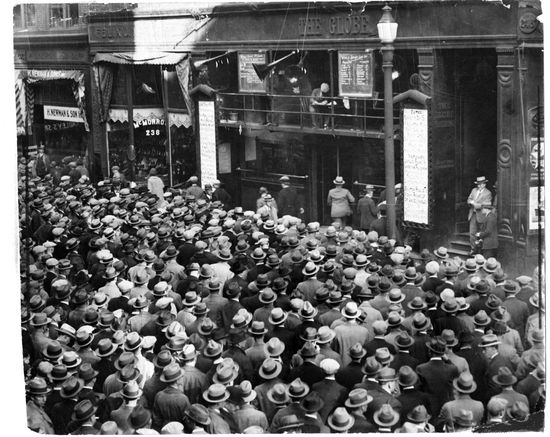
Using the above chart as evidence, Catherine Rampell argues that college is worth the cost:

Lots of people would have changed their major, or done an internship, or started looking for work sooner while enrolled. Did you notice what category of regrets got the lowest share of responses? Wishing they hadn’t gone to college.

Ezra Klein draws a lesson:

This seems like evidence that students are being ill-served by the cultural stereotype of college as a period of enjoyment and exploration that precedes entry into the “real world.” College, rather, is a period of preparation for the real world, and if you don’t take it as such, the real world can make you pay and pay big.

Austria’s Richest Man

Businessweek profiles Red Bull founder Dietrich Mateschitz:

[Red Bull's slogan, "It Gives You Wings"] was just what Mateschitz needed—something to convey that Red Bull had tangible effects. That, in turn, would allow his product-positioning master stroke: He would sell Red Bull as an ultra-premium drink in a category all its own. At about $2 a can, it was far-and-away the most expensive carbonated drink on the shelves. "If we'd only had a 15 percent price premium, we'd merely be a premium brand among soft drinks, and not a different category altogether," says Mateschitz. In 1987 he introduced the drink in Austria. Next came Hungary, the U.K., and Germany, and before long sales were spiking all over Europe.

Waiting For The End Of DADT

A gay officer says it's "a fascinating time to be a gay man in the U.S. military":

The formal briefing was a slightly awkward attempt at a conversation between one of my superior officers and the 40 or so of us squeezed in that room. … As with any other conversation about gays in a setting where I am not “out,” I found myself reverting to old defense mechanisms. I tried to laugh, but not too hard. I listened intently while trying to look as if I was barely paying attention. I looked to see how everyone else was reacting only to mimic their posture, their level of attentiveness, and their own reactions to the conversation.

The Safety School Of Presidential Candidates

Weigel makes the strongest case possible for Pawlenty:

The ideal Republican presidential candidate, obviously, is a reincarnation of Ronald Reagan with the personal wealth of Mitt Romney. More broadly, the best sort of candidate any party can nominate is one who's not moderate but convinces swing voters that he is. That was one reason Obama was so attractive to liberal donors in 2007 and 2008. Hillary Clinton came out of the reformist, Democratic Leadership Council school of politics, but over a couple of decades, conservatives had convinced a pretty large number of voters that she was a committed socialist. Obama had no such problem—voters thought he was more moderate than his record suggested he was.

That's a sweet place to be. Pawlenty's been there for approximately 10 years.

The Anti-Anti Rapture Position, Ctd

Buzzfeed says of the above news report, "As funny as all this Rapture talk is…this is where it gets scary." A reader writes:

Your reader wrote, "What they wish upon us is far more than laughter and humiliation:  it is a slow painful death, the "wages of sin" that we so richly deserve." This is not true. 

These people gave up everything to stop our imminent suffering.  They gave all their money to this man so that he could put up billboards and print pamphlets to spread the word of what was coming.  They did not wish us harm.  The reason they wanted so desperately to convince us they were right is precisely because they did not want us to suffer. 

I myself received a "blessing" (or something like that) along with some literature from these people in Chinatown in DC.  I grew up in Jerry Falwell's hometown in Virginia, so I have been "saved" many times by strangers.  These people were so much more desperate than the people who hand out gospel tracts in their free time.  They were rushed – panicked, almost.  They could not hand pamphlets out fast enough.  They were begging us to listen to them.  They did not want us to experience a "slow painful death."  They wanted us to choose to join them in the Kingdom of Heaven.

The latest:

Radio evangelist Harold Camping said in a special broadcast Monday night on his radio program Open Forum that his predicted May 21, 2011 Rapture was “an invisible judgment day“ that he has come to understand as a spiritual, rather than physical event. “We had all of our dates correct,” Camping insisted, clarifying that he now understands that Christ’s May 21 arrival was “a spiritual coming” ushering in the last five months before the final judgment and destruction.

In an hour and a half broadcast, Camping walked listeners through his numerological timeline, insisting that his teaching has not changed and that the world will still end on October 21, 2011. “It wont be spiritual on October 21st,” Camping said, adding, “the world is going to be destroyed all together, but it will be very quick.”

Faster Internet ≠ Faster Growth?

Charles Kenny questions the importance of broadband in developing countries:

[J]ust because information and communication technologies in general are having a big development impact, and broadband in particular is spreading rapidly, doesn't mean that digging trenches and laying fiber-optic cables are the fastest way to a world free of poverty. For a start, there is little evidence that ubiquitous speed and nationwide broadband networks is necessary for firms to benefit from the opportunities offered by offshoring through the Internet. India's booming IT industry claims by far the largest share of the global business process offshoring market: 35 percent, according to UNCTAD. But India also ranks 114 in the world in terms of average connection speed, according to a survey by global consultancy Akamai.

The Daily Wrap

Today on the Dish, Andrew struggled to find an answer to the Medicare morass, and disagreed with the gay left's version of history that insists on otherness. We parsed Obama's AIPAC speech, Goldblog got called a gay Nazi, and AIPAC came out against even-handedness. Andrew dismissed Netanyahu's hissy fit with this November 11 joint statement that mentions the 1967 lines, China was more courteous than Israel, with more analysis here.

Tim Pawlenty played an exciting candidate on TV, birthers set their sights on Jindal and Rubio, and the Brits had a field day with Sarah Palin's Alaska. Jonathan Cohn sized up the field like an investment market, Fallows outed Huntsman's pro-Sarah speech, and Steven Taylor wasn't seeing a weak roster similar to 1992's Democratic offerings. We kept tabs on NY-26, and Frum wondered how Romney was going to woo Roger Ailes. We cataloged Minnesota's marriage escapades, sniffed out DSK on the dress, and questioned Boehner for playing chicken with the debt ceiling. Readers weighed in with anti anti-Rapture defenses, and some perspective on Rick Perry and his trans-vaginal ultrasounds.

We unpacked a Chicago school's ban on lunch from home, the world food crisis loomed, and China's food prices spiked. Poor children suffered from the stress, headache medicine is restricted to small doses in England, and dogs can't return to the wild. Molly Fischer defended menial internships, Russian humor amused us, and bureaucrats suffer when they don't align with Congress. Readers attacked the dull blade of Occam's Razor, the Boston Globe used to break news on a giant chalk board, and sociologists don't have a monopoly on the human condition. We pondered what it means to believe something, and customers tweeted their complaints at brands. Jersey Shore got the Oscar Wilde treatment, the Fascinator pulled in a cool $130K, and all roads lead back to the Pet Shop Boys.

Parody of the day here, poseur alert here, cool ad watch here, Hewitt award here, quotes for the day here, here, here, and here, VFYW here, MHB here, and FOTD here.

–Z.P.
The Original Homepage

World-series0041

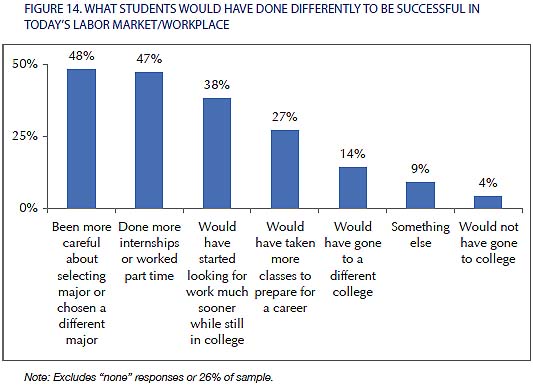
Chris Marstall explains the amazing way the Boston Globe used to break news:

From at least the turn of the century until the 1950s, Globe staff shuttled back and forth throughout the day from the newsroom to the street. There they wrote breaking news headlines and sports scores on four blackboards and two enormous sheets of newsprint. Behind the Globe’s windows? Ads.

Breaking news – a bank holdup, a bus accident, the death of FDR – was quickly featured on the storefront (NB: usually in 140 characters or less). The storefront even offered streaming multimedia of a kind: telegraph dispatches of boxing matches and baseball games were shouted out play by play through a pair of loudspeakers.

(Photo: A crowd listened to the play-by-play in the 1925 World Series. Dated Oct. 8, 1925)

Risking The Economy

Chait worries about the debt ceiling deadline:

Having already taken what he knew to be a huge risk with minimal payoff by supporting the Ryan budget, what can we expect of Boehner during the debt ceiling debate? The market seems to be expecting that cooler heads will prevail. Why would he risk financial chaos? Isn't he listening to business leaders? But within Boehner's world, the riskiest move is to be seen as compromising the movement's principles. When the negotiations tick down to the end, probably in August, Boehner may be thinking not of the guns pointed at the financial system but at the ones pointed at his back.

Josh Barro tries to talks some sense into the GOP:

It’s important to step back and consider the stakes here. Republicans say it is important, above all else, to rein in federal government spending. But the risk with excessive spending is not that government will literally become unaffordable or that we will be unable to service our debts. The United States has tremendous available fiscal capacity, as demonstrated by significantly higher tax burdens in most other first-world countries. The real risk of elevated spending is that we’ll adopt a permanently higher level of taxation.

That is a risk, but not a catastrophic one. While there is a link between government spending and economic growth, it is not as strong as conservatives like to believe.