A Unified Theory Of Humor

Joel Warner covers one professor's attempt to nail it down:

The ultimate takeaway of [Peter] McGraw’s paper was that the evolutionary purpose of laughter and amusement is to “signal to the world that a violation is indeed OK.” Building on the work of behavioral neurologist V. S. Ramachandran, McGraw believes that laughter developed as an instinctual way to signal that a threat is actually a false alarm—say, that a rustle in the bushes is the wind, not a saber-toothed tiger. “Organisms that could separate benign violations from real threats benefited greatly,” McGraw says

The Weekly Wrap

Face

By Matt Cardy/Getty Images.

Today on the Dish, Andrew proposed a theory about Palestinian statehood and European opinion, and Goldblog chastised Netanyahu for disrespecting Obama. Larison skewered the neocon ratchet, Freddie deBoer exposed their religious hypocrisy, and Andrew refuted the Romney doctrine. Yossi Klein Halevi nailed how Israelis are torn, violence didn't abate in Syria, and you know it's bad when Romney loves Israel more than Abe Foxman.

Andrew sounded a cheer for Huntsman 2016, Doug Mataconis schooled Ron Paul on Jim Crow, and Manzi defended the French view of sex. Endorsements may matter more than polls, and readers advised us not to underestimate Rick Perry. Everyone rations healthcare somehow, but Medicaid covers a huge number of children. The gay marriage tipping point toppled over, a sports announcer came out, we considered sports, gays, and bullies, and divorce rates were declining. Gregg Easterbrook concentrated on reducing methane emissions to stop global warming, private prisons failed, and we revisited the most infamous perp walks.

We eagerly anticipated the Rapture, which is the only way Newt might win, and jammed out to the Apocamix. We translated Brit-speak, contemplated people who lie about STDs, and Andrew gave a shout-out to the courage of Parker and Stone. The brain is named after genitalia, and America felt fiscally conservative and socially socialist.

Hewitt award here, Trig neo-natalist here, quotes of the day here, here, here, chart of the day here, MHB here, FOTD here.

Thursday on the Dish, we previewed Obama's Mid-East speech and live-blogged it too. The right accused Obama of destroying Israel for mentioning the 1967 borders, while also calling him a neocon. Serwer argued until the Israeli Palestinian issue is resolved, opinion of the US won't change, and Israel responded with new settlements. Andrew argued that Catholic Bishops should deny Santorum Communion, and suggested O'Reilly move to Britain, and the U.S. finally imposed sanctions on Syrian officials but it may have been too little, too late.

We checked for a pulse on the Ryan budget, Frum grasped at some measure of fiscal conservatism, and Drum signaled the Tea Party might be over. Felix Salmon proposed not paying Congress to solve the debt ceiling crisis, and Palin finally weighed in on Gingrich and "indebtness." Readers pushed back on Andrew's fascination with a faked birth certificate, and Andrew wasn't buying Palin's campaign "strategy." Romney emerged as a front-runner, Nate Silver hoisted Rick Perry's chances up, but Texans weren't believing it.

Serfs are better off renting, taxing driving is the same as taxing gas, and DSK's actions could mean a rise in anti-immigration sentiment in France. Protestants and Catholics pulled away from Christianists on marriage equality, and Cheryl Thomas applauded the US for our legal repercussions for rape. We revisited the linguistic implications of Timberlake's Superbowl boob moment, marveled at disease and DNA, and Mormons went wild at their own beach week.

Moore award here, quote for the day here, chart of the day here, creepy ad watch here, confession of the day here, VFYW here, contest dissents here, MHB here, and FOTD here.
Brooks

Wednesday on the Dish, Andrew raised an eyebrow about how Arnold managed to hide a 14-year-old child, and marveled at a faked birth certificate. Readers reacted to defending elite friends, and Andrew sympathized with children of unknown biological fathers. Andrew felt ill listening to John Yoo moderate a panel on torture, and juxtaposed Orwell's 1984 with Santorum and Marc Thiessen. Dorothy Parvaz recounted her time in a mini Guantanamo, and Andrew nailed Obama's Osama intentions in 2009.

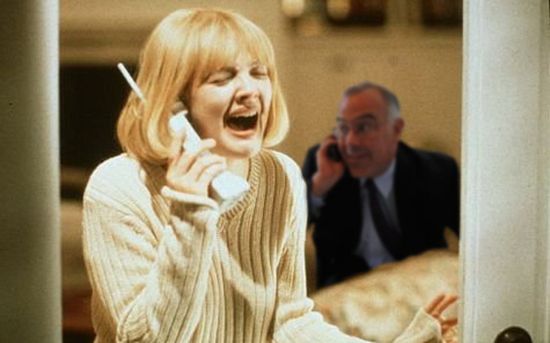
Newt nosedived, and Fallows begged the press to ignore him. Wilkinson believed in Romney, Palin solicited money for her PAC, and Bachmann befriended Christianist heavy metal drummers. We sized up Rick Perry, Palin's ethics advisor got stripped of his law license, and Larison called Bachmann the anti-Romney. Frum tackled healthcare, Douthat weighed in on the Gingrich/ Paul Ryan schizm, and social security accounts for over 90% of income for a third of people over 65. Glenn Greenwald sighed over spouses deported, Alex Massie yawned at the Queen's visit to Ireland, and we picked apart third culture kids.  Doctors don't love autopsies, David Brooks dropped in on "Scream", and climate science nerds exacted their revenge. Serwer approved of funny women, Yglesias approved of repatriating  t-shirts, and Andrew celebrated the San Francisco Giants' "It Gets Better" video. Books went viral, gifted readers filtered their G&Ts, and Jesus had a problem with moderates.

Bean bag of the day here, Malkin award here, headlines of the day here, self-flagellation of the day here, quote for the day here, FOTD here, MHB here, VFYW here, and VFYW dissents here.

Dishness   

Tuesday on the Dish, Andrew rejected Marc Thiessen's claims about torture, torture apologists weren't eager for more information, and Santorum accused McCain of not understanding how enhanced interrogation works. Andrew critiqued the moral certainty of famous people defending their indefensible friends, dissed the perp walk, hesitated to glean a message from Trump's almost-run and dismantled Newt as a thinker. Bernstein compared Pawlenty to Dukakis, Jon Huntsman sounded sane on climate change, and David Brooks the meme ducked Newt. Michael Grunwald invested in Santorum, and Andrew singled out Palin's still strong poll numbers. Andrew ogled Marine on Marine combat, Glenn Beck filled Huckabee's crazy pro-Israel vacuum, and a reader identified Obama as a third culture kid.

The GOP hugged uncertainty on the debt ceiling, and Andrew Sprung solved the debt problem in the shower. Bruce Bartlett blew our mind on the amount our taxes would need to be raised to pay for what's been promised, Annie Lowrey likened the debt ceiling to the appendix, and Reagan remained sane from the grave. Seconds count for nuclear arsenals, size matters even for babies, and by the year 2100 more than 20% of the population will be over 65. More gifted readers weighed in, Andrew sized up a new CPAP, Seth Godin imagined the next libraries, and DNA got all poetic. Andrew remembered the days of Magic Johnson's HIV announcement, John Gray nailed the creationists' mistake, and Stephanie Pappas explained why we think the end is always near. Suketu Mehta praised New York's diverse caste system, and bears slept with dogs.

Moore award here, quotes for the day here, here, here and here, cool ad watch here, chart of the day here, FOTD here, MHB here, view from your airplane window here, VFYW here, and VFYW contest winner #50 here.

View
Halong Bay, Vietnam, 12 pm

Monday on the Dish, Andrew expanded on DSK and men who abuse their power, and argued HIV treatment is prevention. Newt kneecapped Paul Ryan and played the race card, and readers weren't forgiving Newt, even with his daughter's defense. Andrew nailed Newt as a self-important idiot, and picked apart Panetta's letter to McCain on torture. Gary Johnson kicked off his YouTube campaign, Nate Silver tracked Iowa numbers without Huckabee, and we surveyed the full 2012 tea leaf readers. We hit the debt ceiling, feared for the recovery, and parsed why the Republicans are toying with default. Comparing slavery to anything but slavery didn't strike us as right, rich Republicans needed gay marriage in New York, and readers piled on George W. Colbert played with PACs, and Trump grasped at the last straws of his celebrity. 

Israel faced an Arab Spring, Beinart nailed the way forward for Zionism, and Andrew pushed Netanyahu towards being on the right side of history. Gifted kids weren't getting more gifted (but readers stood up for them), we feared all the wrong things, and the NYT had a history of being deferent to the US. Dan Savage couldn't understand his status as an icon, and Sarah Palin ruined the career of Sarah Palin. Alan Jacobs didn't consider Twitter is a popularity contest, Kindles don't make for great study buddies, and email footers aren't legally binding. Lost endings were unearthed, we raised a glass to healthy drinking, sequels soared, and Nicola Twilley sopped up our coffee shirt stains.

Chart of the day here, quotes for the day here and here, beagle playing catch here, VFYW here, MHB here, FOTD here, and the Dish in a picture here.

–Z.P.

Lying About STDs

Tracy Clark-Flory explores why people do it:

Sex is one of the most powerful ways that we seek pleasure, connection and acceptance — and the disclosure of an STD can feel like a threat to all that. This cuts straight to the heart of our insecurities about sex: the worry that we are undesirable.

Dan Savage interviewed Brad Crelia, co-founder of the online magazine Hivster.com, about the biggest misconception that HIV+ guys have about HIV- guys:

That they won’t date you, sleep with you or care about you. After I found out I was positive, I had a few dates and the guys didn’t care about my status, and I eventually met a really special guy; we were together until just a few weeks ago. HIV+ guys are not doomed to life alone and you still can and will enjoy life. There are just a few more hurdles to jump over.

In some ways, the HIV-negatives who are not freaked out by HIV-positives already reveal themselves as ipso facto mature adults worth dating.

When The Web Works

Another writes:

Every time I've seen the new "It Gets Better" ad during the NBA Playoffs, I cry my little straight guy eyes out. The bottom-up organization of it really is compelling, but the part that makes me well up is different. 

The part that kills me is that it really says something powerful about how successful we can be when we appeal to each others' better natures.  This is not about demonizing the bullies.  It's not about finding a villain to take down.  This is a simple message from caring people to hurting people.  And while it's most relevant for gay teens, it speaks to everyone.  Everyone needs to hear that life gets better, that there are people who will love and accept you for who you are out there, and that all you need to do is find them. 

There's a reason Google used it to show the true power of the Internet as a tool.  "It Gets Better" is a living, breathing, natural rebuke to the skeptic's popular indictment of the Internet as a weapon of mass social estrangement.  And it's so successful because it appeals to our better natures.  That's as powerful a statement of humanity's capacity for compassion as I've ever seen, and that's why it brings out the hankie for this straight sports junkie.

Is There A Rick Perry Sized Hole In The Race? Ctd

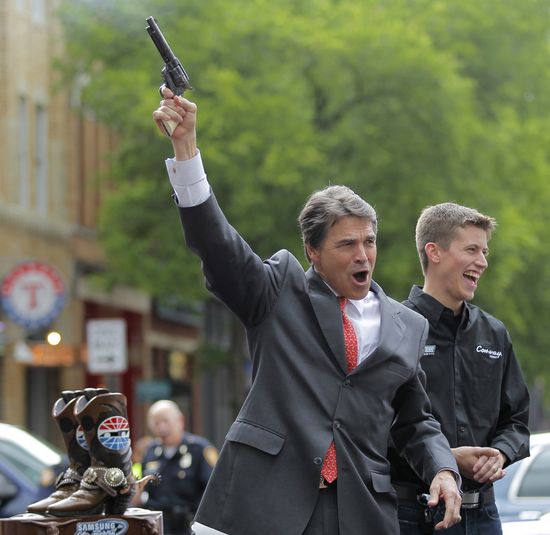
GT_RICK-PERRY-GUN-110520

A reader writes:

Don't underestimate Perry. It’s easy to do, and people down here have been doing it for years at their peril. Perry is great on the stump, where he has a talent for connecting with people. In many ways he’s a lot like W was coming out of Austin, but more conservative. Perry has won more tough races then anyone in modern Texas history (Jim Hightower, John Sharp, Tony Sanchez’s $60 million, KBH when she was the state’s most popular politician, and Bill White when he was the latest hope of Texas Democrats) and he would be very attractive as a national candidate. He’d be by far the most conservative candidate in the race and he’s a gifted campaigner who knows how to go for the jugular. In this rather pathetic GOP field, I don’t know who could stop him.

On top of that, despite his protesting, he wants national recognition. He’s already the longest serving governor in the state’s history, so he’s got nothing more to prove in Austin. Like W, he really could win.

Perry yesterday upped his conservative cred by signing a law requiring women to get a sonogram before receiving an abortion.

(Photo: Texas Governor Rick Perry has some fun with a six-shooter filled with blanks as NASCAR driver Colin Braun looks on at an event in downtown Fort Worth to kickoff a weekend of NASCAR racing at the Texas Motor Speedway on Thursday, April 15, 2010. By Rodger Mallison/Fort Worth Star-Telegram/MCT via Getty Images)

Baby Steps Against Global Warming, Ctd

A reader writes:

I'm sure I won't be the first to write to you on this, but Easterbrook's commentary is truly disingenuous, and he knows better.  The primary reason the "enviros" talk so much about CO2 is its lifetime in the atmosphere – on the order of 100 years.  Methane, on the other hand, only stays aloft for 1-4 years.  This creates an urgent need to control CO2 emissions, even though methane is "20 times more powerful" as a greenhouse gas, since each ton of CO2 emitted now will hang around for a few generations, while if we control methane emissions 20 years from now, the effect will be felt 5 years later than that.

If you want to delve a little deeper, the warming created by CO2 emissions may result in the release of more methane as a feedback effect.  This is one of the thrusts of the Hansen article Easterbook quotes.  Directly from the Hansen article:

However, if global warming continues, the CH4 source from melting of methane hydrates could increase. Thus there is a coupling between the need to reduce CO2 and the possibility of reducing CH4.

And the context for his claim that Hansen supports methane control in the short term.  Again from the Hansen paper:

However, stabilization of climate becomes a realistic objective if coal emissions are phased out and unconventional fossil fuels (such as tar sands and oil shale) are not developed as substitutes for oil and gas as the oil and gas resources decline. With these assumptions, the non-CO2 forcings become an important factor in stabilizing climate.

So, in Hansen's view, the scenario under which Easterbrook says there is "no economic harm" involves phasing out coal.  To be sure, the reduction of methane production will reduce warming (and water vapor and other greenhouse gases are feedbacks from methane).  But the reasons environmentalists are focusing their energy on CO2 is scientific and practical, not because they "Hate America (TM)"

Another writes:

Easterbrook's argument that "there would be no economic harm" in regulating methane emissions isn't right; there is certainly a cost related to reducing methane emissions. Fixing leaky pipes is hugely expensive – that's why we lose so much of a water supply to leaks. Furthermore, most of the leaks aren't occurring in developed countries, which generally have much better pipelines standards than the rest of the world. Reducing emissions from other sources would be equally difficult. How does he plan to change rice production?

Easterbrook's obvious policy misstatements aside, the real problem with his article is his contention that methane is ignored because "enviros" want to blame America first. Any halfway competent scientist modeling ways to prevent climate change looks at emissions from all greenhouse gases, which are reported in carbon dioxide equivalents precisely to account for the fact that different gases have different atmospheric lifetimes and radiative forcing capacities. Carbon dioxide is a policy focus because, after accounting for the different global warming potentials of greenhouse gases, it comprises more than 70% of our annual impact on the climate, versus 18% for methane, with a plurality of (anthropogenic) methane emissions coming from agriculture.

So it's not about blaming America first; it's about addressing the largest aspects of the problem. Furthermore, burning methane doesn't release methane into the air as he suggests; it releases carbon dioxide, and the US consumes 30% more natural gas than the EU. Those two facts alone throw his concluding paragraph under the bus. Easterbrook would have better luck tossing labels around and questioning people's motivations if he understood the basic facts of their argument. I have graduate economics and environmental degrees, and these sorts of gross misstatements and accusations drive me nuts.

Another:

I'm trying to keep myself in check, but as a trained chemist, I'm always flabbergasted when folks like Mr. Easterbrook draw sweeping conclusions from a single figure, such as "Methane…is 20 times more potent as a greenhouse gas than carbon dioxide."  (Maybe he didn't write the headline, but it really overstates the case he makes). A large portion of methane emissions comes from sources which are either directly tied to carbon dioxide emissions anyways (coal mining and petroleum systems, 14.8% of 2009 US methane emissions*) or agricultural processes which are difficult to make more efficient (enteric fermentation – cow farts, and the cited rice cultivation, 21.4%).  Right off the bat, that's 36% of US methane emissions that are off the table by Easterbrook's measure of economic harm. 

It's also important to note that the James Hansen lecture Easterbrook mentions hypothesizes a complete phase-out of coal mining, and thus burning, in addition to other reductions to produce significant emissions reductions.  It also ends with the statement "Non-CO2 forcings should be dealt with separately from CO2 – they should not provide an escape hatch to avoid CO2 emission reductions."**

The reason methane doesn't get a lot of press is twofold.  One, it's less of a problem, on absolute terms: methane represents somewhere around 15% of global 2009 radiative forcing (relative warming potential) above pre-industrial revolution levels to CO2's 70%.***  Two, as Easterbrook notes, the feasible industrial reductions are easier to implement and don't require much coercion from the government. In fact, the US government, in voluntary partnership with industry, has already made significant headway in terms of methane emissions reductions – 2009 emissions levels were only 1.7% higher than 1990 levels,* which represents a per capita decrease of 17%.  Over the same period, CO2 emissions have kept pace almost exactly with the population.****

The truth is, climate change is a problem that requires a measured, all-fronts approach to handle.  I applaud Easterbrook for bringing a discussion of methane emissions to light and certainly there's more work to be done making natural gas extraction cleaner. But simply stating that CO2 regulation MUST harm the economy while methane regulation would have no effect is ludicrous. 

He rightly states that "methane leaks from natural gas drilling…don't serve any economic purpose."  By the same token, a semi truck that releases 2 lb/mile CO2 has no economic advantage over one that releases 1.5.  Each of these innovations require R&D that is spurred by making inefficient emissions more expensive, and even if such an emissions tax were focused solely on methane, it would have some small initial drag on the economy.  A fairly and smartly crafted tax – perhaps penalizing methane emissions at a rate commensurate with its warming potential -  would eventually reduce the cost of doing business, greenhouse gas emissions, AND reliance on foreign energy sources.  And maybe, as Easterbrook himself wrote in 2006*****, regulating all greenhouse gas emissions will be less expensive than we can even imagine, just as taming acute air pollution was.

*http://epa.gov/methane/sources.html
**http://www.columbia.edu/~jeh1/2009/Copenhagen_20090311.pdf
***http://www.esrl.noaa.gov/gmd/aggi/ (Figure 4)
****http://data.worldbank.org/data-catalog/world-development-indicators?cid=GPD_WDI (page 156)
*****http://www.theatlantic.com/magazine/archive/2006/09/some-convenient-truths/5090

Watch The Endorsements

John Sides advice to 2012 horse-race obsessives:

When looking at presidential primaries in particular, polls have some value—as Nate Silver has argued—but probably the best predictor of how many convention delegates a candidate will win is the number of endorsements he or she gets from party leaders. This is the conclusion of a systematic study of recent presidential primaries by Martin Cohen and colleagues in The Party Decides, where they looked at the simultaneous effects of endorsements, fundraising, news coverage, and poll numbers. Why elite endorsements matter is still a bit opaque, but if I were a reporter chasing the candidates, I’d be paying attention to the least visible parts of the “invisible primary”—the interactions and negotiations among party leaders—and less attention to the poll du jour.

Talking To The Tormentors

A reader writes:

I'm starting to wonder if it would be even more effective for the Giants to aim their message not at teenage victims, but at teenage victimizers.  It seems to me that a message from a professional sports team would be heeded more by those likely to bully than by those likely to suffer at their hands. 

Of course, such a message would not be part of a larger extant campaign; but then, perhaps it's time for messages to appear that more actively encourage tormentors not to torment alongside those encouraging the tormented to endure. (Don't get me wrong: I'm thrilled that the Giants are doing this and will be very glad to root for them now.)

Regarding the above ad, Will Brinson writes:

[A]s recently as Sunday night, Grant Hill of the Phoenix Suns recorded a public service announcement for "Think B4 You Speak," which aired TNT during the first game of the Eastern Conference Finals. Hill, as noted by Drew Magary of NBC's "The 20," came under an unbelievable amount of scrutiny for his decision to do so, which only illustrates how difficult it is to approach the subject of sexual orientation in the world of professional sports.

Pity the ad is so corny.