This Email Is Not Legally Binding

The Economist unpacks the ubiquitous e-mail footer:

E-mail disclaimers are one of the minor nuisances of modern office life, along with fire drills, annual appraisals and colleagues who keep sneezing loudly. Just think of all the extra waste paper generated when messages containing such waffle are printed. They are assumed to be a wise precaution. But they are mostly, legally speaking, pointless. Lawyers and experts on internet policy say no court case has ever turned on the presence or absence of such an automatic e-mail footer in America, the most litigious of rich countries.
A Short History Of Coffee Stains On Your Shirt

2200420004_8d81717929_o

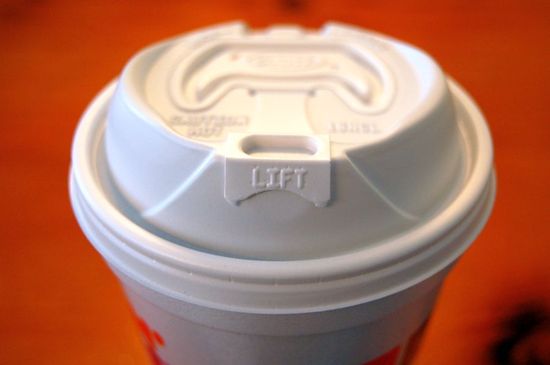
Nicola Twilley constructs a history of the white plastic coffee lid:

The very earliest patent for a drink-through lid — Roy Irvin Stubblefield’s “Cap for Drinking Glasses, filed on April 27, 1934 — was designed for cold beverages. … It wasn’t until 1975 that Walter Elfert and James Scruggs came up with the fold-back tab that could attach itself to the lid to stay out of the drinker’s way. And, according to [lid collector Louise] Harpman, “the true efflorescence in drink-through lid design and production can be traced to the 1980s, when we, as a culture, decided that it was important, even necessary, to be able to walk, or drive, or commute while drinking hot liquids.” Twenty-six new patents were issued in the 80s alone, for refinements in “mouth comfort, splash reduction, friction fit, mating engagement, and one-handed activation.”

(Photo by Flickr user mtsofan)

Twitter’s Groupthink?

A C Goodall feels the limits of the site:

Twitter functions as banally as a school hierarchy: who to like, who not to, who you're allowed to criticise, who you can't etc. Whilst Malcolm Gladwell's article in The New Yorker last year enraged many with his claims that social networking was not instrumental to social change, his most salient point was that social media is "not the natural enemy of the status quo." Twitter relies on people's desire to be the same.

Alan Jacobs rejects the claim:

Twitter is a platform and a medium, not an organized and coherent body — it’s not like a book, for instance, which can be said to have a single overall character. Imagine what you would think if someone said, “Email is all about fitting in.” Or “The telephone functions as banally as a school hierarchy.” Or “The telegraph relies on people’s desire to be the same.” Media platforms are what you make of them, and the history of each reveals that its makers expected it to have a relatively narrow set of uses and were surprised when people exercised their creativity to find remarkably varied uses.

Chart Of The Day

Screen shot 2011-05-12 at 1.05.15 PM
Peter Smith sifts through the FAO's new report to understand the 660 lbs of food each one of us wastes annually in North America:

It makes an important distinction between food loss and food waste. Food losses (the blue portion of the bar) tend to occur due to crumbling infrastructure, harvesting technology, or poorly designed packaging, whereas food waste (the red portion) results from restaurants and people like you and me throwing edible, slightly malformed fruits and vegetables into the trash.

Your Gifted Child Isn’t Getting More Gifted

Frances Woolley reads a new study whose authors conclude that “students exposed to gifted-talent curriculum for the entirety of 6th grade plus half of 7th grade exhibit no significant improvement in achievement.” Arnold Kling gets peeved:

The main reason we have [gifted and talented (G&T) programs] is because parents love it when their kids are placed in them. It is a huge status thing for parents. G&T programs could have negative effectiveness and still be enormously popular.

Along the same lines, Meghan McArdle takes issue with upper-class parents:

[These parents] proudly note that their experience shows how great public education is, while failing to note that their schools work because these comparatively affluent parents with a great deal of social and political capital fight like hell to divert as many resources as possible–including the best teachers–into a handful of schools in affluent areas.

E.D. Kain complicates Megan's point.

Huckabeen, Ctd

My take here. Jonathan Martin makes a case for Huntsman, yes Huntsman, gaining in South Carolina, while Iowa now threatens to derail Romney:

South Carolinians pointed to former Utah Gov. Jon Huntsman and former House Speaker Newt Gingrich as candidates who could benefit there from Huckabee’s withdrawal. Huntsman already has one of Huckabee’s former top advisers, strategist Richard Quinn, working for him, and could inherit more of the Arkansan’s infrastructure. “I would very seriously consider [Huntsman’s] candidacy,” said former South Carolina Gov. David Beasley, suggesting that Huntsman could capture voters who were drawn to Huckabee’s sheer newness on the national stage. “When Jon expressed an interest in running it definitely caught my attention because he might be just the fresh face on the field that’s needed at this time in the Republican primary process.”

He thinks a Mormon who favors civil unions for gays will do well in … South Carolina? Well, we'll see. He surely knows the place better than most. Of course, this is all absurdly premature, but fun nonetheless.

The Necessary Lie II

Julian Baggini ponders the morality of lying:

It is ironic that the same rules on unparliamentary language which ban MPs from calling each other liars also forbid them from describing another member as “drunk.” Members are banned from accusing others of not telling the truth on some occasions—and then forced to conceal the truth themselves on others. There is nothing more common than inconsistency and confusion over the imperative not to tell a lie.

I've always thought that banning both terms of abuse was a little counter-productive. A lie in the House of Commons could be excused, it seems to me, on account of being sloshed. And there is a bar in the Commons, which serves, naturally, as the focal point for the journalists.