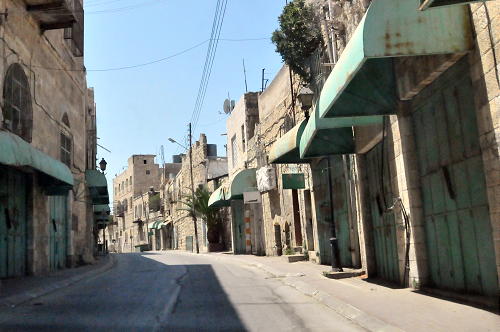
Michael J. Totten visits Israeli settlers surrounded by Palestinians in Hebron, in the West Bank:
What the Israeli military calls the “sterile zone” was once a vibrant ancient city. Today, it looks like a ghost town, as though everyone had been driven out by a violent catastrophe, which is pretty close to what happened. These streets are in Hebron’s old city, a part of town that would overflow with thousands of tourists and pilgrims from all over the world if it weren’t a slum made hideous by hatred and war. …
Because Hebron, historian Yaacov Lozowick wrote, “is what happens when Israelis and Palestinians agree to divide a city, but can’t agree to live together in peace. The blame for lack of peace is irrelevant: each side will doubtlessly say it’s all the fault of the other, but the result won’t be any nicer thereby. The myriads of observers, pundits, politicians, dreamers, visionaries and true believers who all know for a certainty that dividing Jerusalem is the key to peace in the Middle East need urgently to visit Hebron.”
Really? Is Lozowick equating the ancient religious mix in Jerusalem with the results of the settlement policy? Hebron's liveliness was killed not because it was divided but because the settlers decided it was theirs' and had the might of the Israeli government to turn the place into a war-zone/ghost town. To say assigning blame is irrelevant is in this case bizarre. And in the context of a comprehensive agreement, partition can surely work better. Because partition is the only way to resolve this.
But partition, as we now know, is not even among the worst options for the current Israeli government. They are adamantly, passionately for Greater Israel for ever. And the US Congress is foursquare behind them.
 The Dish