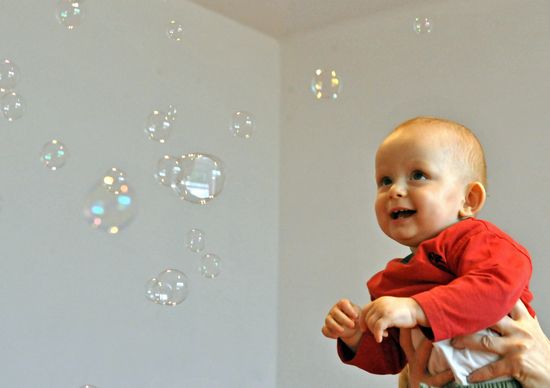
The financial kind, that is. Jonah Lehrer explains:
[Read Montague, a neuroscientist at Virginia Tech] argues that the urge to speculate is rooted in our mental software. In particular, bubbles seem to depend on a unique human talent called “fictive learning,” which is the ability to learn from hypothetical scenarios and counterfactual questions. In other words, people don’t just learn from mistakes they’ve actually made – they’re able to learn from mistakes they might have made, if only they’d done something different.
Unfortunately, fictive learning can also lead us astray, which is what happens during financial bubbles. Investors, after all, are constantly engaging in fictive learning, as they compare their actual returns against the returns that might have been, if only they’d sold their shares before the crash or bought Google stock when the company first went public.
(Photo: Janek Skarzynski/AFP/Getty Images)
 The Dish