Alexis Madrigal remembers the first time he realized the Internet would dramatically change our lives. As an eager middle-schooler, he emailed a biology professor, who responded and later became a friend:
There were no "social networks" as we think of them now, but the power to connect to people — anyone! including Kansas biology professors! — was like a neon arrow pointing from my dark bedroom at the end of a gravel road in a tiny town to the future, when we'd all sort of be everywhere in the world at once.
Maggie Koerth-Baker's revelation came later:
[I] remember one of my professors talking about how to track down sources using
phone books, calling newspapers in other towns, digging into old back issues of magazines and journals at the library. He was describing a days-long process, just to get started. Just to find the people you wanted to interview. And I realized that his experience didn't describe my experience. Finding sources still took time, but I found them online in hours, not days, and I went to the right people directly, rather than through intermediaries making recommendations. This technology was changing the way journalism was done. That was when I realized that the Internet was powerful.
Derek Powazek is collecting other testimonials for his new project, On the Network.
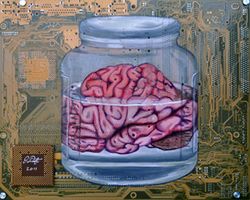
(Image of "Memory" by Joe Dragt who paints over old circuitboards)
 The Dish