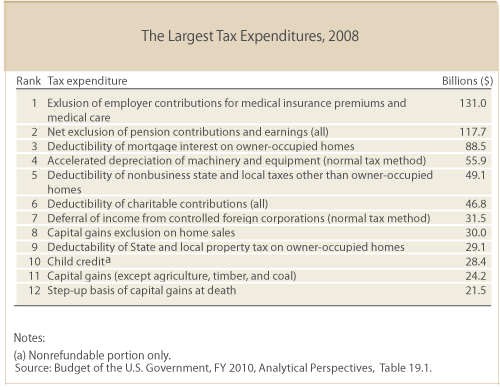
Suzanne Mettler takes a close look at tax expenditures:
Over the past few decades, while many standard social benefits have atrophied in real value, those packaged as “tax expenditures”—the formal name in federal budgeting parlance for subsidies provided through the tax code—have flourished, growing rapidly in value and number.
These tax expenditures for individuals and families represented 7.4 percent of GDP in 2008, up from 4.2 percent in 1976. (Tax expenditures for business, such as those for the oil and gas industry, made up another 1 percent.) By way of comparison, Social Security amounted to 4.3 percent of GDP in 2008; Medicare and Medicaid, 4.1 percent.
These social tax expenditures comprise a major part of what I call the “submerged state.” By that I mean that they are public policies designed in a manner that channels resources to citizens indirectly, through subsidies for private activities, rather than directly through payments or services from government.
Reihan adds that "tax expenditures are skewed to the rich, welfare state expenditures are skewed to the 'deserving' poor."
(Chart from the Tax Policy Center)
 The Dish