A Poem For Saturday

Alec Wilkinson remembers the late Gil Scott Heron, author of The Revolution Will Not Be Televised:

On the subway, he liked to sing just loud enough to be heard by the people around him, and he was very pleased one time when another passenger said, “Brother can sing.” He also liked it when people told him he looked like Gil Scott-Heron. He said that he mostly worked at night, and that a melody would arrive first, delivered by the spirits. “If you’re supposed to be doing something,” he said, “the spirits will come and help you. They have helped me out with lines I shouldn’t have known, chords I shouldn’t have known. Every once in a while I get lines from somewhere, and I think, I better write this down.” His nature was passionate but gentle, but there was the sense that he was trying somehow to find his way back to the self he had been that was so radiant and full of enthusiasm and ideas.

Why We Interrupt Each Other On Cellphones

ABC Radio’s Future Tense explores voice technology with author Brian Christian:

[W]hat you find if you look the way that human conversation has been changing in the past ten years or so, a lot of our interaction happens over email, where we're not really interacting in real time, and I would also say that the shift in telephone technology from landlines to cellphones has had a kind of unforeseen trade-off, which is that we’re now much more accessible geographically, but the cost is that the lag on the connection is six times greater. So it’s about half of a second instead of a little bit less than a tenth of a second. And it may not seem like much, but in fact it is enough to disrupt a lot of the subtle dynamics of timing and pauses, and yielding to other people …

The Trouble With Electric Cars

Steven D. Levitt examines the conundrum over rare metals:

[I]f electric cars become a mainstay, we may be trading one dependence for another that is even more troubling. Ninety-five percent of the world’s output of rare-earth metals today comes from one country: China. By some estimates, demand will outstrip supply within five years. At least with oil we know there are fifty years of oil reserves readily available. Moreover, oil is produced all over the world, limiting the monopoly power of any one country.

The Weekly Wrap

Today on the Dish, Andrew gulped as Palin weighed in on the debt ceiling, and he couldn't ignore her extreme narcissism because of the policy implications. Palin butchered the history of Paul Revere's ride, the heartland tired of foreign wars, and Andrew found the perfect cartoon metaphor for Palin's strategy. Andrew weighed the pros and cons of her unconventional campaigning, and Jay Newton-Small argued Palin was sure dressing the part. We picked apart Mitt's flaws, Mitt picked on the economy, and Andrew delineated Mitt's conventional lies. Nate Silver played down the economy's impact on the presidential race, but the trend may matter more than the rate. The Tea Party opposed cuts in social security benefits,

Unemployment got us down, but experts promised this recovery was never going to be quick. Bradford Plumer proposed taxing pollution, McWhorter argued the drug war isn't a product of racism, and Greenwald flogged Politico for anonymous sourcing. "I'm Not Racist But" tickled our casually bigoted funny bone, and the readers got sweaty over biking in the US and Europe. The rest of the press caught on to Dagan upending the debate on Israel, and we all agreed that Palestinian rap is much better than the Coldplay-endorsed version.

We remembered Clarence Thomas' weinergate, people thought gays already had discrimination protection in the workplace, and one woman vowed to not look in the mirror for a month. We believed in ourselves thanks to this kid, and America out-nannied the Netherlands. We perused the Ebay for illicit drugs, rebel friends influenced us to have sex and take drugs, and readers dreamed erotically of Andrew. Question of the day here, quote for the day here, chart of the day here, view from your airplane window here, VFYW here, MHB here, and FOTD here.

RUSHES from Daniel Etura on Vimeo.

Thursday on the Dish, Andrew fisked Romney's speech, and deconstructed some of his untruths. Andrew refused to rule Palin out, Josh Green continued to drink the Kool-Aid, and Michelle Cottle urged more crazy women to run. Larison believed in the fringe, Cain studied for the big test, and Palin got caught in an odd lie about the debt. Andrew stayed (fairly) mum on Weiner's weiner, offered his simple advice, and contemplated what it means for privacy today.

Andrew revisited the ACA's effects on Medicare spending, Britain's healthcare crisis sounded familiar, and Douthat predicted compromise on the deficit would go down easier than one on immigration. The internet tried to solve cutting Medicare, Manzi couldn't calculate the impact of saving GM, and young people needed to save on their own for their retirement. Grand Rapids lip-dubbed, dads picked kids up from school on bikes, but not in this DC heat, and young people don't want cable.

Syria tried to make meager concessions, and Nadia El-Awady felt more feminine without her hijab. Andrew dared the GOP to call the former head of Mossad an anti-Semite for calling for a two state solution, Jews still loved Obama, and a philo-semitism primer here. Quotes for the day here and here and here, VFYW here, MHB here, FOTD here, chart of the day here, dissents of the day here, hathos alert here, and prayer Tina Fey style here.
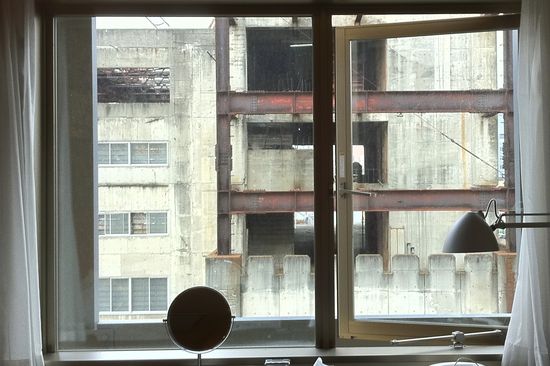
View

Osaka, Japan, 7.40 am

Wednesday on the Dish, Andrew likened Palin to Father Coughlin for her bizarre populism, charted the rise of Cain and unable, and couldn't understand the National Review's refusal to condemn her. Newt fizzled, Cain sizzled, and Sarah still reigned as the ultimate mean girl. Alex Massie dubbed her a very effective political troll, while she still managed to play the victim, and her full Alaskan email load was on its way.

Andrew attempted to understand the GOP's deadly game of debt chicken, and vowed to keep at what fiscal conservative even means today. Medicare couldn't last, but Americans still couldn't come to terms with that. GOP governors refused to set up healthcare exchanges, the Ryan plan stood only to get more unpopular, but the Dems still didn't offer any alternatives. The recovery slowed, we picked apart a new study on what makes for good teachers, and tried to glean the real truth about cellphones and cancer.

Syria stayed awake to the sound of gunfire, Haleh Sahabi was murdered publicly in Iran, and change came slowly to Egypt. Andrew displayed little sympathy for the settlers' ghost town of Hebron, and reasoned through Israel's dependence on US support. Andrew welcomed news of a man cured of HIV, readers rode bikes to work without sweating, and Tarantino's next movie sets its gory sights on the South.

Home news here, chart of the day here, cool ad watch here, VFYW here, MHB here, and FOTD here.
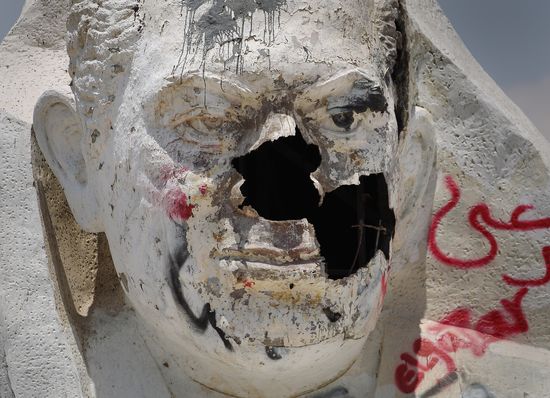
  Face
By Peter Macdiarmid/Getty Images.

Tuesday on the Dish, Andrew condemned the torture and murder of a child in Syria, and the entire population united against a regime which refuses to progress.

Andrew frisked Palin's rogue bus tour, Beinart called her campaign now or never, and the press scrambled to cover the paparazzi candidate. Palin, however, rose to the occassion by calling Obama un-American, loved the smell of emissions while greenhouse gases reached an all-time high, and kept using her children as props. Readers egged Andrew on, using Carla Bruni's "hidden" baby bump as an example, and the GOP commissioned polls to reinforce their views. Roger Ailes churned out the anti-Obama memes, and we explored the edge Obama still has over others, especially among Republicans and the elderly.

The Ryan plan split the GOP over healthcare, and Andrew reminded everyone how much more expensive private healthcare is than a public version. Conor Friedersdorf criticized the flipside of the terrorism threat, Tyler Cowen searched for the driverless car lobby, and medical marijuana hit a million patients. Readers recalculated the real cost of a bike rider's commute, we celebrated high-risk takers and looked down on low-risk takers, and Angry Birds taps into our primal urges. Sharing is caring (with coworkers), the post office approached collapse, and we grilled headphone users on what song they're listening to. McArdle begged parents to vaccinate their kids, Kelly Hodgkins trained us in mental push-ups,

Correction of the day here, quotes for the day here, here, and here, MHB here, FOTD here, VFYW here, and contest winner #52 here.
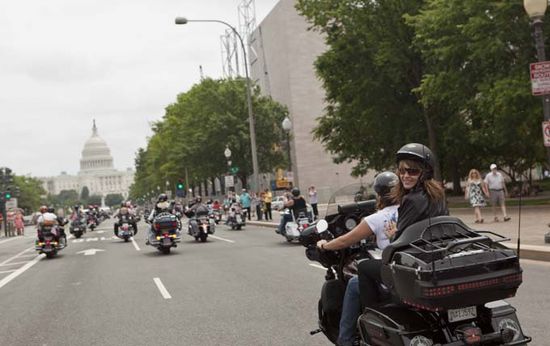
Palinriding
 

Monday was Memorial Day!

–Z.P.

The Cost Of Your Commute, Ctd

Screen shot 2011-06-02 at 7.18.15 PM

Our popular discussion thread continues in force:

North Americans always have an excuse for not cycling. Tokyo, one of the world's largest cities, with a very warm and humid summer climate, has a bicycle mode share of roughly 25%. Davis, California has average summer temperatures above 90 F, with a bicycle mode share of 20%. Plus, northern Germany and Holland might not have that many hills, but they do have impressive North Sea winds and storms. People are quite adaptable, and those who are interested in riding a bike will find a way around pretty much any problem.

Lastly, there's the electric bicycle, which will do a lot of the work for you. E-bikes now make up 15% of the new bike market in countries like Holland and Germany. There's always a solution, even for pampered North Americans  ;-)

Another writes:

Are your readers insane?  People bike more in Copenhagen because of the glorious weather?  Once, while biking in Denmark, a storm rode in from the North Sea. 

My wife and I had to knock on doors to beg rural Danes to let us into their homes to avoid hypothermia.  After some rejections and a long huddle in front of someone’s dryer vent we were saved from a possibly serious issue by a kindly man.  It was July.

Sure, it can be pretty hot for a couple months in Atlanta or Houston or DC.  However, the weather is very mild and temperate much of the year.  Meanwhile, it’s rainy, cold, and miserable in Holland and Denmark pretty much all the time.  We Americans don’t bike less than Europeans because of the weather.   That’s yet another pathetic excuse.  It’s our comparative lack of cycling infrastructure and our abject laziness.  It’s an empirical fact that we’re fat compared to most of the world.  And our obesity and resistance to walking and biking work together in a feedback loop.

I once went jogging at my in laws’ place in Alabama.  People stared and laughed at me like I was some kind of circus freak.  Maybe they’d never seen this behavior before in their neighborhood.  Most, including the kids, were obese.  It almost makes me wonder if resistance to biking, or exercise, or eating healthy isn’t becoming yet another front in our culture war.  This time “conservatism” won’t be defending strength, vigor, and other martial virtues against liberal wimpiness and decadence as it might have in the past.   Instead it will defend our right to be fat, unhealthy slobs in the name of freedom and out of resentment of the slightly healthier, slightly wealthier people in culturally blue enclaves who think biking is hip.

Another:

Many of your readers have echoed the idea that Americans are just making excuses for not using bicycles to get to work, complaining about sweat and rain. Now, beside the fact that sweat and rain (and snow!) are real concerns, no one seems willing to mention an even more elemental problem with biking in most US cities: Our roadways and transport areas were not designed for bikes, nor even pedestrians; they were designed for cars.

I live in Boston and for about four months while I was in grad school I rode my bike from Somerville to Boston University (about three miles). Initially the ride was pleasant, but soon, when traffic was thick, the roads were very difficult to navigate safely. During my experiment I was hit by two cars, forced against a railing by an MBTA Bus, and nearly very seriously injured when I barely escaped being "doored." To compare an average American city to Amsterdam and other European cities which have been designed with bike transport and pedestrians chiefly in mind seems naive. I mean just watch this video about how accommodating Amsterdam is to bicyclists and then look out on the mortal combat between pedestrians, bicyclists and cars in any major US city, such as Boston, New York or Miami. I mean give me a break.

Another:

While nowhere in the US sees 40-50% bicycling rates, many cities have rates climbing towards 5% or higher, accounting for tens of thousands of bike commuters. These aren't cities with perfect weather, either: Portland, Minneapolis and Seattle (rain, cold, rain) lead the way. These are cities which have made a conscious effort to build enough bicycle infrastructure that cycling is an alternative to driving- bikes aren't relegated to the side of ten-lane-wide, 50 mph arterial highways filled with road debris. As for your reader who's worked with 1000 people and never me one who commuted by bike, well, let's just say that if you worked with that many people in Portland or Minneapolis, you'd meet dozens.

Another:

Yes, hills and inclement weather make biking a little less enjoyable. But while Seattle has seven massive hills and legendarily uncomfortable weather it's a city that's very big on bike commuting. Hills are why bikes have lower gears and there's a whole industry of rain gear for bikers. It's one of the things that I love about my city that millionaires and the homeless pass each other on bikes in the rain as they get around town.

Another:

Most of Europe was built before mass transportation methods and the automobile. Most of America was built after (ie suburbs, exurbs). The planning is completely different.  The country is becoming more urbanized, and that may increase the trend.  But still, many US cities, old and new, are built around the automobile and are often pedestrian/cycle adverse.  I recently moved a smaller urban area in New England, from the Midwest.  The city road planning is built mostly on top of old carriage routes.  Thus the main streets are wider, and allow city bike lanes, even on top of parking.

Another:

I'm sure I speak for many Midwesterners when I point out that we have almost no bike lanes, many of us have to take interstate highways to get to work, and our average commute is over 16 miles. I would LOVE to take a bike to work, but that would require a massive cultural overhaul around here.

Another circles back to the initial theme of the thread:

Often the only costs considered are fuel, vehicle maintenance and time.  Another cost to consider is buying the car in the first place.  Often, a family would only need one car instead of two if one or both people biked or took mass transit to work.  Not having to purchase the car (or its insurance) is a huge savings.

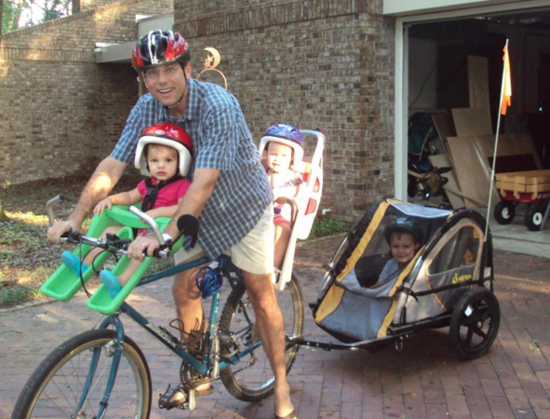
The reader who sent the above photo writes:

My family moved out of the 'burbs and into town a year-and-half ago, specifically so that we could get out of the car and access more places on foot and on bike.  The attached photo is the work/school commuting rig for me, and my kids (ages 5, 2 and 2).  I haven't figured out how to monetize having more quality time with my kids, but I know has value to me (and to them, too, whether they know it or not).

Is Mitt Doomed? Ctd

Chait reiterates his belief that Republicans won't vote for Romney:

Romney is evidence that Obama's policies — on economic stimulus, health care, the auto bailout, and pretty much everything — are anything but the extreme socialism they now portray them as. His nomination would undercut their claims daily, and demonstrate it is the GOP, not Obama, that is proposing a radical new direction for the country. That's why they can't nominate him.

Face Of The Day

GT_MONKEY_110602

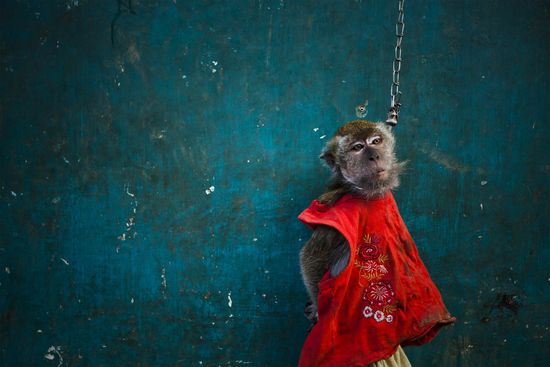
On June 1, 2011 in Jakarta, Indonesia, a macaque monkey trained for street performances is chained to a wall to learn to stand on two feet.  The street performances usually involve the monkeys wearing masks, such as dolls' heads or attire to mimic humans, with the monkeys trained to act out human activities such as shopping, riding bicycles or other simulations of human behaviour. Poverty drives the handlers to exploit the monkeys in the hope of earning small change, but the effect and cruelty to the monkeys is a cause that charities such as the Jakarta Animal Aid Network are increasingly taking up. By Ulet Ifansasti/Getty Images.

The Tea Party And Social Security

A new poll from Missouri shows a huge majority – 78 percent – opposed any cuts in social security benefits. Not far behind, 59 percent of the Tea Party voters are opposed. In the debt battle ahead, it seems clear to me that the GOP hasn't even come close to sealing the deal on spending. But there is a glimmer of hope in the data:

There is strong bipartisan support among Missouri voters for lifting the cap to impose Social Security taxes on all wages above $106,800 and requiring both employees and employers to pay (68 percent). This was supported by large majorities of Republicans (62 percent), Independents (70 percent), and Tea Party supporters (61 percent). By a margin of 59 percent to 18 percent voters say they would be more likely to vote for a Senate candidate who supports requiring employees and employers to pay Social Security taxes on all wages above $106,800.

Yes, more taxes for the successful is far more popular than any cuts to actual benefits.

Cellphones And Cancer, Ctd

A reader writes:

You should tell your very informed reader that he has little to worry about on the effect of cell phones on teens' brains.  My god, what teenager would be caught dead "talking" into a phone?  I certainly don't know any.  It's their thumbs he should worry about!

Another writes:

I'm a professor of physics at a major research university.  My area of specialization is the interaction of matter with microwave radiation.  I run a large research group, give talks all over the world on my work, and have more than 100 peer reviewed publications on the subject.  It is safe to say that I am one of the world experts in this area.

A reader of yours  wrote "(Devra) Davis points to evidence that cell phone radiation can break down DNA, and can disrupt the blood-brain barrier. The effects are even more significant with newer phones than older "2G" phones."

I cannot emphasize enough that there is NO KNOWN PHYSICAL MECHANISM THAT WOULD ALLOW MICROWAVES TO CAUSE CANCER.   In fact if it was possible, it would be inconsistent with what we have learned over the last 100 years about quantum physics.   It is fair to say that these tenets of quantum physics are as well verified as any physical theory ever.  Since the epidemiologically data is "inconclusive" (which means no correlation has been found), and every practicing physicist will tell you the same thing as me,  I find it mind boggling that someone would pay attention to someone like Davis, whose working physical knowledge is spotty at best.

Why believe such a thing?   There is of course a long history of such scares, going back to the "power lines cause cancer days".  But there is no basis whatsoever.   And the mumbo jumbo physics of people like Davis keep this absurd idea alive.  Why not believe the phases of the moon cause cancer?   Or the color red causes cancer?   Or being a Capricorn causes cancer?   It would make as much sense.

Another:

As to Devra Davis' book. According to Amazon.com, it's full title is "Disconnect: The Truth About Cell Phone Radiation, What the Industry Has Done to Hide It, and How to Protect Your Family." This is not the kind of title that gives me much confidence that the book is a reasoned look at the issue.