Can The Church Lose With Grace?

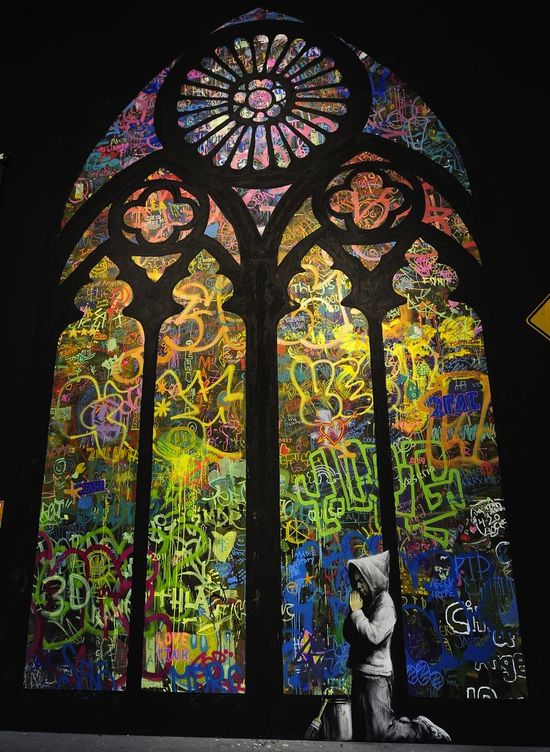
Banksy-church

J. Peter Nixon has his doubts:

From the sale of contraceptives to abortion to the introduction of no-fault divorce, the Catholic Church has tended to lose most of its high profile fights over social issues.  To the extent that one sees these struggles as a form of witness the Gospel, victory or defeat may well be beside the point. There’s losing, though, and then there’s losing ugly.

… I suspect that many young people who grow up within the Church sense that the ways that heterosexuals fall short of Church teaching—fornication, cohabitation, contraception, remarriage after divorce—are, in pastoral practice at least, taken less seriously than the sexual sins of gays and lesbians.  While I have no illusions that a more consistent application of the Church’s teaching would be “appealing,” it would at least immunize the Church against the charge of hypocrisy.  The emerging generation of young people may not be inclined to adhere to the Church’s sexual ethics, but it would be a measure of progress if they could at least respect them.

(Photo: 'Stained Window,' a collaboration between renowned street artist Banksy and the City of Angels public school in Los Angeles students, is on display at the 'Art In The Streets' exhibition at the Museum for Contemporary Art (MOCA) in Los Angeles. By Robyn Beck /AFP/Getty Images)

Beyond Numbers

Paul Krugman nerds out on his favorite books:

I read Hume’s Enquiry, this wonderful, humane book saying that nobody has all the answers. What we know is what we have evidence for. We do the best we can, but anybody who claims to be able to deduce or have revelation about The Truth – with both Ts capitalised – is wrong. It doesn’t work that way. The only reasonable way to approach life is with an attitude of humane scepticism. I felt that a great weight had been lifted from my shoulders when I read that book.

Is The City Making You Crazy?

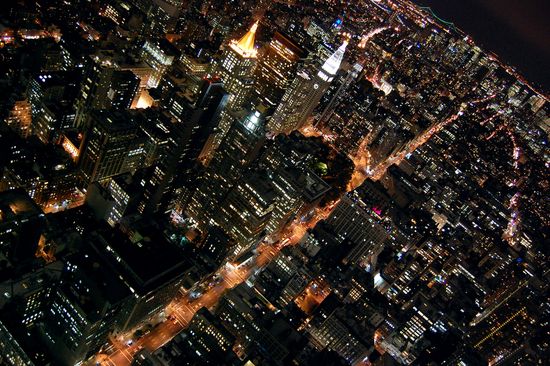
City

Possibly. According to Jens Pruessner, incidence of "anxiety disorders is 21 percent higher for people from the city," and urbanites "have a 39 percent increase for mood disorders." Also, "schizophrenia is almost doubled for individuals who are born and brought up in cities":

Interestingly, it didn't seem to make much difference whether individuals lived in a concrete jungle or a city with a lot of green space. The implication is that it's population density, rather than any other factor, which causes the changes in the brain. Almost 70 percent of the world population is expected to live in a city by 2050, according to United Nations projections.

(Photo by Ludovic Bertron)

Face Of The Day

117193655

Method Man of The Wu-Tang Clan performs at the Glastonbury Festival at Worthy Farm, Pilton on June 24, 2011 in Glastonbury, England. The festival, which started in 1970 when several hundred hippies paid 1 GBP to watch Marc Bolan, has grown into Europe's largest music festival attracting more than 175,000 people over five days. By Fergus McDonald/Getty Images.

Drunk On Growth

People living on a dollar a day or less can spend 6 cents or more of that on alcohol and tobacco, but:

[M]ounting evidence suggests that beer in particular, and the beer industry that surrounds it, may be as good for growth as excess sobriety. In some of the world's toughest investment climates, beer companies today are building factories, creating jobs, and providing vital public services, all in the pursuit of new customers for a pint. It's the brewery as economic stimulus: a formula even a frat boy could love.

Talking In Code

Daniel Soar reports on a US government attempt to use George Lakoff's linguistic theories to analyze foreign cultures:

Lakoff’s basic idea was that the ‘target’ of the metaphor, an abstract concept like democracy, is explained in terms of the ‘source’, a familiar physical object or process. The analogy would often rely on some lingering ‘folk theory’ about how a process works. For example, according to the folk theory, anger would cause increased body temperature, increased blood pressure and agitation (ANGER IS HEAT). This leads to metonymic expressions such as ‘Don’t get hot under the collar,’ and ‘When I found out, I almost burst a blood vessel.’

Then, a series of ‘entailments’ would cause one metaphor (ANGER IS HEAT) to combine with another (THE BODY IS A CONTAINER FOR THE EMOTIONS) in such a way that a whole new concept results, as if by magic: viz, anger is the heat of a fluid in a container. This means that when someone is filled with anger we can say – or we could say, if we spoke in the language of 1980s English-teaching textbooks – that their blood boils and they have to let off steam before they flip their lid. The assumption is that conceptual metaphors like this reflect and constrain a person’s way of thinking. It’s all a great game, and the spy agencies, Beltway entrepreneurs and hangers-on expect to profit from it.

Steven Pinker's critique of Lakoff's theory is always worth a revisit. Lakoff replies here.

WiFi Everywhere

Tim Carmody lusts after the wireless Internet in Seoul, the best connected city in the world. Now officials are planning to bring WiFi to every street corner in the city:

Seoul's problem (such as it is) illustrates both the genius and the frustrations of municipal wireless plans worldwide. They boil down to this: City and regional governments don't want to blanket their jurisdiction in Wi-Fi for the benefit of their citizens. At least not directly. They need data coverage for government workers: police, fire, emergency responders, city inspectors, parking meter readers, and so forth. Putting Wi-Fi everywhere a city worker might go means putting Wi-Fi everywhere in a city.

A Poem For Saturday

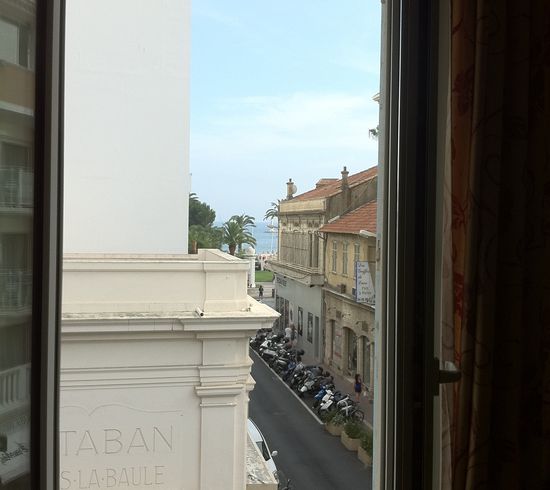
Windows

"Ezra Pound's Proposition" by Robert Hass:

Beauty is sexual, and sexuality
Is the fertility of the earth and the fertility
Of the earth is economics. Though he is no recommendation
For poets on the subject of finance,
I thought of him in the thick heat
Of the Bangkok night. Not more than fourteen, she saunters up to you
Outside the Shangri-la Hotel
And says, in plausible English,
“How about a party, big guy?”

Here is more or less how it works:
The World Bank arranges the credit and the dam
Floods three hundred villages, and the villagers find their way
To the city where their daughters melt into the teeming streets…

The rest of the poem is here.

(Photo via Magik Dick's tumblr)