Waiting For Albany, Ctd

Another day ends without a vote on marriage equality:

A late night here at the Capitol turned out to be a relatively early night after deals quickly crumbled and fell apart. Everyone here was gearing up for a debate into the wee hours of the morning and a private-closed door conference on same-sex marriage. But it was not to be. … Deputy Majority Leader Tom Libous said that the same-sex marriage issue will now be discussed Friday — postponing a determination on whether it would be brought to the floor for a vote.

Laura Nahmias looks back at the long day. The above footage was shot earlier this evening.

Would We Want To Be Contacted?

Another uncontacted tribe has been discovered in Brazil's rainforest. Norman Geras poses a thought experiment:

Suppose there is a site of extraterrestrial life somewhere very far off and that the life in question is not only intelligent but also – miraculously – human. These are human beings, what is more, who are technologically much further 'ahead' than we are. They have the means to detect us and they have detected us, and they have the means to travel across the vast spaces they need to in order to come and shake our hands. Do they owe it to us to forbear – to leave us alone?  …

[Imagine] that those extraterrestrial humans had already found ways of solving social, medical or other problems still bedevilling us here on Earth. Suppose, similarly, we could help extend the lifespan of the average rainforest tribesperson by 50 per cent.

Previous Dish coverage of isolated tribes here, here and here. Above is a long but captivating video of the Toulambi tribe of Papua New Guinea meeting a white man for the first time in 1976.

Why Should The Feds Bust Pot Smokers?

Friedersdorf commends Ron Paul and Barney Frank's new bill:

[I]ts states' rights approach is significant, and forces defenders of federal drug policy into  their weakest position. It's one thing to argue that marijuana should be illegal. It's another thing to insist that the federal government enforce a nationwide ban even as duly elected state legislatures signal that the people disagree. That is the essence of the matter.

Mike Riggs tracks the momentum.

A Saudi Shift?

The Economist checks in on Saudi Arabia:

[S]ubtle changes are afoot. An increasingly irreverent, subversive tone infuses chat in the thriving Saudi ether via text messages, Twitter and Facebook. This reveals a growing gap between the elderly princes and an increasingly cosmopolitan populace. On June 17th only a few score women actually got behind the wheel to protest against the unique Saudi ban on female drivers. By and large, police shied away from intervening, emboldening more women to join the movement. The Saudi way of life may be about to shift.

Abraham Wagner goes further, seeing vulnerability at the top:

Clearly change is coming, whether by death or revolution. King Fahd, never an enlightened or benevolent monarch, suffered a stroke in 1995 and has not been "dealing with a full deck" in years. His relatives and potential heirs aren't much better. … As the U.S. must now look to a broader and more realistic strategy in the Middle East, a serious approach to Saudi Arabia must be an essential element of the process. Critical here is an intelligence estimate of the near and longer-term viability of the Saudi regime, not unlike that undertaken with respect to Yugoslavia before the death of Tito. A public version of this estimate should also be made available to inform public debate.

A group of Saudi women has stoked international demand for a boycott of Subaru due to the car company's support of the regime. Indonesia, whose migrant workers are integral to the Saudi economy, has halted emigration in protest of the beheading of an Indonesian maid.

Update: A reader points out a pretty big error we should have caught:

You were just quoting so you get a pass, but it is completely true that King Fahd has "not been dealing with a full deck in years" – because he died 6 years ago. Thanks for playing, Abraham Wagner!

The Diplomatic Surge Will Fail?

That's Tara McKelvey's bet:

[Afghanistan] remains awash in chaos, violence, and corruption, and the surge of civilians has hardly made a dent. One of the few things that the Americans have done is to assist Afghan officials in preparations for their presentations before other officials; in other words, as [Harvard's Michael] Semple says, “better PowerPoints.”

Face Of The Day

117139505

A member of the Purple Blazers team reacts to getting his spelling wrong at the first national spelling Bee Championship at Indigo O2, at the O2 Arena on June 23, 2011 in London, England. More than a thousand schools across the country participated in a string of competitions to get to today's final. By Danny Martindale/Getty Images.

The End Of A Certain Kind Of War

That's George Packer's read on Obama's Afghanistan speech:

The troop drawdown this year and next signals not so much that “the tide of war is receding,” but that America will no longer fight a particular kind of war—soldiers on wary foot patrol in dense neighborhoods and villages, junior officers taking off their helmets and sitting down over tea with local elders to talk about roads and jobs, generals and diplomats alternately coaxing and browbeating their counterparts about troop training and corruption. We’ve been fighting this kind of war somewhere or other for almost a decade, and Americans, who prefer our wars big on weaponry, short, and decisive, are tired of it, and so, no doubt, is President Obama, as well as many of his Republican opponents and members of Congress.

Is Healthcare Worth Jail Time?

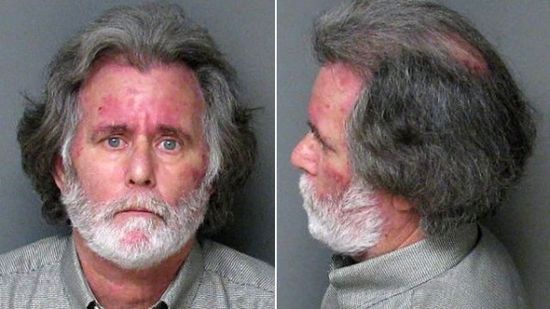
James-verone-bank-robbery-health-care

James Verone thinks so:

Some people who need medical care but can't afford it go to the emergency room. Others just hope they'll get better. James Richard Verone robbed a bank. Earlier this month, Verone (pictured), a 59-year-old convenience store clerk, walked into a Gastonia, N.C., bank and handed the cashier a note demanding $1 and medical attention. Then he waited calmly for police to show up.

Mansfield Frazier says Verone isn't alone:

Damien Calvert, who was recently released from an Ohio prison for a drug-related murder he committed when he was 18 (he’s now a straight-A student at Cleveland State University, studying nonprofit management), said that part of the reason recidivism rates are so high is due to the lack of access to health care on the streets for parolees. “Guys get out with a week’s supply of their medications,” said Calvert, “and when they’re unable to navigate the health-care delivery system out here in the world, they commit another crime so they can go back to their comfort zone, back to where they know they’ll be kept alive. But there’s something fundamentally wrong in this country when people have to resort to committing crimes to receive adequate health care.”

Quote For The Day III

"The only thing I can tell you at this point is that there are differences [within the GOP over the war in Libya]. I’m not sure that these kind of differences might not have been there in a more latent form when you had a Republican president. But I do think there is more of a tendency to pull together when the guy in the White House is on your side. So I think some of these [isolationist] views were probably held by some of my members even in the previous administration, but party loyalty tended to mute them," – Mitch McConnell, in a rare moment of candor.

The Lame State, Ctd

Smoke1 Smoke2

A reader writes:

The warnings have to go on cigarette advertising as well, not just the packs.  It will be nearly impossible to glamorize smoking in advertising with these warnings included.  Just think how useless the iconic Marlboro man campaign would have been if all of those ads had these images as well.

Another writes:

I admire your reader's hipster ethos of ironically embracing graphic warning labels in precisely the opposite way that the government hopes (in a way that encourages the purchase of cigarettes). But, alas, not all of us are naturally that blasé.  Which is why there is broad and extensive empirical evidence that warning labels are effective in reducing the number of people who smoke, particularly among children.  I know, totally uncool.

This pamphlet [pdf] from the Campaign for Tobacco Free Kids sums up the evidence pretty well. From the document:  "Warning labels that include graphic images that elicit an emotional response have been shown to be the most effective.  Strong, emotional responses are associated with increases in the warning’s effectiveness."

The above images are from Thailand. Another reader:

I'm reminded of the power for good in the British government's "Think" campaign. In the UK, the change of mindset and creation of a social stigma around drink driving was achieved by the shocking TV campaign that has been running since the 1980s. If you watch this example and this one, you'll get a sense for the hard hitting nature of the delivery of the message. They are both excellent. A few more here and here, from 2008, regarding seat belts. Shocking. But bloody effective.