Will The Afghanistan Surge End?

Brian Fung has doubts:

[T]here may be a way to achieve a rapid drawdown without dramatically downgrading force integrity, and that is to use private security contractors to fill the gap. I wouldn’t be surprised if the idea has been floated privately — contractors already outnumber U.S. troops in Afghanistan, so what’s another 8,000 to 10,000 more? Upping the number of contractors would be an easy and quiet way for the president to end the surge without really ending the surge.

Why We Are Not Rome

I know we ended this thread but this email strikes me as worth running:

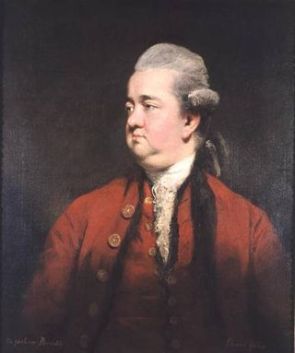
The Roman Empire (look at a map) was essentially a land locked empire.  In other words the borders of the Roman Empire that had to be defended were nothing moreEdward_Emily_Gibbon  than lines along land borders, much like the Russian Empire.  The United States is surrounded by two oceans, that is what the US has to defend.

The best measures of spending to GDP in the Roman period of decline was something like 35% of total production. During the declining British Empire it was somewhere around 30%. In the United States today it is something like 5%.

One of the key features of the period of Roman decline of the fifth and sixth centuries was sharply rising crime, such that the ability to move goods and services ground to a halt.  This was the inertia that so damaged the Roman Empire.  The ability to transport goods was damaged, and the military was not able to both control borders and control crime on trade routes.  In contrast crime has declined rapidly in the United States since its peak in 1980.

Rome lost the ability to communicate with the extreme west of the Empire and was not fully able to absorb events as they occurred.  How could that really be possible in the age of the internet, cell phone, etc.

And here is a kicker: Rome never fell.

It lost control of the Western Empire moved its capital from Rome to Constantinople (well before the fall) placing its new capital in the much more easily secured region between two bodies of water (sound familiar).  The eastern empire thrived well into the 15th century at which time the rise of ocean vessels provided alternate trading routes, ended the land routes on which Constantinople depended and went into economic decline.  Rome itself was reconstituted into the head of the Roman Catholic church and the seat of the Popes. 

The region thrived through the period, and it was France and Britain and areas further from Rome that suffered with the loss of roads.  For that matter the Carolinian Empire did much to reconstitute the West Empire, and still animates the EU today.

It is quite difficult to draw much comparison in any manner.

I take all these points. But what Edward Gibbon would say about America's turn away from Enlightenment reason to fundamentalist Christianity would probably be too racy to print even on this blog.

Pilot FAIL

Hilariously offensive (and NSFW):

The Daily What details:

A Southwest Airlines pilot was suspended without pay and ordered to attend sensitivity training after he accidentally broadcast an obscene rant concerning the lack of datable flight attendants to every airplane in the area through the Houston Center air traffic control frequency.

"Gays and grannies and grandes" has a nice poetic touch.

Illegal Immigrants Among Us, Ctd

Daniel Foster exhibits sympathy but not total forgiveness toward Vargas:

Reihan has argued repeatedly, and effectively, that we should treat access to the U.S. economy, not to mention its extensive welfare state, as a scarce resource. We can debate and debate the best way of distributing this resource– from “not at all” to “come one, come all” and everywhere in between. But distributing it based on who manages most successfully to violate the law, at the expense of would-be immigrants who are honoring the process, is surely not a valid option.

Serwer blames the system:

Foster's concern about fairness is aimed in the wrong direction. Undocumented immigrants aren't being unfair to those who try to navigate America's baroque, outdated, and inefficient immigration system, that system is unfair to the people who try to follow the rules, because the system itself is dysfunctional. 

The other problem with Foster's argument is that it views immigration as essentially a one-sided deal in which immigrants get access to the U.S. economy and Americans get to feel magnanimous. But part of what's so compelling about Vargas' story is how much he's contributed to American society, as an example of how much other immigrants are prepared to contribute to their adopted home, not just socially or culturally, but everything from increasing economic growth to reducing the deficit. If the U.S. economy is a "scarce resource," it's odd to argue that we should be getting rid of people who would make it stronger.

Adam Ozimek asks Foster what he would do if were he in Vargas's position:

Upon turning 18 would [Foster] have left this country and returned to the Philippines because it would be unfair for him to stay? Would he have sacrificed the life he knew here out of a sense of unfairness to other potential immigrants we aren’t letting in? Would he agree that the government should deport him?

Suzy Khimm explores the legal implications of Vargas's actions.

What’s The Afghanistan Endgame?

Fred Kaplan's optimistic scenario:

Obama's actions, and even more his announcement of the actions, will make it harder for U.S. and Afghan troops to stave off the Taliban militarily and to win over the Afghan people politically. But it may also send a message to Karzai that he really does have to get serious about reform. And, it may send a message to Afghanistan's neighbors that they really do have to start playing an active role in helping to stabilize the country—or else risk the stability of their whole region. All along, officials from Obama, Gates, Clinton, and Petraeus on down have said that these kinds of wars tend to end not with a military victory but with a political settlement. If Obama couples his military drawdown with a surge in diplomacy pressure, this may all turn out for the best.

The Spiritual Power Of Psilocybin, Ctd

Materialists return fire. One writes:

The Shrooms from inside the brain with a voice emanating from a cell phone is completely flawed. Of course a reasonable person would not believe that the voice originates from the cell phone, because a person using a cell phone knows that he or she is talking to another person. We know this by common sense and because we have used cell phones before.

Consider for a moment that we dropped a cell phone down to a tribe of people who have not had contact with the outside world for hundreds of years. One of them picks it up, not knowing what it is, and when it begins ringing, fumbles around with it until he accepts the call. It is possible, if not likely, that this person would think the voice on the phone was indeed originating from the phone. It would be perhaps equally likely that the people of this tribe would believe the voice of the phone was god’s. God is always what we attribute to the unknown.

We might not know how or why psilocybin has the effect on the brain that it does, but that in itself does not mean that something spiritual or supernatural is at work. It only means that we do not yet understand what is happening, just as that tribesman does not understand what a cell phone is.

Another further breaks down the analogy:

It is a universal experience of people who speak on the phone to have also conducted conversations with people in person, where we have heard, seen, touched and smelled them. Very often in fact, we conduct conversations over the phone with the very same people we have spoken to in real life. If any doubt were to ever arise in ones mind as to the true origin of the voice in the phone, a quick real life conversation with the supposed source of that voice would be all that was needed to set ones mind at ease.

We know how cell phones work. Cut down your nearest cell phone tower, or put your phone in a Faraday cage and the voices coming from the phone disappear. Use a radio scanner to see the radio frequencies it receives and emits with the corresponding conversation. Blast enough radiation across the band and the voice drops away.

You will notice that none of these experiments will work with god. You can only ever to talk to god on the phone as it were, no double checking by having a real life conversation with him (and of course, even talking to him on the “phone” is not by any means universal. I have never had the pleasure myself, but even amongst people who have, there seems to be quite a debate about what his telephone number is and what he likes to talk about). There are no prayer waves, and thus no prayer Faraday cages or cutting down the prayer cell tower. If you cut down the cell phone tower, no amount of faith or belief will make your, or anyone else’s phone work.

Another steps back:

This is ridiculous.  Look, scientific theories are abstract models of the universe.  Models explain data.  We can compare two different models by evaluating how well they explain the data – our observations about the universe.  There are models that include a god or gods that have omniscient powers and are undetectable in the physical world.  The problem is that none of these models explain the data any better than models that do not include gods.  That’s Occam’s razor.

The materialist view does not require us to dismiss any model, including one that includes undetectable gods.  We dismiss it because it has unnecessary complications.  But if we suddenly have some observation such that that model becomes the best fit to ALL the data, then we bring it back into play.  That observation might be, say, somebody rising from the dead (in such a way that there is no other possible explanation that fits with any other model).  There is nothing “mad” about this.  It is in fact completely logical.  Most of us happen to think that something that would bring that model back into play is extremely unlikely, so there is no point in working with it until something like that does happen, and whatever that is is indisputably support for that model (rather than being explainable by people lying or some trickery).

Another:

This thread has clarified for me the essence of the materialist/spiritual divide. Spiritual folk believe that faith that makes them happy is self-validating. It MUST be true. How could it feel so right and powerful if it were untrue?  This seductive thought is absolutely refuted by the complete lack of reproducibilty across individuals, religions, cultures, and time. It is clearly a highly error-prone way to think, if not error-guaranteed.

Another:

There’s a distinct problem with your reader’s comparison of the religious or sacred sense to other perceptions: it presumes that the sacred sense is a perception, and not a reaction. For instance, say I enjoy the taste of Chinese food (and oh, I do). Do we then say that the Chinese food objectively contains my enjoyment, and that my enjoyment reaction in my brain is merely a perception of that objective enjoyment? No. Enjoyment is merely my subjective response to a stimulus. Someone who hates Chinese food would not derive that same enjoyment from the same stimuli. It’s certainly clear that not everyone receives the same dose of sacred sense from the same stimuli – I get much more of it from nature, while a friend finds it in a loud, raucous, speaking-in-tongues Born Again church that I frankly find intimidating and alien.

Finally, your reader presumes that a materialist viewpoint is inherently inferior – that it does not lead to the same happiness and love that “living from the point of view of conscious being” does. My partner and I have shared love for nine years, and I am extremely happy. Materialism is why I am happy. Everything that I am will die out when I stop breathing – this knowledge makes each moment precious, because I have no hope of eternity to remove the importance from the moment. It forces me to consider each moment deeply, to derive what I can from it. It makes me treasure everything I have, because I am aware that it is fleeting and unique – that this moment will never repeat again, because I do not have infinity to wait for it to recur. If I had infinity, then wasting my life would mean nothing, because it is only an imperceptibly tiny fraction of the time I am allotted.

The discussion thread thus far – in chronological order – here, here, here and here. Fear not. I will return to this debate soon.

(Photo of Psilocybe Cubensis by Flickr user afgooey74)
Illegal Immigrants Among Us

Matt Yglesias notices that increasing immigration is unpopular across the board:

Immigration

Timothy B Lee encourages illegal immigrants to follow in Jose Antonio Vargas's footsteps and out themselves:

It’s interesting that Vargas mentions coming out of the closet because I think many immigration advocates could learn from success of the gay rights movement. Ignorant anti-immigrant beliefs are driven by the same kind of intellectual laziness people always display when thinking about people different from themselves. Go back to the 1970s and you’ll find millions of people who didn’t consider themselves to be bigots but harbored fundamentally bigoted beliefs about gay people. Go a little further back and you’ll find millions of whites who didn’t consider themselves racists but who would readily repeat crude stereotypes about blacks and tacitly supported America’s system of racial apartheid.

What Israel Lobby?

A classic Washington gaffe from Susan Rice, referring to the upcoming UN vote on recognizing a Palestinian state:

“And this would be exceedingly politically damaging in our domestic context, as you can well imagine. And I cannot frankly think of a greater threat to our ability to maintain financial and political support for the United Nations in congress than such an outcome.”

Why would it be so politically damaging at home for the Obama administration if the UN took such a vote, even if the US votes in favor? A two-state solution has been the US position for years; recognizing an emergent, if still fragile, Arab democracy on the West Bank, would seem a no-brainer, and a critical part of aligning US interests with the other emergent Arab democracies in Tunisia, Egypt and (fingers crossed) Iraq . Yes, Americans tend to side with the Israelis, but I don't believe that mass opinion would oppose recognizing a Palestinian state. The Progressive Realist suggests that the danger for Obama is that the pro-Israel lobby could flex its Congressional muscles, weaken electoral fundraising for Obama and the Democrats, and play the anti-Israel card to rally the Christianist end-timers. Money quote:

What a sad testament to the damage being done to America’s national security by Benjamin Netanyahu.

In an age when terrorism is said to be the gravest threat to Americans at home and abroad, we’re going to do jihadist recruiters the favor of amping up Arab antipathy toward the US by opposing this Palestinian quest for statehood? In an age when collective international action is increasingly vital to world order, congress may slash funding to the United Nations?

Of course, the Israeli-American effort to thwart Palestinians’ legitimate aspirations will, in the long run, be bad for Israel, not just for America. But this is an old story: It isn’t that America’s interests clash with Israel’s true interests; it’s just that America’s interests clash with Israel’s self-destructive policies—and thus with the political force emanating from “pro-Israel” Americans who, whether they know it or not, are hurting both Israel and America.