by Zack Beauchamp
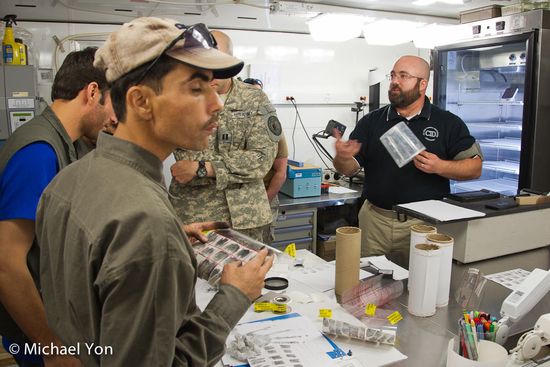
Michael Yon reports on how forensics help counterinsurgency in Afghanistan:
In the early days of the Iraq and Afghanistan wars, if a bomb blew up our people, we would be apt to arrest every male in the village old enough to sport pubic hair. We paid for that with more blood and may or may not have gotten the right guys. It was as if we were dealing with a thousand mysterious unibombers. In America, if a bomb hit the local National Guard headquarters and the Guard responded by flooding out and arresting the entire neighborhood, the Guard could be assured that any positive or neutral feelings would be toxified to the point where previously friendly eyes would become enemy spies. The formula is simple and works every time. Somewhere along the line, some very smart person must have gotten the idea that we needed forensics and law enforcement experts to join battle.
A related post, on the rule of law more broadly, contains an important insight in light of the attack on AWK's funeral:
The Taliban can deliver crude justice, suicide bombers and IED cells, but that’s about it. They can’t walk and sing at the same time. They can’t organize a biogas program, build a road, or start mining operations. (Or, for that matter, de-mining operations.) They can intimidate but they cannot inspire. They can take, but never serve. They can dominate but they cannot govern.
Some COIN scholars (with justification) rubbish the idea that government provision of social services can produce support for the counterinsurgent. But comparing the government, with all its flaws, to the alternative – people who bomb mosques during funerals – sure does illuminate the stakes.
 The Dish