Jonathan Cohn glances at his watch:
[T]he biggest problem with the plan is that its architects didn’t introduce it six weeks ago, when it could have been a foundation for negotiation. As my colleague Jonathan Chait observes, the proposal suffers from the same political drawback as every other reaonable-sounding bipartisan plan: The revenue that makes it appealing to people like me makes it a non-starter with House Republicans. And while it’s not inconceivable that leaders from the two parties could figure out some way to pass a plan like this, they would need time — and that’s the one thing they do not have now.
Ezra Klein foresees other roadblocks:
I don't want to be too pessimistic here. The political system's reaction to the plan has been surprisingly positive. But over the last year, pessimism has tended to be the right stance towards the real-world prospects of these sorts of plans.
Stan Collender eyes the markets:
In response to the news yesterday that the gang of six had finally agreed to a comprehensive deficit reduction plan and the preliminary signal from the White House that the deal could provide the way to avoid a debt ceiling crisis, there was a clear relief rally in both the stock and bond markets. … In other words, the market analysts who have been saying for months that the debt ceiling fight was having no impact on stock prices and interest rates either didn't have a clue or were lying.
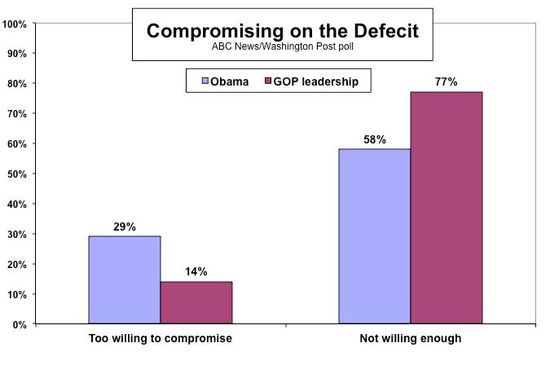
But he's unconvinced the plan can pass the Senate, let alone the House. I'm away but not so sure. In fact, it behooves me to say that my instant gloomy assessment of Obama's failure to lead on this in January may have been premature. It does appear that the politics of this are now moving swiftly toward sanity. The polls show clearly that the public is none too fond of the adolescent Randian right. The scale of the consequences of default are sinking in. The president's willingness to compromise much more than the GOP has also penetrated the public consciousness. Reality-based conservatives note how any sane right-of-center party would leap to embrace this framework.
Indeed, Obama, from London, looks like what he actually is: a Cameron Tory. His preferred solution is exactly the British right's: 3:1 spending cuts to tax hikes, but with tax reform thrown in as a great sweetener. It shows just how unconservative the current GOP is that it would rather risk the entire global economy than adopt the austerity measures of its British cousins. But today's GOP is as hostile to the core institutions of government as it is to accountability and compromise. I hope they experience electoral near-death as a result. I see no way for the US to become a serious nation again until this deeply unserious party destroys itself.
Faster, please, as someone once said.
 The Dish